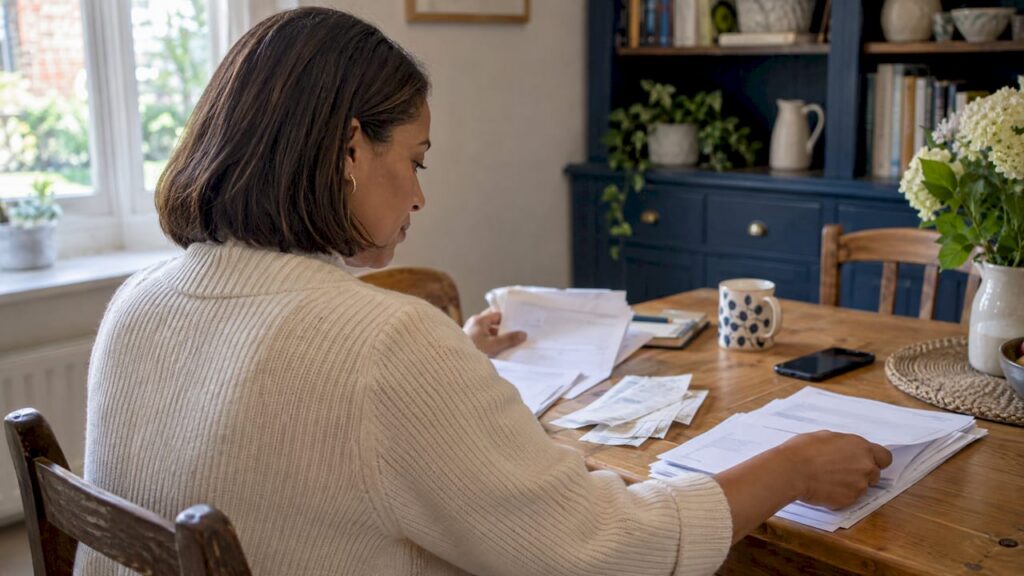
An ecommerce accountant turns marketplace payouts, platform fees, refunds and stock into accounts that match reality, then files the tax returns that follow from them. The hard part is rarely the tax return. It is getting from a pile of settlement reports and bank deposits to a set of books you can trust. I’m Chris White, an AAT Licensed Accountant based in Hildenborough near Tonbridge, and I support online sellers across Kent and remotely throughout the UK with exactly that: bookkeeping, tax returns and cloud accounting software.
If you sell on eBay, Vinted, Depop, Etsy, Amazon or your own Shopify store, this guide explains what needs recording, why the money landing in your bank is not your turnover, and how to tell when you have moved from clearing out your wardrobe to running a business.
TL;DR
- Marketplace payouts are usually sales minus fees, refunds and adjustments, so they are not your turnover. Your books need the gross sale and the costs recorded separately.
- Reconcile each platform balance to its own settlement report first, then to your bank. Incomplete app connections are the most common cause of errors.
- Selling a few unwanted personal items is different from trading. Repeated buying to resell, or selling for profit in an organised way, points towards trading. Check HMRC’s current guidance for your situation.
- Track your sales against the VAT registration threshold monthly, and keep stock and returns records from the start.
- I can set up your cloud accounting, keep the books, and prepare your Self Assessment or company accounts. I work directly with you, with no hand-offs.
Table of Contents
- What an ecommerce accountant actually does
- Why marketplace payouts are not your turnover
- Reconciling platform balances to bank receipts
- How incomplete integrations create errors
- Records an online seller needs to keep
- Selling personal items or trading: where is the line?
- VAT for online sellers
- Tax: sole trader or limited company?
- How to choose an ecommerce accountant
- Signs you have outgrown spreadsheets
- How I support ecommerce businesses
- Need help with your ecommerce accounts?
- My view on ecommerce accounting
- FAQ
- Sources
What an ecommerce accountant actually does
A general accountant can prepare a tax return from a spreadsheet. An online seller needs more, because the figures come from several places that do not agree with each other. A typical seller has sales in one or more marketplaces, money passing through a payment processor, costs on a card or bank account, and stock bought in batches.
In practice, the work covers:
- Bookkeeping: recording sales, fees, postage, refunds, stock and expenses in cloud software, so your profit is visible during the year and not only after it.
- Reconciliation: proving that what the platforms say you sold matches what reached your bank.
- VAT: advising on when to register, how to treat sales across channels, and preparing returns.
- Tax: Self Assessment for sole traders, or annual accounts and Corporation Tax for limited companies.
- Systems: choosing and setting up the software and any connections between your shop and your books.
You can see how I approach the day-to-day side on my bookkeeping services page.
Why marketplace payouts are not your turnover
This is the single most important idea in ecommerce accounting, and the one that catches most new sellers out.
When a platform pays you £940, you did not necessarily make £940 of sales. The payout is a net figure. Between the customer paying and the money reaching you, the platform may have deducted:
- selling or final value fees
- payment processing fees
- advertising or promoted listing charges
- shipping labels bought through the platform
- refunds and partial refunds
- chargebacks or dispute adjustments
- reserves held back and released later
If you record only the deposit as income, your turnover is understated and your expenses are missing. Your profit may come out roughly right, but the numbers will be wrong in ways that matter: your VAT threshold monitoring will be off, your gross margin will be unknowable, and your accounts will not show how much the platforms really cost you.
A simple worked example
Imagine a settlement report that shows the following for one week. These are made-up round numbers to show the method, not a real seller.
| Line | Amount |
|---|---|
| Gross sales (what customers paid) | £1,000.00 |
| Platform fees | -£90.00 |
| Payment processing fees | -£25.00 |
| Refunds issued | -£45.00 |
| Net payout to your bank | £840.00 |
In your books, sales should show £1,000.00, fees £115.00 and refunds £45.00, with £840.00 arriving in the bank. If you record £840.00 as sales, you have lost £160.00 of turnover and £160.00 of costs in one week. Across a year, that is a very different set of accounts.
Reconciling platform balances to bank receipts
The cleanest way to keep ecommerce books right is to treat each platform as its own holding account, sometimes called a clearing account. Sales go in, fees and refunds come out, and payouts to your bank clear the balance.
The routine looks like this:
- Record gross sales from the platform’s report into the clearing account for that platform.
- Record fees, refunds and adjustments from the same report against the right expense or sales-returns accounts.
- Match each payout to the bank deposit that carries it. A single deposit often covers several orders over several days.
- Check the clearing balance. It should equal what the platform says it still owes you, which is normally the pending or available balance on your seller dashboard.
- Investigate the difference if it does not. A balance that drifts means something has been missed or recorded twice.
Bank reconciliation is the final check that your books match the bank. If you use Xero, my guide on how to finish Xero bank reconciliation in a day walks through the habits that make it quick. QuickBooks users can follow the QuickBooks bank reconciliation steps.
Why timing differences cause confusion
A sale on the 30th might not reach your bank until the following week. A refund might be taken from the next payout. If you reconcile only to the bank, those timing gaps look like mistakes. Reconciling to the platform report first, then to the bank, separates genuine errors from ordinary delays.
How incomplete integrations create errors
Xero says you can connect it to Shopify, Amazon, eBay or Etsy through ecommerce apps so that sales transactions flow into Xero for reconciliation, giving you up-to-date records. That is a genuine time-saver, and I like using cloud tools that cut manual entry.
But a connection is only as good as what it brings across. Errors tend to appear when:
- Only sales come through. Fees, refunds or shipping are left out, so the clearing account never balances.
- Only payouts come through. You get the net figure without the gross sale behind it.
- Refunds land in a later period than the original sale, which distorts monthly figures.
- Multiple channels overlap. The same order appears once from the shop and again from the payment provider.
- Tax settings do not match. A sale treated as VAT-inclusive in one place and VAT-exclusive in another produces a VAT figure that does not agree with your records.
- Currency conversions are applied by the platform at a different rate than your bank uses.
The fix is not to distrust automation. It is to set the connection up deliberately, decide what each feed is responsible for, and reconcile regularly so a gap is caught in days, not at year end. Choosing the right setup is part of accounting software setup and training, which I offer for Xero, QuickBooks and FreeAgent.
Records an online seller needs to keep
Whether you are a sole trader or a limited company, the records are broadly the same. Good ones make everything downstream faster.
Sales records
Keep platform sales reports and settlement or payout reports for every channel. Download them regularly rather than relying on a dashboard that may only show a limited history.
Fees and costs
Record marketplace fees, payment processor fees, advertising, packaging, postage, software subscriptions and any returns postage you pay. These are separate lines, not part of the payout.
Refunds and returns
Record refunds against the original sale where you can, and note whether the item came back into stock or was written off as damaged. A returned item that can be resold is still stock. One that cannot is a cost.
Stock
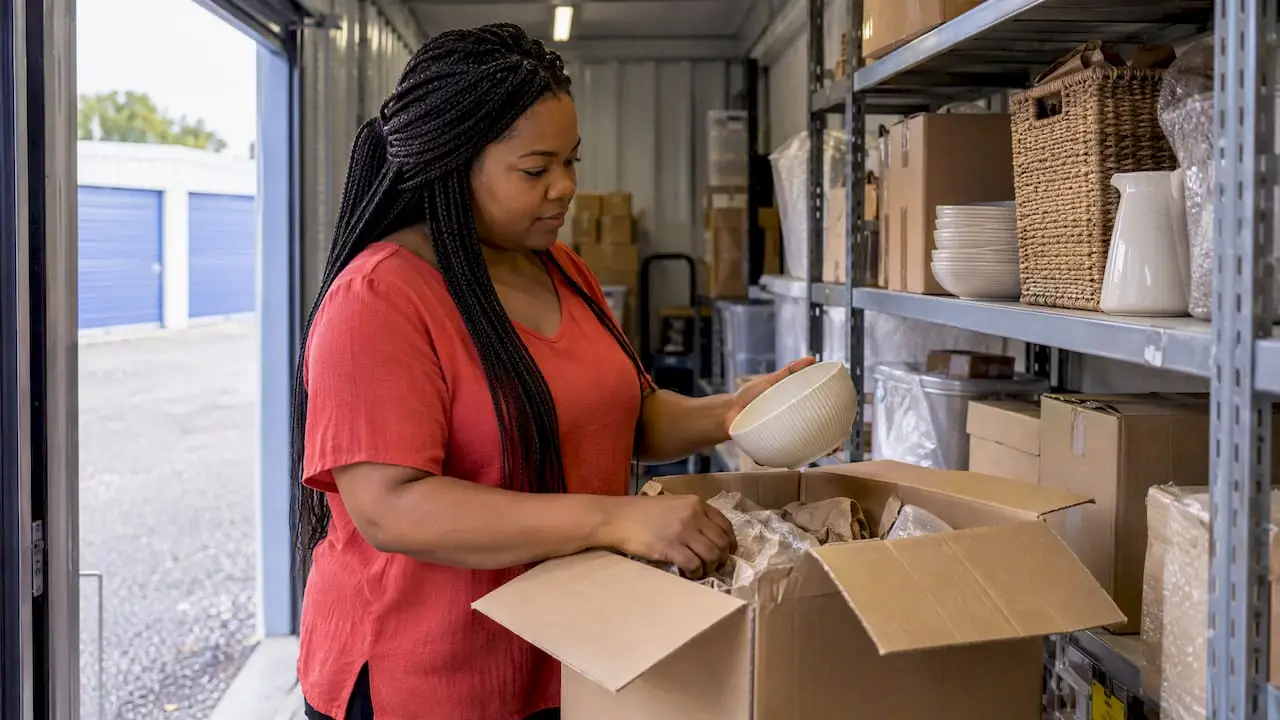
Stock is where many sellers feel least confident. At the end of your accounting period, unsold stock bought for resale is normally valued at the lower of cost and what it could be sold for, and the value affects your profit. Keep purchase invoices, a simple stock list, and the date of your stock count. Even a basic spreadsheet counted at year end is far better than guessing.
Marketplace settlements and VAT records
If you are VAT registered, you need records that tie each sale to its VAT treatment, and your VAT return should reconcile to your bookkeeping. My guide on reconciling VAT returns to your bookkeeping records shows how.
For general habits that prevent mistakes, see avoiding bookkeeping errors as a self-employed person.
Selling personal items or trading: where is the line?
This question comes up constantly, especially for Vinted, Depop and eBay sellers. The distinction matters because trading income is taxable and needs to be reported, while selling your own personal belongings generally is not treated the same way.
HMRC does not use a single number to decide. It looks at the overall pattern of activity, often described as the “badges of trade”. Factors that point towards trading include:
- buying items specifically to resell them at a profit
- selling regularly and in volume
- running the activity in an organised, business-like way, such as keeping stock, advertising or having a brand
- making the sales a source of ongoing income
- how long you held an item before selling it
Factors pointing the other way include selling a few things you owned and no longer want, with no intention of profiting from them.
Two practical points:
- Sourcing matters. Clearing out your own wardrobe is a different activity from buying job lots at car boots or wholesale and reselling them. The second is much more likely to be trading.
- Platforms may share information. Online platforms can be required to send seller information to HMRC, so it is sensible to assume your activity can be seen and to be able to explain it.
HMRC’s guidance changes from time to time and your own facts decide the outcome, so read the current pages on GOV.UK for online sellers before you decide. If you are unsure which side of the line you are on, it is worth a conversation before you file anything, rather than after HMRC writes to you. I can talk through your circumstances, though I do not give personalised tax advice in an article.
If you are trading, you will normally need to be registered for Self Assessment. My Self Assessment registration checklist covers the deadline and the steps.
VAT for online sellers
VAT catches many sellers by surprise because it is based on your taxable turnover, which is your sales, not your profit and not your payouts. The registration threshold is £90,000, and I explain how to stay ahead of it in my guide to VAT registration before £90,000.
For online sellers specifically, think about:
- Monitoring turnover monthly. Use gross sales across all channels, added together. A seller with three small channels can pass the threshold without any single channel looking large.
- Registering voluntarily. Some sellers choose to register earlier, for example if their customers are mostly VAT-registered businesses. My article on voluntary VAT registration explains when it pays.
- Getting the treatment of each sale right. Where your customers are, where goods are sent from and who is responsible for VAT on a marketplace sale can all change the answer, and the rules differ for imports and exports.
I cover the basics in VAT registration for online sellers. Once registered, I can prepare your VAT returns from your books, so the figures tie back to your sales records.
Tax: sole trader or limited company?
Most new online sellers begin as sole traders. Your sales profit goes on a Self Assessment return alongside any other income. As your business grows, some sellers move to a limited company, which files annual accounts and pays Corporation Tax on profits.
Neither is automatically better. The right choice depends on your profit, your plans, whether you want to take money out regularly and how much admin you are happy with. I can discuss it with you, and my guides on Corporation Tax for UK limited companies and preparing accounts for a tax return give useful background.
Two things reduce stress either way:
- Know your payments on account. If you are a sole trader with a Self Assessment bill above a certain level, HMRC may ask for advance payments towards next year’s tax. They can be a shock the first time. See payments on account explained simply.
- Prepare for Making Tax Digital for Income Tax. This is HMRC’s move to digital record-keeping and quarterly updates for many self-employed people and landlords. Seller bookkeeping that is already clean and digital makes it far simpler. I explain how I help on my Making Tax Digital for Income Tax page.
How to choose an ecommerce accountant
When you compare options, ask practical questions rather than relying on a long list of platforms in a headline.
- Do they work in the software you use or want? Cloud accounting with sales connections should be the starting point.
- Will they reconcile platform reports, or only the bank? The answer tells you whether your turnover will be right.
- Who will you deal with? Many people prefer one named person who knows the business, rather than a queue of different staff.
- Is the fee clear before work starts? Pricing should be agreed upfront, with the scope written down.
- Can they handle the full picture? Bookkeeping, VAT, tax return and software support under one roof saves you explaining your business several times.
- Do they explain things in plain English? You should understand your numbers, not just receive them.
Fees for ecommerce work vary with the number of channels, the volume of transactions, whether you are VAT registered and whether you want monthly bookkeeping or an annual return only. A higher transaction count means more reconciliation, which is why a quote should reflect your real set-up.
Signs you have outgrown spreadsheets
A spreadsheet works for a handful of sales. It starts to fail when:
- you sell on more than one platform
- you cannot say what your profit was last month
- your bank deposits never quite match your sales
- you are unsure whether you are close to the VAT threshold
- the year-end task feels like a last-minute mess
If that sounds familiar, my bookkeeping cleanup checklist is a calm way to start, and the five signs your bookkeeping needs professional help may help you decide. If you are moving off spreadsheets, see moving from Excel to cloud accounting.
How I support ecommerce businesses
I’m a sole practitioner, so when you work with me you deal with me directly. Here is what I can do for an online seller:
- Set up your cloud accounting in Xero, QuickBooks or FreeAgent, and train you to use it, so the structure suits your channels. A tidy chart of accounts is part of that.
- Keep your books with system-led bookkeeping, recording gross sales, fees, refunds and payouts separately and reconciling them.
- Prepare your VAT returns once you are registered.
- Prepare your Self Assessment return. My Self Assessment tax returns start from £250 one-off, and you can see the details on the Self Assessment page.
- Prepare limited-company accounts and Corporation Tax if you trade through a company.
- Support Making Tax Digital for Income Tax and give you budgeting and forecasting help as you grow.
I work with clients in Tonbridge, Sevenoaks and across Kent, and remotely throughout the UK, which suits online sellers who do not need to meet in person. I work paperless, using secure digital workflows. Pricing is tailored to each client and agreed clearly upfront.
Need help with your ecommerce accounts?
If you would like the platform fees, refunds and payouts sorted into books you can rely on, I can look at your set-up and tell you what it needs. You can see my full range on the accounting services page.
When you are ready, get in touch with me here and tell me which platforms you sell on and whether you are a sole trader or a company. I will reply as soon as I can, and we can talk through what would suit you.
My view on ecommerce accounting
The mistake I see in online seller accounts, and the one I would most like to help people avoid, is treating the bank statement as the record of the business. It is only the end of the story.
A good set of ecommerce books starts earlier, with the gross sale, the fee, the refund and the postage, each in its proper place. Once those are recorded cleanly, VAT, tax returns and Making Tax Digital stop being frightening. They become the natural result of records you already trust.
That is why I use cloud accounting and automation where it genuinely saves time, and why I still reconcile platform reports by hand when the numbers need explaining. You deal with me directly, and I explain things in plain English, so you understand your numbers and can run the business with confidence.
Chris
FAQ
Do I need an ecommerce accountant if I only sell part-time?
Not every side seller does, but anyone who is trading needs accurate records and may need to register for Self Assessment. If you sell on several platforms or are unsure whether your activity counts as trading, a conversation with an accountant early on can save time and worry later.
Can Xero connect to my Shopify, eBay or Etsy shop?
Yes. Xero says it can connect to Shopify, Amazon, eBay or Etsy through ecommerce apps, so sales flow in for reconciliation. Which app and settings suit you depends on your channels, and I can help set that up and check it is bringing across fees and refunds.
Is the money I receive from a platform my turnover?
Usually not. A payout is normally the net amount after fees, refunds and adjustments. Your turnover is the gross value of your sales, and the deductions are costs or returns. Recording them separately gives you correct turnover, profit and VAT figures.
When do I need to register for VAT as an online seller?
You must register when your taxable turnover goes over the VAT threshold, which is £90,000 at the time of writing. Add up sales across all your channels, not each platform alone, and check GOV.UK for the current threshold and rules before you act.
Can you work with me if I am not in Kent?
Yes. I work remotely with clients throughout the UK, using cloud accounting and secure digital workflows, so you do not need to be near Tonbridge.
Sources
Recommended
- VAT Registration Online Sellers: What You Need to Know
- Hire accountant small business checklist: UK guide 2026
- Hire a Bookkeeper First. When UK Small Businesses Need an Accountant
- Accurate bookkeeping: save tax and avoid HMRC problems
This article provides general information based on UK tax and accounting rules at the time of publication. It is not a substitute for advice tailored to your individual circumstances. Tax legislation and HMRC guidance may change. If you need advice about your specific situation, please contact me at CW Licensed Bookkeeper & Accountant.