
The Autumn Budget 2026 was delivered on 28 October 2026, bringing a range of tax announcements that will affect sole traders, landlords, limited company directors and small businesses across the UK.
Among the headline measures are an increase in the trading allowance from £1,000 to £3,000, higher income tax rates on rental profits, changes to capital allowances and a reduction in the lifetime limit for Business Asset Disposal Relief.
For landlords, the further increase in property income tax rates from April 2027 makes forward planning particularly important. Meanwhile, sole traders will benefit from an increased trading allowance, although Making Tax Digital for Income Tax remains a separate consideration.
As an AAT Licensed Accountant based in Hildenborough near Tonbridge, I have reviewed the official HMRC and HM Treasury Budget publications to explain what these announcements mean in practical terms.
In this guide, I will break down the key changes, explain when they are expected to take effect and highlight the actions worth considering now.
Importantly, some announcements require legislation before becoming law, while others are proposals or consultations. I will distinguish between these so that you can plan using reliable information rather than speculation.
TL;DR
-
Sole traders: The trading allowance will increase from £1,000 to £3,000 from 6 April 2027, reducing reporting and tax obligations for some people with smaller amounts of self-employment income.
-
Landlords: Property income tax rates will rise by a further two percentage points from 6 April 2027, bringing the proposed rates to 24%, 44% and 49%.
-
Limited company owners: The lifetime limit for Business Asset Disposal Relief will reduce from £1 million to £500,000 from 6 April 2027.
-
Capital allowances: The main-rate first-year allowance will increase from 40% to 50% for qualifying expenditure from 1 January 2027, while the main writing-down allowance will fall from 14% to 12% from April 2027.
-
Planning ahead: Many measures take effect in 2027, giving individuals and businesses time to review their finances and prepare for the changes.
Table of Contents
Autumn Budget 2026: What Was Announced?
The Chancellor delivered the Autumn Budget on 28 October 2026, announcing changes to personal taxation, business investment allowances and the administration of the UK tax system.
For small businesses, some of the most relevant announcements concern the increased trading allowance, changes to capital allowances and future requirements for digital tax reporting. Landlords face further increases in the tax rates applying to property income, while company owners may need to consider changes to Business Asset Disposal Relief.
The Budget also confirmed developments in Making Tax Digital for Income Tax, including a temporary easement from late submission penalty points for quarterly updates during the 2027/28 tax year for taxpayers joining in April 2027.
Not every announcement takes effect immediately. Some changes are scheduled for April 2027 or later, while others will require legislation or further consultation before implementation.
I have based this summary on HMRC’s official Budget 2026 tax documents and the Overview of Tax Legislation and Rates, published on 28 October 2026. My focus is on explaining what these measures mean for individuals and small businesses, rather than simply repeating the Chancellor’s speech.
Autumn Budget 2026: Key Tax Changes and Effective Dates
The Autumn Budget 2026 introduced a number of tax measures affecting individuals, landlords and businesses. Some changes will take effect from April 2027, while others are scheduled for later implementation or remain subject to legislation.
The following table summarises the principal measures relevant to sole traders, landlords, limited companies and small employers. It also distinguishes previously announced changes from new Budget measures.
| Tax change | Who it affects | Effective date |
|---|---|---|
| Trading allowance increases to £3,000 | Sole traders with smaller trading income | 6 April 2027 |
| Property income tax rates of 24%, 44% and 49% | Individual landlords | 6 April 2027 |
| Business Asset Disposal Relief lifetime limit reduces to £500,000 | Qualifying business owners | 6 April 2027 |
| Main-rate first-year capital allowance increases to 50% | Businesses with qualifying expenditure | 1 January 2027 |
| Main writing-down allowance reduces to 12% | Businesses claiming capital allowances | April 2027 |
| MTD Income Tax quarterly penalty easement | Taxpayers joining MTD in April 2027 | 2027/28 |
| VAT e-invoicing reforms | VAT-registered businesses | Planned from April 2029 |
| Self Assessment payment reforms | Individuals paying tax through Self Assessment | Planned from April 2029 |
The sections below explain how these changes may affect different types of taxpayers and businesses, together with the practical steps worth considering ahead of their implementation.
Sole traders: what to check
For sole traders, the Autumn Budget 2026 needs to be considered alongside the forthcoming Making Tax Digital requirements. The practical priorities are understanding when digital reporting becomes mandatory, maintaining accurate records and assessing how any confirmed tax changes affect your business.
Making Tax Digital for Income Tax
Making Tax Digital (MTD) is HMRC’s programme to move tax reporting onto digital records and compatible software. For Income Tax, it means keeping digital records and sending quarterly updates, rather than gathering everything once a year.
The dates, as set out by the government, are:
-
Sole traders and landlords with qualifying income over £30,000 must join from 6 April 2027.
-
The threshold then falls, and those with qualifying income over £20,000 must join from 6 April 2028.
Note the words “qualifying income”. It means your gross trading and property income before expenses, not your profit. A sole trader with £32,000 of sales and £12,000 of costs is still over the £30,000 line. The government’s own advice is to check whether you meet the threshold, sign up early and allow time to choose compatible software.
Following the Autumn Budget 2026, sole traders should check the latest HMRC guidance for their applicable Making Tax Digital commencement date and any transitional arrangements. Preparing digital records and choosing compatible software in advance will make the move to quarterly reporting considerably easier.
If you want to see what this looks like in practice, I have written plain-English guides on MTD for Income Tax for sole traders and landlords, the sole trader transition and the requirements checklist.
Equipment and capital allowances
The Autumn Budget 2026 announced further changes to capital allowances for businesses investing in equipment, machinery and other qualifying assets.
At the same time, the main-rate first-year allowance will increase from 40% to 50% for qualifying expenditure incurred on or after 1 January 2027.
These changes mean businesses may receive greater tax relief upfront on qualifying new investment, but slower relief on expenditure remaining in the main pool. The treatment depends on the asset, the business and the allowances available.
A simple example
Imagine a self-employed electrician in Tonbridge with £34,000 of qualifying income in the relevant tax year. Depending on the applicable MTD rules and the income reported on their tax return, they may be required to use Making Tax Digital for Income Tax from April 2027.
The practical preparation is straightforward: choose compatible software, keep digital records, connect the business bank account where appropriate and establish a routine for reviewing transactions. Doing this in advance is considerably easier than trying to organise everything immediately before the first reporting deadline.
Landlords: What the Autumn Budget 2026 Means for Property Income
The Autumn Budget 2026 announced further changes affecting individual landlords, including the rates of Income Tax applying to rental profits. These changes make it particularly important to review expected rental income, allowable expenditure and the overall tax position of a property portfolio.
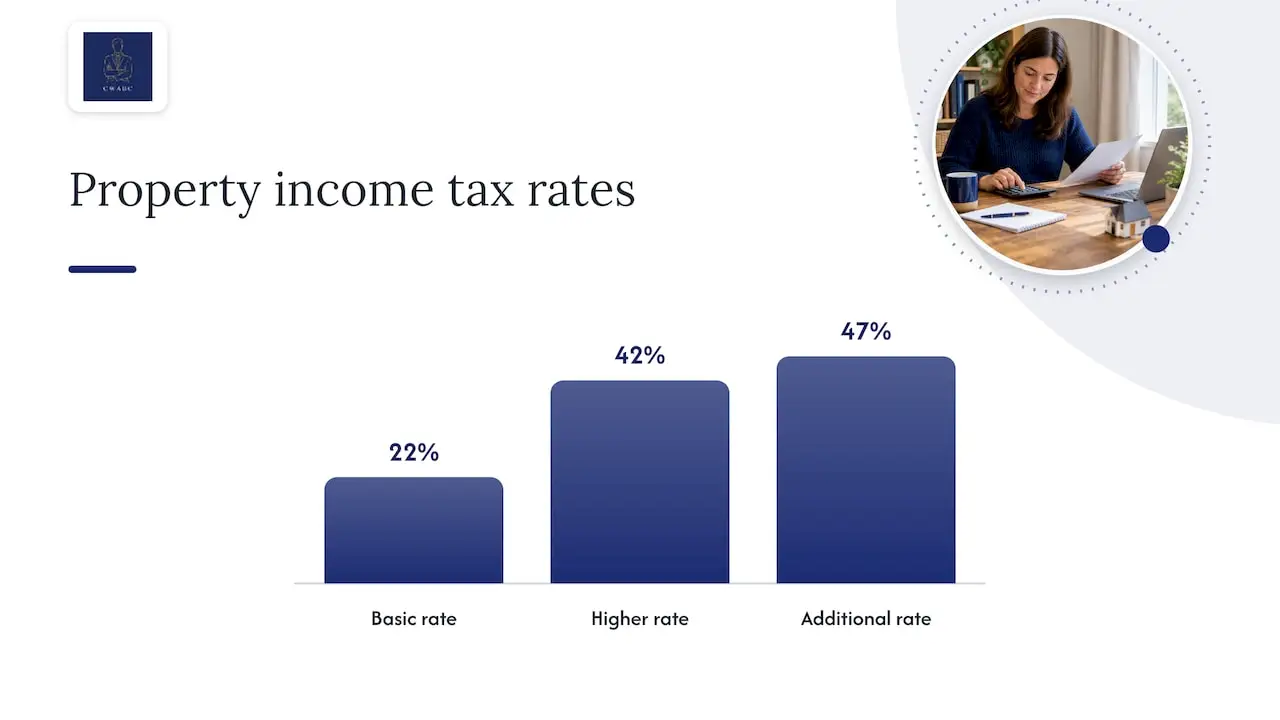
From 6 April 2027, the separate Income Tax rates applying to residential property profits for individual landlords in England, Wales and Northern Ireland are scheduled to increase to 24% for basic-rate taxpayers, 44% for higher-rate taxpayers and 49% for additional-rate taxpayers, subject to the relevant legislation.
The Autumn Budget 2026 announced these further increases alongside changes to the ordering of income and the allocation of reliefs. Landlords should consider how the revised rules affect their overall tax liability, particularly where they receive employment income, self-employment income or pensions alongside rental income.
What this means for you:
-
If you own rental property personally, you are likely to keep less of each pound of rental profit from the 2027/28 tax year, because the rate on that profit rises by two percentage points in each band.
-
The way your allowances are applied can change which income is taxed at which rate, so your total bill is not just a matter of adding two points.
-
Mortgage interest relief, repairs and other allowable expenses remain important when calculating the tax payable on rental income. For individual landlords with residential properties, finance costs are generally subject to a basic-rate tax reduction rather than a direct deduction from rental profits. Accurate records are essential.
I cannot tell you what your bill will be without your numbers, and I will not guess here. But I can show you how to model it.
Landlords and Making Tax Digital
Landlords whose total qualifying trading and property income exceeds £30,000 are required to use Making Tax Digital for Income Tax from 6 April 2027, with the threshold reducing to £20,000 from 6 April 2028. Qualifying income is measured before expenses, rather than by taxable profit. Where a landlord also has self-employment income, the relevant income sources are combined when assessing whether the threshold is exceeded.
I have a dedicated guide to Making Tax Digital for landlords. Quarterly updates for rental property are usually simpler than for a busy trade, because the income and costs are repeated each month. Setting up a clean rental ledger early makes them quick.
Furnished holiday lets
If you let furnished holiday property, the special regime has been abolished. Furnished holiday let income is now treated much like ordinary rental income, and the loss of business status removes capital allowances on new purchases and some capital gains tax reliefs. I have written two practical pieces on this: FHL tax issues after April 2026 and furnished holiday lettings rules.
Other Property Tax Measures and Future Consultations
The Autumn Budget 2026 included changes affecting the taxation of rental income, but landlords should distinguish measures formally announced by the government from speculation about further property tax reforms.
Proposals concerning Capital Gains Tax, National Insurance on rental income and property-related thresholds should not be treated as confirmed changes unless supported by published government documents or legislation.
Before selling, gifting or restructuring a rental property, I recommend reviewing the tax implications using the rules applicable at the time, rather than relying on headlines or speculation.
Limited company directors: dividends and corporation tax
For limited company directors who take dividends, the changes introduced from 6 April 2026 remain important when deciding how to extract profits from a company.
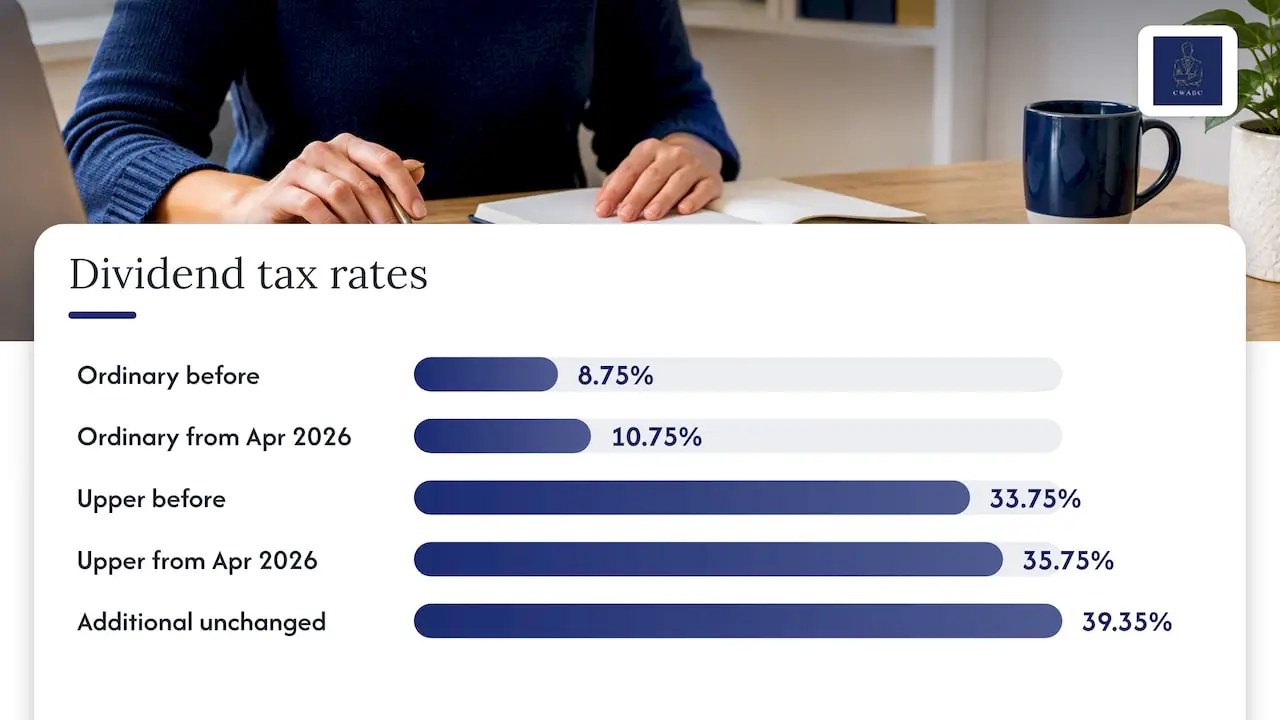
The ordinary dividend tax rate increased from 8.75% to 10.75%, while the upper rate increased from 33.75% to 35.75%. The additional dividend tax rate remained at 39.35%.
These rates should be considered alongside salary, employer National Insurance, Corporation Tax and the director’s wider personal tax position when reviewing remuneration arrangements.
This changes the maths of salary versus dividends, but it does not make a company the wrong choice for everyone. It depends on profit, other income and your plans. If you have not reviewed your remuneration since the changes, now is a sensible time.
Corporation tax
The Autumn Budget 2026 maintained the government’s commitment to the Corporation Tax Roadmap. The main Corporation Tax rate remains at 25%, while the small profits rate remains at 19%. Companies with taxable profits between £50,000 and £250,000 may qualify for marginal relief, although these thresholds can be reduced where there are associated companies.
The Budget also announced changes to capital allowances. The main-rate first-year allowance will increase from 40% to 50% for qualifying expenditure incurred from 1 January 2027. Meanwhile, the main writing-down allowance will reduce from 14% to 12% from 1 April 2027 for Corporation Tax purposes.
For directors considering significant expenditure on equipment or machinery, it is worth reviewing the timing of purchases and the availability of other reliefs, including the Annual Investment Allowance and full expensing, before making investment decisions.
Business Asset Disposal Relief
The Autumn Budget 2026 also announced that the lifetime limit for Business Asset Disposal Relief will reduce from £1 million to £500,000 for qualifying disposals made on or after 6 April 2027. This could affect directors and shareholders considering selling their business or shares. Anyone planning a disposal should review their eligibility, the timing of the transaction and any relevant anti-forestalling provisions before proceeding.
Small employers and VAT-registered businesses
Following the Autumn Budget 2026, small employers and VAT-registered businesses should review the announcements affecting payroll, employment costs and tax administration.
Not every measure takes effect immediately, and some changes require further legislation or consultation. The priority is to identify which announcements affect your business, when they take effect and whether your payroll or accounting software needs updating.
-
Payroll: Review the Budget announcements and HMRC guidance for any changes to employer National Insurance, Employment Allowance, statutory payments and National Minimum Wage rates. Check the relevant commencement dates and ensure your payroll software is updated before the changes take effect.
-
CIS: if you are a contractor or subcontractor, deductions and monthly returns carry on as normal unless the official documents say otherwise. My guides to CIS monthly returns and CIS for subcontractors cover the basics.
-
VAT: if your turnover is growing, keep an eye on the registration threshold. My guide on whether to register for VAT and the VAT return explanation show how to monitor it.
Business rates
The Autumn Budget 2026 announced further business rates support for qualifying retail, hospitality and leisure properties in England from 1 April 2027.
The rateable value threshold for 100% Small Business Rate Relief for qualifying properties in these sectors will increase from £12,000 to £18,000, while the upper threshold for tapered relief will rise from £15,000 to £21,000.
The government also announced an increase in business rates relief for qualifying pubs, social clubs and live music venues from 15% to 35%, alongside a two-year real-terms freeze on bills for qualifying retail, hospitality and leisure properties in 2027/28 and 2028/29.
Eligibility depends on the property, its rateable value and the applicable relief conditions. If you operate from commercial premises, I recommend checking your business rates assessment and the reliefs available through your local council.
My perspective: plan around what is certain
I have spent over 30 years in finance, and Budget week always brings the same pattern. People feel they must react quickly. In my experience of small business owners, the worry is usually bigger than the change.
Here is how I approach it with clients:
-
Start with the confirmed dates. The Autumn Budget 2026 announced changes that will take effect at different times. I recommend identifying which measures apply to you, checking their commencement dates and allowing sufficient time to prepare. Making Tax Digital for Income Tax also has its own implementation timetable.
-
Get the records right first. Almost every tax change, whether a rate, allowance or reporting rule, is easier to handle when your bookkeeping is up to date. That is why I focus on cloud software, bank feeds and digital receipts.
-
Separate announcements from speculation. I focus on measures published in official Budget documents, while recognising that some announcements still require legislation or consultation. Where a proposal is not final, I can explain the potential implications without treating it as established law.
-
Keep it practical. The question is rarely “what did the Chancellor say?” It is “what do I need to do, by when, and what will it cost me?”
Tax rules change, but a tidy set of records and a clear calendar make each change far less stressful.
— Chris
How I can help
I am Chris White, an AAT Licensed Accountant based in Hildenborough near Tonbridge. I work with sole traders, landlords, limited company directors and small employers across Tonbridge, Sevenoaks and Kent, and remotely across the UK.
Where it fits your situation, I can help you:
-
Check which MTD for Income Tax date applies to you and get your software and records ready, through my Making Tax Digital for Income Tax support.
-
Set up and keep your records tidy with my bookkeeping services, including rental reporting for landlords.
-
Prepare and submit your Self Assessment tax return, with a quotation tailored to your individual circumstances and the complexity of your tax affairs.
-
Look at VAT, payroll, CIS, corporation tax and accounts through my accounting services.

Pricing for other services is agreed clearly upfront, based on what you need. Everything I say here is general information, not personal tax advice, and I do not promise any particular outcome.
Your post-Budget checklist
Now that the Autumn Budget 2026 has been delivered, I recommend working through the following checks to identify which announcements affect you and what action, if any, is required.
-
Read the source. Open the Budget 2026 tax documents and find the measures that mention your type of income or business.
-
Sort each measure. Establish whether it is already in force, announced with a future commencement date, subject to legislation or still a consultation. This will help you prioritise the actions that matter now.
-
Check your start date. For each measure, note the tax year it begins and whether it touches your 2026/27 or 2027/28 figures.
-
Test the MTD threshold. Check your combined gross trading and property income against the relevant qualifying income threshold. Income above £30,000 brings taxpayers within MTD for Income Tax from April 2027, while the threshold reduces to £20,000 from April 2028. The relevant income is generally taken from an earlier tax return, so check the applicable assessment year.
-
Choose your software. Pick a package that works with HMRC’s MTD service and connects to your bank. Make sure you are comfortable using it before your first quarter.
-
Review landlord numbers. If you own rental property personally, assess how the announced property income tax rates of 24%, 44% and 49% from April 2027 could affect your rental profits and overall tax liability, taking account of allowable expenditure and other sources of income.
-
Review pay and dividends. Directors should check how the higher dividend rates affect the best mix of salary and dividends.
-
Review equipment plans. Before making a significant purchase, consider the announced increase in the main-rate first-year allowance to 50% from January 2027 and the reduction in the main writing-down allowance to 12% from April 2027. Check which capital allowances are available for the particular expenditure.
-
Put dates in your diary. Quarterly deadlines, payments on account, VAT and payroll dates all deserve a reminder.
-
Ask if unsure. A short conversation now costs less than a penalty later.
If you want to see how a past Budget was handled, my write-up of Autumn Budget 2025 shows the approach I take.
Common mistakes to avoid in Budget week
-
Acting on headlines. A rumour is not a rule. Wait for the official paper.
-
Confusing income with profit. The MTD threshold uses gross income, so a low-profit business can still be in scope.
-
Leaving software until the last minute. Setting up and learning a package takes time, and the government itself advises giving yourself that time.
-
Forgetting payments on account. Higher tax bills feed into your later payments, so understanding payments on account helps your cash flow.
-
Ignoring messy records. Digital records are the base of every tax calculation. If your bookkeeping feels out of control, my piece on signs your bookkeeping needs help may be a useful starting point.
FAQ
When is the Autumn Budget 2026?
The Autumn Budget 2026 was delivered on 28 October 2026. The government’s Budget documents and accompanying tax publications set out the announced measures, their proposed commencement dates and any further legislative or consultation requirements.
What should I do following the Autumn Budget 2026?
Start by identifying which announcements apply to your circumstances and when they take effect. Sole traders and landlords should review their Making Tax Digital obligations, while company directors should consider remuneration, capital allowances and any planned business disposals. Accurate bookkeeping and a clear understanding of future tax liabilities will help you prepare without making unnecessary changes.
Will Making Tax Digital for Income Tax still start in April 2027?
Yes. Under the published timetable, sole traders and landlords with qualifying trading and property income exceeding £30,000 are due to join from 6 April 2027, with the threshold reducing to £20,000 from 6 April 2028. Qualifying income is generally assessed using the relevant earlier tax return, rather than the income earned during the year of entry. Check HMRC’s guidance to establish your own commencement date.
Are landlords going to pay more tax?
The Autumn Budget 2026 announced property income tax rates of 24%, 44% and 49% from 6 April 2027 for individual landlords in England, Wales and Northern Ireland, subject to legislation. The actual impact depends on rental profits, other taxable income, allowable expenses and the allocation of reliefs. I recommend reviewing your individual figures before deciding whether any changes to your property arrangements are appropriate.
Need help?
If you would like to talk through how these changes could affect your own situation, I would be glad to help. You can contact me here and tell me a little about your business, and I will get back to you. I am Chris White, and I keep things plain, practical and free of jargon.
Sources
-
Autumn Budget 2026: Background briefing, House of Commons Library (PDF)
-
Autumn Budget 2026: Background briefing, House of Commons Library
-
Sole traders and landlords earning more than £30,000 urged to act now, GOV.UK
-
Making Tax Digital for Income Tax Self Assessment for sole traders and landlords, GOV.UK
-
Changes to tax rates for property, savings and dividend income, GOV.UK
-
Backing your business: our plan for small and medium sized businesses, GOV.UK
-
Confirmation of Budget package and the non-domestic rating multipliers for 2026/27, GOV.UK
Recommended
-
UK Landlords: 5 Actions to Fix FHL Tax Issues After April 2026, AAT
-
Sole Traders: 20% of Transition Profit May Hit Your 2026/27 Tax Bill
This article provides general information based on UK tax and accounting rules at the time of publication. It is not a substitute for advice tailored to your individual circumstances. Tax legislation and HMRC guidance may change. If you need advice about your specific situation, please contact me at CW Licensed Bookkeeper & Accountant.