You can usually earn up to £1,000 in gross side income in a tax year without paying Income Tax on it, provided that income qualifies as trading or miscellaneous income. This £1,000 covers your total receipts across every side hustle combined, not £1,000 per activity. The tax year runs from 6 April to 5 April, and once your gross receipts pass £1,000 you’ll normally need to register for Self Assessment.
TL;DR:
- Earnings from casual or small-scale activities like babysitting, tutoring, or reselling goods typically qualify for the £1,000 tax-free trading allowance, based on gross receipts before expenses.
- If total gross receipts exceed £1,000, you must register for Self Assessment by October 5 following the tax year and report the income by January 31.
- Claiming the £1,000 allowance is advantageous when your actual allowable expenses are below £1,000, but if expenses are higher, calculating profit normally might be more beneficial.
- Selling personal belongings for no profit usually does not count as trading income, unless high-value items trigger Capital Gains Tax.
- Digital platforms may report seller data to HMRC, but that does not determine your tax liability, which depends on your actual gross receipts and activity classification.
Table of Contents
- Who qualifies and what counts as trading income
- How full relief and partial relief actually work
- When you must tell HMRC and key filing deadlines
- Selling personal possessions versus trading: telling the difference
- Record keeping and what platform reporting actually means
- Reasons the trading allowance might not suit you
- A worked example: two side hustles, one allowance
- Common mistakes I see with side income
- How I can help with side income and Self Assessment
- Sources
- FAQ
- Need help?
Who qualifies and what counts as trading income
The trading allowance applies to individuals with self-employment income or casual, one-off earnings that HMRC treats as trading or miscellaneous income. It’s designed for people doing small amounts of work or selling alongside a main job, benefits claim, or retirement.
Common qualifying activities include:
- Casual services such as babysitting, gardening, dog walking or tutoring
- Self-employment as a sole trader, even on a small scale
- Hiring out equipment, a spare room or personal items
- Buying or making goods specifically to resell for a profit
What counts towards your £1,000 is gross receipts, meaning everything you’re paid before any costs come out. That includes cash, card payments, money through platforms like Vinted or Etsy, and even payment in kind such as goods or services received instead of money. Platform fees, postage and materials don’t reduce this figure. You add them up first, then work out relief afterwards.
Two things sit outside this: selling your own unwanted possessions is usually not trading at all, which I’ll come back to shortly, and income from a connected party, such as a family member’s business, or from a partnership, does not qualify for the allowance.
How full relief and partial relief actually work
If your total gross receipts from trading and miscellaneous income are £1,000 or less in the tax year, you get full relief. That income is treated as nil for Income Tax purposes, and in many cases you won’t need to report it at all.
Statistic callout: The trading allowance has applied to UK trading and miscellaneous income since 6 April 2017, giving individuals a standard £1,000 threshold before reporting obligations typically begin. That’s nearly a decade of the same threshold, so it’s worth checking GOV.UK directly rather than relying on older forum posts or outdated blog advice.
Once your receipts go above £1,000, you have a choice to make:
- Claim the £1,000 trading allowance as a deduction from your gross receipts, rather than deducting your actual expenses.
- Deduct your genuine allowable expenses instead and pay tax on the profit that’s left.
You cannot do both for the same income. You either use the flat £1,000 deduction or your real costs, never a mix of the two, and the allowance can never be used to create or increase a loss.
A simple rule of thumb helps here: if your allowable expenses come to less than £1,000, the allowance usually gives you a better result because you’re deducting more than your costs actually were. If your expenses are higher than £1,000, or higher than your income altogether, working things out under the normal profit calculation is likely to serve you better, particularly if you want to preserve a loss to carry forward. My guide to allowable expenses for sole traders walks through what typically counts.
One more point worth flagging: profits above the allowance can trigger Class 2 or Class 4 National Insurance liabilities depending on the amount, alongside Income Tax, so the decision isn’t purely about the tax bill.
When you must tell HMRC and key filing deadlines
If your total gross trading receipts for the tax year exceed £1,000, you’ll normally need to register for Self Assessment by 5 October following the end of that tax year. My step-by-step registration guide covers exactly how to do this online.
Once you’re registered, the key dates to keep in your calendar are:
- Online Self Assessment returns and any tax owed are due by 31 January following the end of the tax year
- Registration for Self Assessment is due by 5 October following the tax year in which you went over the threshold
- Even under £1,000, you may still need to tell HMRC in specific cases, such as connected-party income or if you want to pay voluntary Class 2 National Insurance to protect your benefit entitlement
It’s worth separating two different things here: your reporting obligation and your actual tax liability. You can be required to tell HMRC about income even when no tax ends up being due on it, particularly where HMRC needs to confirm your circumstances or where you’re claiming certain benefits. Don’t assume silence from HMRC means you’re in the clear if your receipts have crept over £1,000.
Selling personal possessions versus trading: telling the difference
This trips a lot of people up, especially with online selling. Clearing out a wardrobe is usually very different, tax-wise, from running a resale business, even if both happen on the same app.
Signs that point towards trading include:
- Buying items specifically with the intention of reselling them at a profit
- Making goods yourself to sell, such as crafts, baked goods or artwork
- Advertising services or goods repeatedly and regularly
- Operating with the regularity and organisation of a small business, even a modest one
Signs that point away from trading:
- A one-off clear-out of clothes, books or furniture you’ve genuinely owned and used
- Selling personal belongings with no profit motive, just to declutter
For most people, selling unwanted personal items isn’t trading income at all. The exception is very high-value items, where Capital Gains Tax rules might apply instead, so it’s worth checking the specific rules if you’re selling something valuable like jewellery, art or a valuable collection.
Record keeping and what platform reporting actually means
Even if you never expect to owe tax, keeping basic records protects you if HMRC ever asks questions.
At minimum, keep a note of:
- The date of each sale or job and the gross amount received
- Any platform or transaction fees deducted before the money reached you
- Refunds or returns, so your totals stay accurate
- A brief description of what was sold or the service provided
Pro Tip: Reconcile your platform statements to the tax year rather than the calendar year, and always work from the gross figure before fees, since some platforms only show you the net amount you actually received.
Digital platforms including online marketplaces are required to report seller data to HMRC in certain circumstances. That reporting on its own does not create a tax bill. Whether tax is due depends on whether your activity is trading, and on your own gross receipts once you’ve reconciled them properly, not on the fact that a platform has shared data with HMRC.
Reasons the trading allowance might not suit you
The allowance is optional, and there are cases where claiming it works against you.
- Income from a connected party or a partnership cannot use the trading allowance at all
- If your allowable expenses are higher than your receipts, using the allowance instead would waste the chance to record a loss you could otherwise carry forward
- Trades involving capital allowances, or income reported under the Construction Industry Scheme, may need specific entries elsewhere on your return rather than a simple allowance claim
- Choosing the allowance instead of paying Class 2 National Insurance voluntarily could affect your entitlement to certain contributory benefits later on
If any of this applies to you, it’s worth running the numbers both ways, or getting a second opinion, before you file.
A worked example: two side hustles, one allowance
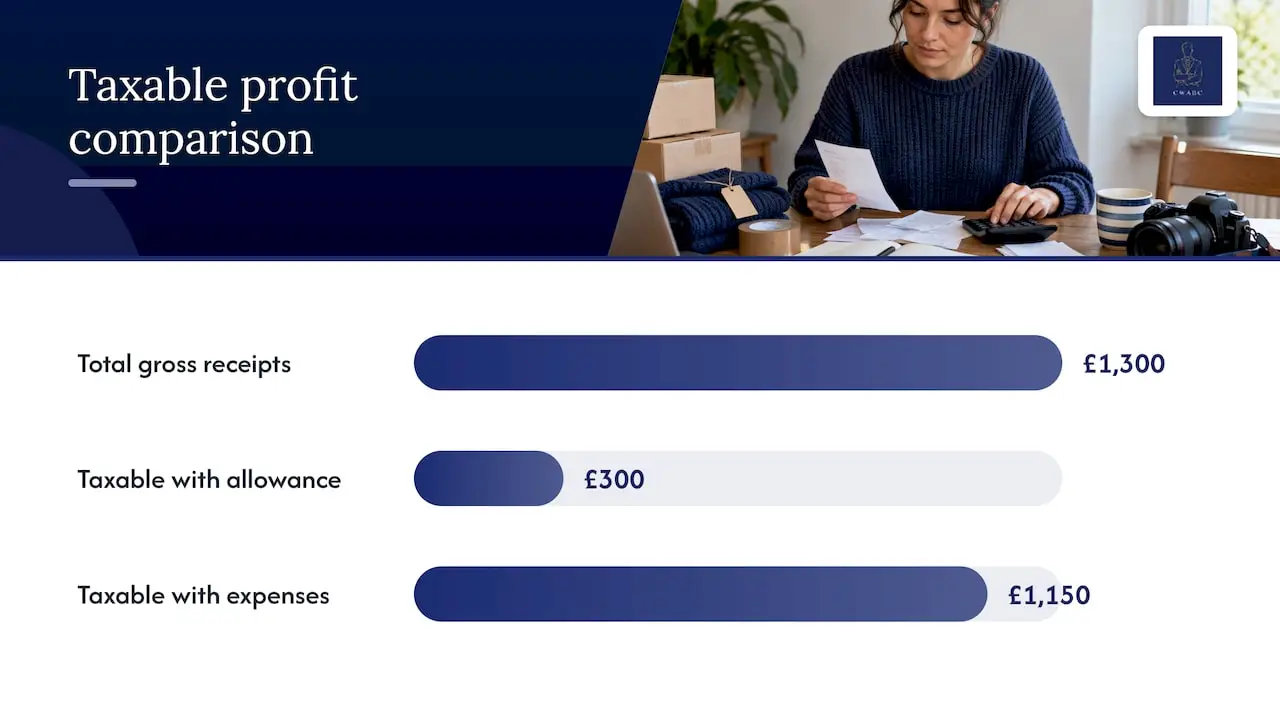
Say you earn £600 gross from weekend dog walking and £700 gross from selling handmade candles. Added together, that’s £1,300 in total gross receipts for the tax year, comfortably over the £1,000 threshold, even though neither activity alone crosses it.
- Option A, the trading allowance: deduct £1,000 from £1,300, leaving £300 of taxable profit.
- Option B, actual expenses: say your real costs were candle wax, wicks and dog treats totalling £150. Deduct that from £1,300, leaving £1,150 of taxable profit.
Statistic callout: On these figures, claiming the £1,000 trading allowance instead of actual expenses cuts taxable profit from £1,150 to £300, a difference of £850. In this example, the allowance clearly wins, because your genuine costs were well under £1,000.
You’d enter your total gross receipts and the £1,000 allowance claim on the self-employment short pages of your Self Assessment return, in the boxes set aside for the trading allowance rather than for individual expense categories.
Common mistakes I see with side income
The mistake I see most often is people totalling up net payments from a platform instead of gross receipts, which understates their income and their allowance decision. A close second is treating each side hustle as having its own separate £1,000 allowance, which simply isn’t how it works.
A simple weekly habit avoids most of this: log every payment and fee as it happens, reconcile monthly against your bank or platform account, then check your running total against £1,000 well before the tax year ends. If you’ve got several income streams, a loss-making trade, CIS involvement, or you’re just unsure, that’s the point to get proper advice rather than guess.
— Chris
How I can help with side income and Self Assessment
Working out whether you’re over £1,000, and whether the allowance or actual expenses give you a better result, is exactly the kind of decision I help clients with regularly. I offer Self Assessment Tax Returns with clear upfront pricing, covering registration guidance, the calculation itself, and getting your return filed on time.
If your side income has grown into something more regular, I also provide ongoing bookkeeping services to keep your records organised and ready for HMRC year-round, so you’re never scrambling at the January deadline. Get in touch through my Self Assessment page to talk through your situation and what it would take to get sorted.
Sources
This article is general information, not a substitute for advice from a qualified financial advisor. Consult a qualified financial professional about your own circumstances before acting on anything here.
FAQ
How does the £1,000 trading allowance work?
It lets you earn up to £1,000 in gross receipts from trading or miscellaneous income in a tax year without paying Income Tax on it. This total covers all your side activities combined, not each one separately, and runs from 6 April to 5 April.
Can I earn £1,000 tax-free from my side hustle?
Yes, as long as your total gross receipts across all your side hustles stay at or below £1,000 in the tax year. Go even slightly over that combined figure and you’ll usually need to register for Self Assessment and work out your tax position properly.
What is the trading allowance and how does it differ from other allowances?
The trading allowance is separate from your Personal Allowance, which covers your overall Income Tax-free amount each year, and from the property allowance, which applies specifically to rental income rather than trading. You cannot claim the trading allowance and expenses on the same self-employment income, though the Personal Allowance and property allowance work independently alongside it.
Will HMRC know about my side hustle?
Digital platforms can be required to report certain seller data to HMRC, but that reporting does not automatically create a tax bill. Whether you owe anything depends on your actual gross receipts and whether the activity counts as trading, so keeping your own records matters more than worrying about platform data alone.
Need help?
If you’re unsure whether your side income counts as trading, whether you’re over the £1,000 threshold, or which option gives you the better result, I’m happy to talk it through. Get in touch via my contact page and I’ll help you work out exactly where you stand.