
A rental bookkeeping system does far more than tidy up your spreadsheets. It records gross rent and every deductible expense, keeps digital records ready for Making Tax Digital, reconciles what your letting agent actually paid you against what hit your bank, and tells you which property is genuinely making money. Get this right and your tax return writes itself; get it wrong and HMRC queries become a real risk.
TL;DR:
- Accurate reconciliation requires splitting agent fees and mortgage interest directly from bank statements to avoid misreporting rental income and expenses.
- Landlords earning over £50,000 must adopt MTD-compatible software starting April 2026, with thresholds lowering to £30,000 in 2027 and £20,000 in 2028.
- Consistently tagging transactions by property and setting up bank rules for recurring payments significantly reduces year-end workload and minimizes errors.
- Bookkeeping should be a monthly routine to produce accurate, actionable reports on cash flow, profitability, and tax position, rather than an annual afterthought.
- Correct categorization of expenses protects against HMRC queries and helps identify the most profitable properties and effective investment decisions.
Table of Contents
- What a rental bookkeeping system actually does
- Core records and categories landlords must track
- Reconciliation challenges landlords face and how a system helps
- Making Tax Digital and compliance: what landlords need to know
- Spreadsheets, cloud accounting and property software: what actually fits
- A practical monthly-to-annual bookkeeping checklist
- How good bookkeeping supports tax accuracy and property profitability
- Common bookkeeping mistakes and red flags to fix
- How I support landlords with bookkeeping and MTD
- Three small changes that cut your year-end workload
- How I can help with bookkeeping and MTD-ready setups
- Authoritative pages worth checking directly
- Sources
What a rental bookkeeping system actually does
Most landlords think of bookkeeping as an annual chore: gather the bank statements, hand them to an accountant, hope for the best. That approach misses the point entirely. A proper system works continuously, capturing every transaction as it happens rather than reconstructing a year’s activity from memory in January.
At its core, the system does four jobs:
- Captures transactions from bank feeds or manual entry and sorts them into the right category the moment they arrive.
- Tags everything by property, so a landlord with three flats can see each one’s income and costs separately, not blended into one confusing total.
- Handles liabilities correctly, treating tenant deposits, agent deductions and adjustments as what they are, not as extra income.
- Produces reports that show cash flow, tax position and profitability whenever you need them, not just once a year.
That last point matters more than most landlords realise. A system that only exists to feed a tax return is doing half the job. The same records should tell you whether a rent increase makes sense, whether a boiler replacement was worth it, and whether one property is quietly dragging down your overall return.
This is where the phrase “rental accounting” earns its place alongside bookkeeping. Bookkeeping is the recording; accounting is what you do with those records once they’re accurate. Both depend entirely on the quality of what goes in day to day.
Core records and categories landlords must track
HMRC expects landlords to keep records of rent received and expenses paid, and the SA105 notes set out exactly which figures go in which box on your Self Assessment return. Getting the categorisation right at source saves hours of guesswork later.
The essential categories are:
- Gross rent received, not the net figure your agent transfers after their fee. Record the full rent as income and the agent’s cut as a separate expense.
- Revenue expenses: repairs, insurance, utilities you pay on the tenant’s behalf, ground rent, service charges and management fees. Keep the invoice or receipt for each one.
- Finance costs: mortgage interest split out from the capital repayment portion of each payment, since only the interest element has any tax relevance.
- Capital expenditure: anything that improves or adds to the property rather than simply maintaining it, which affects Capital Gains Tax later rather than your annual rental profit.
- Deposits: held on trust, not income, and must never appear on your profit and loss.
HMRC’s guidance on working out rental income confirms that rent books, receipts, invoices and bank statements all count as acceptable records, and that landlords with property income up to £150,000 can generally use the cash basis rather than traditional accounting.
Pro Tip: Name your digital files consistently, something like “2026-03-Repairs-FlatA-BoilerService”, and store them by tax year and property. When HMRC asks for evidence, you want to find it in seconds, not scroll through months of email attachments.
Reconciliation challenges landlords face and how a system helps
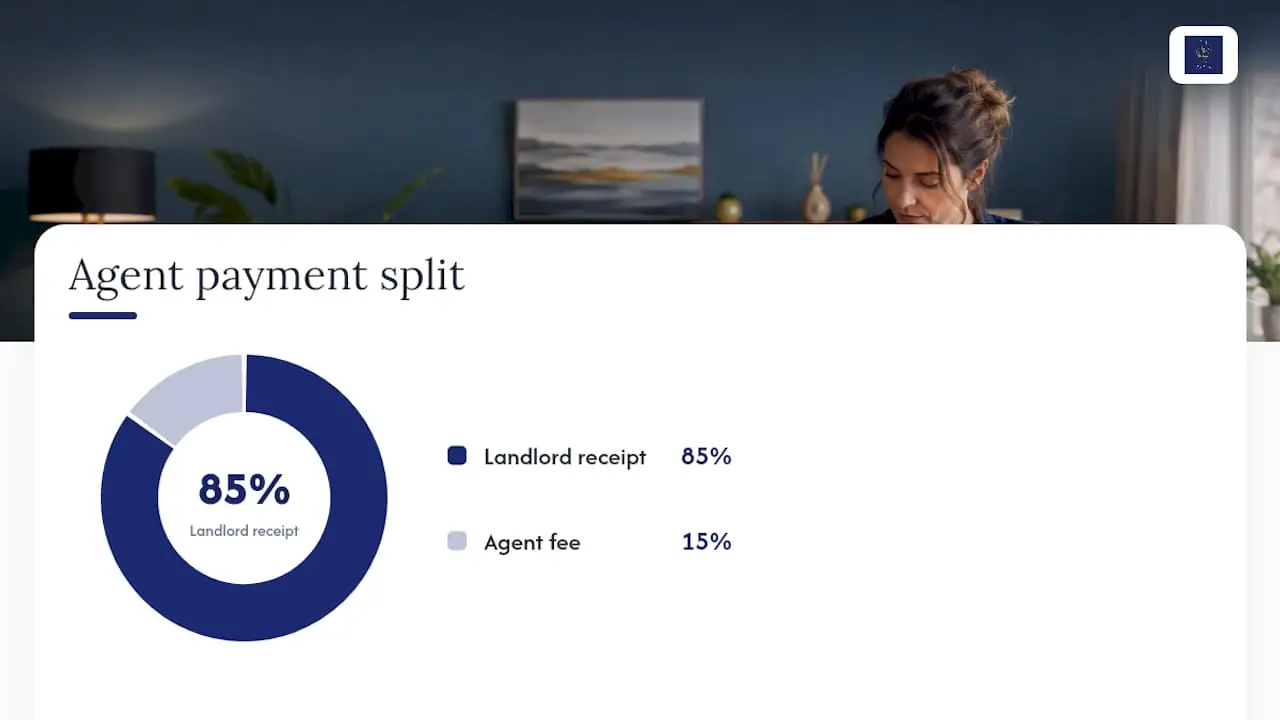
Bank statements lie to you, not deliberately, but by omission. A payment from your letting agent might show £850 when the tenant actually paid £1,000 rent and the agent kept £150 in fees. Your mortgage direct debit blends interest and capital into one number. Deposits sit in your current account looking exactly like income.
A property accounting reconciliation guide highlights these exact traps, and a decent bookkeeping workflow deals with each one directly:
- Match every agent statement to the bank entry, then split it into gross rent income and a separate agent-fee expense line.
- Split each mortgage payment using your lender’s annual certificate or monthly schedule, so interest and capital are recorded as two different figures.
- Post deposits to a liability account, never to income, and only move them to rental income if you legitimately retain part of one for damage.
- Set up bank rules and recurring templates for regular payments like insurance and service charges, then let the system flag anything unusual for manual review.
Do this monthly and reconciliation takes minutes. Leave it until April and you’ll be reconstructing a year of guesswork from memory.
Making Tax Digital and compliance: what landlords need to know
Making Tax Digital for Income Tax changes how landlords keep records, not just how they file. From April 2026, landlords and sole traders with qualifying income over £50,000 must use MTD-compatible software. That threshold drops to £30,000 from April 2027 and £20,000 from April 2028, pulling in a much larger share of small-scale landlords over time.
The numbers to know: MTD applies to landlords earning over £50,000 from April 2026, over £30,000 from April 2027, and over £20,000 from April 2028, based on GOV.UK’s staged mandation guidance.
Under MTD, you must keep digital records and send quarterly updates to HMRC through compatible software, plus a final declaration and payment by 31 January. HMRC does not provide the software itself, so landlords need either cloud accounting or a bridging tool that pulls data from a spreadsheet into an MTD-compliant format.
Practical steps to take now:
- Check your qualifying income against the current thresholds, since this is based on gross rental turnover, not profit.
- Sign up for MTD for Income Tax ahead of your mandation date rather than waiting until the deadline looms.
- If you use a letting agent, decide whether you or your accountant will need authorised access to file on your behalf.
Read more in my guide to Making Tax Digital for landlords for the sign-up process in detail.
Spreadsheets, cloud accounting and property software: what actually fits
There’s no single right answer here, and I’d be doing you a disservice pretending otherwise. It depends on how many properties you have, how comfortable you are with formulas, and how much time you want to spend on admin.
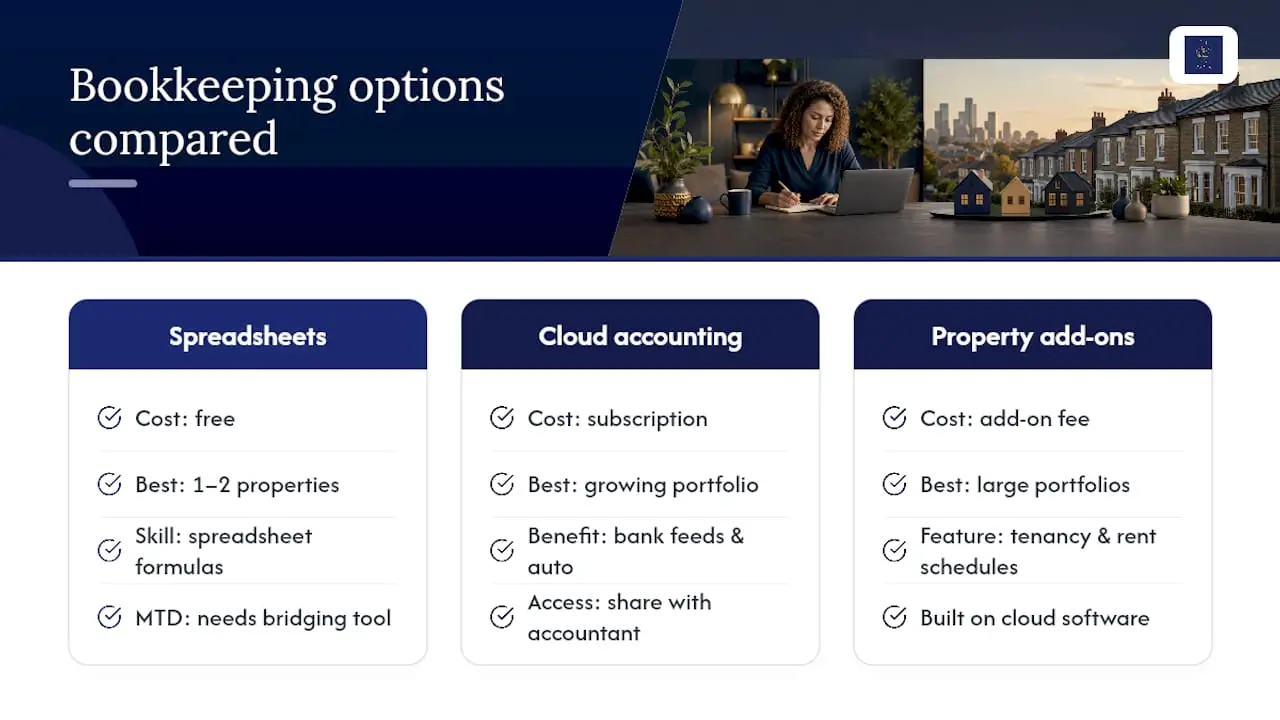
Spreadsheets cost nothing beyond your time and work fine for a landlord with one or two properties and simple transactions. The catch: under MTD, a spreadsheet alone won’t cut it. You’ll need bridging software to submit quarterly updates, which adds a step most landlords underestimate.
Cloud accounting brings bank feeds, automated categorisation and the ability to give an accountant or letting agent shared access. It also produces the per-property reports that a spreadsheet struggles to generate cleanly once you’re juggling more than one address.
Property-specific add-ons sit on top of cloud accounting for larger portfolios, adding tenancy tracking, rent schedules and portfolio-wide reporting that generic accounting software doesn’t offer out of the box.
Sensible combinations exist too: a simple spreadsheet feeding a bridging tool for one rental, or cloud software with property tags for a growing portfolio. My comparison of landlord bookkeeping systems walks through which setup suits which situation, and my notes on moving from Excel to cloud accounting cover the practical migration steps if you decide it’s time to switch.
A practical monthly-to-annual bookkeeping checklist
Consistency beats intensity. A landlord who spends twenty minutes a month stays far ahead of one who spends a frantic weekend every March.
- Monthly: reconcile the bank feed, match agent statements to bank entries, tag each transaction to the right property, code invoices to the correct category, and split that month’s mortgage payment into interest and capital.
- Quarterly: if you’re within MTD, prepare and submit your quarterly update; review cash flow against your expectations; clear any unmatched or flagged transactions before they pile up.
- Year-end: produce a profit and loss for each property, gather your supporting documents for the SA105 pages, and double-check that nothing capital has been coded as revenue by mistake.
Pro Tip: Block out a fixed slot each month, the first Saturday morning works for many landlords, purely for reconciliation. Treating it as a routine rather than an emergency is the single biggest difference between landlords who dread January and those who don’t.
Consistent file naming and cloud storage, as covered earlier, make the year-end stage far quicker since nothing needs to be hunted down.
How good bookkeeping supports tax accuracy and property profitability
Correct categorisation isn’t just tidy, it’s protective. Miscoding a capital improvement as a repair, or forgetting to split mortgage interest, increases your chance of an HMRC query and potentially a penalty for an incorrect return.
Beyond compliance, accurate records answer the questions that actually affect your income:
- Which property delivers the best yield once repairs and finance costs are accounted for, not just the headline rent?
- Is a planned kitchen refurbishment likely to pay for itself through a higher achievable rent?
- Can you absorb a void period on one property without straining cash flow across the whole portfolio?
Reports worth running regularly include a per-property profit and loss, a cash-flow forecast covering the next three to six months, and a simple summary of upcoming finance cost changes if you’re on a variable-rate mortgage. None of these are complicated to produce once your underlying records are clean, and each one turns bookkeeping from a compliance task into a genuine decision-making tool.
Common bookkeeping mistakes and red flags to fix
A few errors show up again and again across landlord accounts, and each one is fixable within a single afternoon.
- Deposits recorded as income: move them to a liability account immediately and adjust prior entries if needed.
- One bank account, no property tags: start tagging from today’s date forward rather than trying to unpick history, then tidy the backlog when you have time.
- Mortgage payments left unsplit: request your lender’s annual interest certificate and apply it retrospectively to correct the figures.
- Reconciliation left until year-end: switch to monthly reconciliation, even ten minutes a month prevents the scramble later.
How I support landlords with bookkeeping and MTD
I set up property-level bookkeeping systems for landlords to help keep records accurate and organised. This typically includes configuring cloud accounting software with bank feeds and property tags, creating bank rules for recurring transactions like insurance and mortgage payments, and establishing a monthly reconciliation routine to keep records ready for tax filing without becoming a burden.
For landlords who fall within MTD’s scope, support can include sign-up, quarterly updates and the year-end submission to help keep everything on track. The result is straightforward: clean per-property reports, fewer surprises when your tax bill lands, and a filing process that doesn’t eat your evenings. Full details sit in my landlord bookkeeping guide.
Three small changes that cut your year-end workload
Most landlords overcomplicate this. In my experience reviewing property accounts, three changes make more difference than any software switch.
First, set up bank rules for every recurring transaction, insurance, mortgage, service charges, so they categorise themselves. Second, insist your letting agent sends gross rent statements, not just the net transfer, so you’re not reconstructing figures every quarter. Third, tag every single transaction to a property the moment it happens, never in a batch later.
Each change takes an hour to set up and saves days at year-end. Pick one and try it this month; the other two follow naturally once you see the difference.
— Chris
How I can help with bookkeeping and MTD-ready setups
Setting up a rental bookkeeping system properly, once, saves you from reconstructing a year of transactions every January. Services include system-led bookkeeping tailored to rental properties, MTD for Income Tax setup and ongoing submissions, Self Assessment preparation, and per-property profitability reporting.

Engagements can begin with organising existing records, setting up bank feeds, property tags and recurring rules to streamline future bookkeeping. This is followed by regular reports and submissions prepared for tax authorities. If you’re weighing up whether your current setup needs an overhaul, my guide on signs your bookkeeping needs professional help is worth a read first.
Get in touch through my contact page and tell me a bit about your portfolio and current setup. If you’re also looking to enhance your property marketing, consider partnering with a specialist like the Property & Real Estate Marketing Agency | AMW Media for expert services. I’ll respond with a clear view of what’s involved and how the pricing works, agreed upfront before anything starts.
Authoritative pages worth checking directly
For the rules behind everything covered here, go straight to the source. GOV.UK’s Making Tax Digital for Income Tax guidance confirms the current thresholds and sign-up dates. The step-by-step MTD collection explains what compliant software must do. And the official SA105 notes set out exactly how property income and expenses translate onto your tax return.
Need help? If you’d rather have a professional set up and run your rental bookkeeping system properly, get in touch with me here and I’ll talk you through what’s involved for your situation.
Sources
- Income tax when you rent out a property: working out your rental income
- Property accounting reconciliation guide for landlords
- SA105 notes for UK property tax return (official HMRC guidance)