
The furnished holiday lettings regime ended for Corporation Tax on 1 April 2025 and for Income Tax and Capital Gains Tax on 6 April 2025. From those dates, former FHL income is taxed under the normal property business rules, losing the special reliefs that once made holiday letting more attractive than a standard rental. The immediate action for most landlords is to check capital allowances pool balances as at 5 April 2025 and prepare to report on the standard UK property pages for the 2025/26 tax year.
TL;DR:
- Capital allowances on fixtures and equipment can only be claimed for pools that existed before 5 April 2025, with no new additions allowed after that date.
- Mortgage interest relief is now limited to a basic-rate tax credit, reducing the cash benefit for high-borrowing landlords.
- Most CGT reliefs are unavailable on disposals of former FHL properties after April 2025 unless the letting business officially ceased before the operative date.
- All former FHL income must now be reported on the standard UK property pages, SA105, alongside other rental income, beginning with the 2025/26 tax return.
- Landlords with contracts signed close to the transition dates or uncertain cessation must review anti-forestalling rules and seek professional advice before filing.
Table of Contents
- Furnished holiday let tax rules after April 2025: before and after comparison
- How income, finance costs and capital allowances now work
- Capital gains reliefs: what’s lost and the narrow exceptions
- Your transitional checklist before filing 2025/26
- What changes in your bookkeeping and Self Assessment filing
- Where landlords get this wrong, and when to ask for help
- How I can help with your transitional filing
- Authoritative primary sources
- Sources
- FAQ
Furnished holiday let tax rules after April 2025: before and after comparison
If you ran a qualifying holiday let before 6 April 2025, four tax advantages applied that don’t apply anymore. Seeing them side by side makes the scale of the change clearer.
- Full mortgage interest relief against profits. Now restricted to a basic-rate tax credit, the same as any other residential landlord.
- Capital allowances on furniture, equipment and fixtures. Existing pools can still claim writing-down allowances, but nothing new can be added to them.
- CGT reliefs including Business Asset Disposal Relief, rollover relief and gift relief. These are now largely unavailable on disposals of former FHL property.
- Profits counted as earnings for pension contribution purposes. That link has gone, which affects how much you can pay into a pension based on letting profits.
Nothing changes for VAT, council tax, business rates or local planning and licensing rules. Those sit outside tax law entirely and continue exactly as before, so a property still liable for business rates under the holiday-let criteria stays that way regardless of the FHL abolition.
A quick illustration: a higher-rate taxpayer with £15,000 of mortgage interest on a holiday let used to deduct the full amount from rental profit. That’s a real cash difference for anyone carrying significant borrowing on a holiday property.
How income, finance costs and capital allowances now work
Former FHL profits or losses now sit inside your ordinary UK (or overseas) property business, reported alongside any other rental income you have. HMRC’s guidance confirms that the income itself hasn’t disappeared. It’s simply been folded into the same pot as a standard buy-to-let.
Finance costs work differently now. You can no longer deduct mortgage interest in full when calculating property profit. Instead, individuals get a basic-rate tax credit against the tax bill, exactly as with any other residential letting.
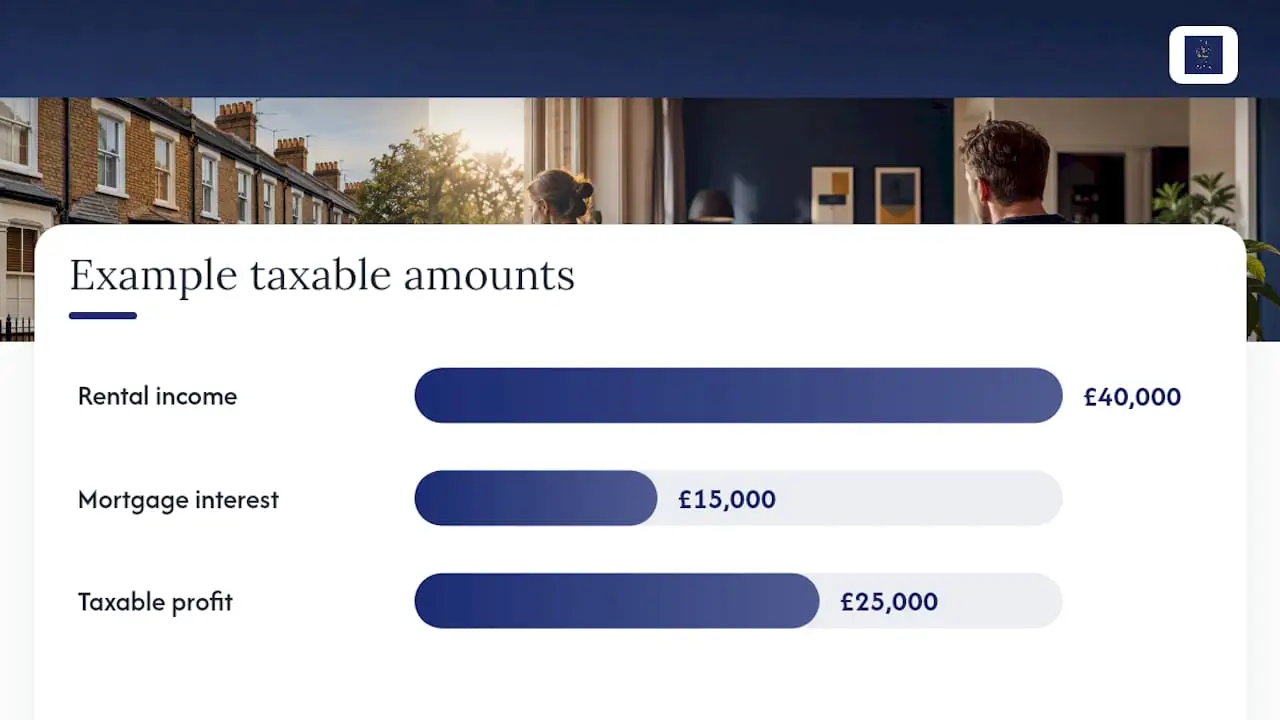
Here’s a simplified example: a landlord with £40,000 in rental income and £15,000 in mortgage interest used to deduct the interest first, leaving £25,000 taxable.
Capital allowances follow transitional rules rather than a clean cut-off:
- Pools that existed on 5 April 2025 continue to attract writing-down allowances going forward.
- No new expenditure on fixtures or equipment can be added to those pools after that date.
- Replacement of domestic items relief, the standard mechanism other landlords use for replacing carpets, appliances and furniture, now applies instead.
Pensionable earnings are affected too. Former FHL profits no longer count as relevant UK earnings for pension contribution purposes, which matters if you’ve been using letting profits to justify higher pension contributions.
Pro Tip: Pull a full capital allowances pool reconciliation now, while invoices and purchase records are easy to find. HMRC can query carried-forward claims years later, and reconstructing evidence after the event is far harder than filing it properly today.
Capital gains reliefs: what’s lost and the narrow exceptions
Business Asset Disposal Relief, rollover relief and gift relief are generally unavailable on disposals of former FHL property made on or after 6 April 2025 for individuals, or 1 April 2025 for companies.
There is one narrow exception worth knowing about. If the holiday letting business actually ceased before the operative date, certain CGT claims may still be possible within the usual three-year window that applies to cessation of a business. Proving actual cessation is fact-sensitive, and HMRC will expect objective evidence such as marketing withdrawal dates, a formal booking cut-off, or accounts showing the business had stopped trading, not just a decision made after the fact.
Anti-forestalling rules add another layer of risk:
- If you entered an unconditional contract before 6 April 2025 but completion happens on or after that date, HMRC can still examine the arrangement.
- Claims for rollover relief, BADR or gift relief can be refused if the main purpose of the arrangement was to lock in reliefs that would otherwise have expired.
- Transactions between connected persons attract closer scrutiny under this test than genuine arm’s-length sales.
Anyone with a sale or contract straddling these dates should get that reviewed before relying on any pre-abolition relief.
Your transitional checklist before filing 2025/26
Getting the transitional detail right now saves a much harder conversation with HMRC later. Work through these steps before your 2025/26 return is due:
- Reconcile capital allowances pools as they stood on 5 April 2025. Keep invoices, purchase records and pool worksheets together, ideally in one dated folder.
- Review any contracts or disposals signed close to the operative dates for anti-forestalling exposure, particularly where completion fell after 6 April 2025 but the contract was agreed earlier.
- Document unrelieved losses from the FHL business at 5 April 2025. UK losses carry forward against your ongoing UK property business profits, while EEA losses carry forward against overseas property income specifically, so keep the two separate in your records.
- Check accounting period straddling if you operate through a limited company. A period that runs across 1 April 2025 needs splitting for Corporation Tax purposes, with FHL rules applying only to the portion before that date.
- Get a second opinion on anything involving a sale, an unclear cessation date, or overlapping accounting periods, before you commit figures to a return.
Pro Tip: Don’t rely on memory for pool balances going back several years. If your bookkeeping has gaps, now is the moment to reconstruct the numbers properly using your property income tax return records, rather than guessing when HMRC eventually asks.
What changes in your bookkeeping and Self Assessment filing
The separate FHL section on the Self Assessment return has gone. From 2025/26 onward, former FHL income sits on the standard UK property pages, SA105, combined with any other rental income you hold. If your holiday let sits overseas, the equivalent overseas property pages apply instead.
Practically, that means amalgamating profit and loss figures across all your properties rather than ring-fencing the former holiday let separately, unless you want to keep management-level detail in your own records for your own clarity.
In your bookkeeping software, whether that’s Xero, QuickBooks or FreeAgent, a few adjustments help:
- Stop coding new furniture and equipment purchases to a capital allowances nominal. Route them instead to a replacement of domestic items expense category.
- Keep a separate reference or tag on transactions relating to the pre-5 April 2025 capital allowances pool, so a reconciliation is quick to pull together.
- Retain invoices and records for at least the standard six-year period HMRC expects for property records, longer if a pool claim is still running.
The 2025/26 tax year is the first one fully affected by this change, with the return due by 31 January 2027. If you’ve been used to a separate FHL box, that’s the year the habit needs to break. My rental income tax guide covers how combined property income generally gets reported if you want the fuller picture.
Where landlords get this wrong, and when to ask for help
The most common mistake I see brewing is landlords assuming the FHL rules still apply because the property hasn’t changed, only the tax treatment has. That leads to income reported on the wrong pages, capital allowances claimed on new purchases that no longer qualify, or CGT reliefs claimed on a sale that falls foul of the anti-forestalling test.
The second common error is losing the paper trail. A capital allowances pool claimed years from now with no invoices behind it is a difficult position to defend if HMRC asks questions.
As an AAT-licensed accountant who works with landlords on exactly this kind of transition, my advice is straightforward: if your situation involves a disposal, a contract signed close to either operative date, or an unclear cessation of the letting business, get it checked before you file rather than after.
— Chris
How I can help with your transitional filing
Sorting out a former FHL property under the new rules usually comes down to getting the paperwork straight, not wrestling with the tax law itself, and that’s exactly where a second pair of hands earns its keep. I offer Self Assessment tax returns from £250 one-off, which covers landlords needing their 2025/26 return prepared correctly against the new property business rules.

Beyond the return itself, I provide rental reporting and bookkeeping support, capital gains tax guidance for anyone with a disposal near the operative dates, and Making Tax Digital for Income Tax setup for landlords getting their digital records in order ahead of that requirement. A typical engagement starts with a quick document check covering your capital allowances pools, contracts and existing bookkeeping, followed by a clear quote and an agreed set of deliverables, so you know exactly what you’re paying for before any work begins. If your bookkeeping has fallen behind or you’re unsure how your former holiday let now needs to be reported, get in touch and I’ll talk you through what’s needed for your 2025/26 return.
Authoritative primary sources
For the primary detail behind this guide, go straight to the source. GOV.UK’s abolition page sets out the operative dates and transitional capital allowances treatment. PIM4165 summarises the four areas affected, including joint ownership elections. CG73505 covers the anti-forestalling test in detail, and ICAEW’s guidance explains the practical Self Assessment reporting change for 2025/26.
This article is general information, not a substitute for advice from a qualified financial advisor. Consult a qualified financial professional about your own circumstances before acting on anything here.
Sources
FAQ
When exactly did the FHL tax regime end?
Corporation Tax treatment ended on 1 April 2025, while Income Tax and Capital Gains Tax treatment ended on 6 April 2025.
Can I still claim capital allowances on my former holiday let?
Only on pools that existed at 5 April 2025, which continue to attract writing-down allowances; no new fixtures or equipment purchases can be added to those pools.
Is Business Asset Disposal Relief still available on a holiday let sale?
Generally not, for disposals on or after 6 April 2025 (1 April 2025 for companies), except in narrow cessation cases with strong supporting evidence.
Where do I report former FHL income on my tax return?
On the standard UK property pages, SA105, alongside any other rental income, starting with the 2025/26 tax return.
Does this change affect VAT or business rates on my holiday let?
No. VAT registration, business rates and local planning or licensing rules are unaffected and continue under their existing rules.
Do I need an accountant to handle this transition?
Not necessarily for straightforward cases, but anyone with a disposal, a contract straddling the operative dates, or unclear cessation timing should get professional review; I offer Self Assessment support from £250 one-off for exactly this situation.
Need help? If you’re a landlord working out how your former furnished holiday let should be reported for 2025/26, or you have a disposal, loss, or capital allowances pool that needs sorting properly, get in touch with me directly and I’ll talk you through the next steps.