
Sole trader National Insurance contributions are compulsory payments calculated on your business profits, with Class 2 abolished from April 2024 and Class 4 remaining as the primary obligation for the self-employed. Understanding sole trader national insurance explained in plain terms matters because these contributions directly affect your entitlement to the State Pension and certain benefits, yet many sole traders miscalculate them by confusing turnover with taxable profit. HMRC collects Class 4 NIC through the Self Assessment system alongside Income Tax, meaning you pay both in one process. Get the calculation wrong and you face penalties, underpayments, or gaps in your pension record.
How are sole trader NI contributions calculated?
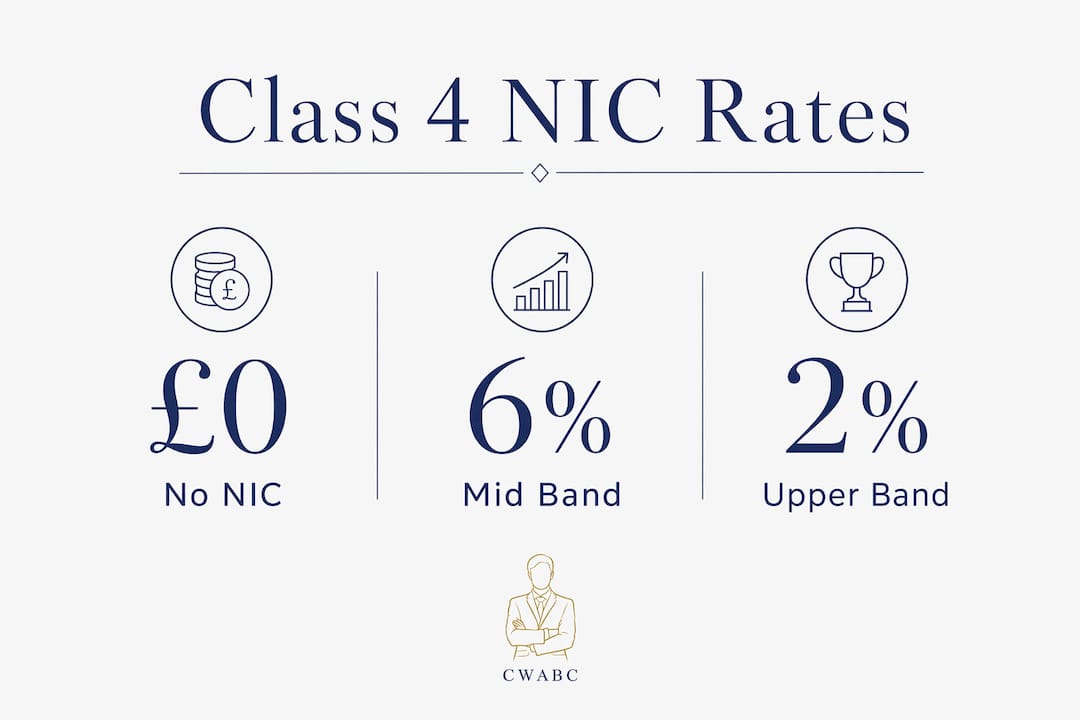
Class 4 NIC rates work on a simple three-band structure: no contributions on profits below £12,570, 6% on profits between £12,570 and £50,270, and 2% on profits above £50,270. These thresholds apply to your taxable profits, not your total income or bank balance. That distinction matters more than most sole traders realise.
Here is a concrete example. If your taxable profit is £35,000, you pay nothing on the first £12,570, then 6% on the remaining £22,430. That gives you a Class 4 NIC bill of £1,345.80 for the year. If your profit reaches £60,000, you pay 6% on £37,700 (from £12,570 to £50,270) and 2% on the remaining £9,730, totalling £2,456.60.

Class 4 NIC is calculated and paid through your Self Assessment tax return alongside Income Tax. You do not pay it separately or in advance. This combined filing process is one reason why accurate bookkeeping throughout the year is so valuable. If your profit figure is wrong, both your tax and your NIC bill will be wrong.
The abolition of Class 2 contributions in April 2024 simplified things for most sole traders. Previously, Class 2 was a flat weekly charge that also counted toward State Pension entitlement. Now, low-profit sole traders who earn below the Small Profits Threshold of £6,725 no longer build qualifying years automatically. This is a meaningful change for anyone whose profits sit in that lower band, and it is worth checking your National Insurance record on the HMRC personal tax account portal.
Pro Tip: Check your National Insurance record at least once a year via your HMRC personal tax account. Gaps in qualifying years are far cheaper to fill proactively than to discover at retirement.
How does bookkeeping affect your Class 4 NIC?
Taxable profits for Class 4 NIC are calculated after deducting allowable business expenses, and the accounting method you use changes the profit figure significantly. Two sole traders with identical bank balances can end up with very different NIC bills depending on how they record income and expenses.
The two main methods are:
- Cash basis accounting: You record income when you receive it and expenses when you pay them. This is simpler and suits most sole traders with straightforward finances. It avoids the complexity of debtors and creditors.
- Traditional (accruals) accounting: You record income when it is earned and expenses when they are incurred, regardless of when cash moves. This method is required if your turnover exceeds £150,000 or if you have more complex trading arrangements.
The choice between these methods affects your profit figure in any given tax year. Under cash basis, a large invoice paid in April falls into the new tax year. Under accruals, it falls into the year it was earned. That timing difference can shift hundreds of pounds of NIC liability from one year to another.
Capital allowances add another layer of complexity. Under traditional accounting, you claim capital allowances on equipment purchases rather than deducting the full cost immediately. Under cash basis, you can generally deduct the full cost in the year of purchase. A £3,000 laptop purchase could reduce your taxable profit by £3,000 under cash basis, saving you £180 in Class 4 NIC at the 6% rate.
The Trading Income Allowance is another option worth knowing. If your trading income is £1,000 or less, you can claim this allowance instead of deducting actual expenses, which simplifies your return. However, if your actual expenses exceed £1,000, claiming them individually will reduce your profit and therefore your NIC bill further.
Pro Tip: Your bookkeeping system setup determines the accuracy of your profit figure. A well-organised system means your Class 4 NIC calculation is based on real numbers, not guesswork.
The practical takeaway is clear. You cannot estimate your Class 4 NIC from your bank balance alone. Professional bookkeeping support, or at minimum a structured cash basis accounting approach, gives you a reliable profit figure and removes the risk of an unexpected tax bill in January.
When should you pay voluntary National Insurance contributions?
Voluntary NIC exists to fill gaps in your National Insurance record, protecting your entitlement to the State Pension and certain contributory benefits. The cost and availability of voluntary contributions changed significantly from 6 April 2026, so the rules you may have read about previously no longer fully apply.
The table below compares the two classes of voluntary contribution available to sole traders:
| Contribution type | Weekly cost | Who can use it | State Pension impact |
|---|---|---|---|
| Voluntary Class 2 | ~£3.45 | Self-employed with low profits (below Small Profits Threshold) | Counts as a qualifying year |
| Voluntary Class 3 | ~£17.45 | Anyone with gaps in their record | Counts as a qualifying year |
Voluntary Class 2 contributions at approximately £3.45 per week were previously available to UK nationals working abroad as a low-cost way to maintain pension coverage. From 6 April 2026, this option is abolished for periods spent outside the UK. Anyone in that situation must now use voluntary Class 3 contributions at approximately £17.45 per week, which is five times the previous cost.
For sole traders based in the UK with profits below the Small Profits Threshold of £6,725, voluntary Class 2 remains available and is still the most cost-effective way to build qualifying years. One qualifying year costs roughly £179 at the Class 2 rate. The same year costs approximately £907 at the Class 3 rate. The difference is substantial when you consider that 35 qualifying years are needed for a full State Pension.
Voluntary NIC payments are best treated as targeted investments in your pension record rather than optional extras. Before paying, check your State Pension forecast on the GOV.UK website to identify exactly which years need filling. Paying for years that are already qualifying years is a waste of money, and there are time limits on how far back you can go.
How do NI contributions fit into your overall tax planning?
Managing your sole trader tax obligations means treating NIC and Income Tax as a single combined liability, not two separate problems. HMRC calculates both through your Self Assessment return, and both are due on the same deadlines.
The key dates to fix in your calendar are:
- 5 October after your first self-employed tax year: register for Self Assessment with HMRC. Missing this deadline triggers penalties.
- 31 January: file your online tax return and pay any tax and Class 4 NIC owed for the previous tax year.
- 31 July: pay your second payment on account if HMRC has set one up for you.
- 31 January and 31 July: payments on account are advance payments toward your next year’s bill, each set at 50% of your previous year’s liability.
Self Assessment deadlines are fixed and penalties for late filing start at £100, rising the longer you delay. The payments on account system catches many sole traders off guard in their second year of trading. Your January bill suddenly includes not just the previous year’s liability but also the first advance payment for the current year. That can mean paying 150% of what you expected in a single month.
The practical way to manage this is to set aside a percentage of every payment you receive throughout the year. A common approach is to reserve 25 to 30% of your profit for tax and NIC combined, though the exact figure depends on your profit level and personal allowance position.
If you are also employed alongside your self-employment, Class 1 NIC paid through PAYE may reduce your Class 4 liability. HMRC applies a maximum NIC limit across all sources of income, so you will not pay more than the annual maximum regardless of how many income streams you have. This is worth checking if you hold both employed and self-employed income in the same tax year.
Pro Tip: Open a separate savings account and transfer your estimated tax and NIC reserve immediately after each client payment. This removes the temptation to spend it and eliminates the January panic.
Sole trader vs limited company: how does NIC compare?
The NIC treatment of a limited company director differs from that of a sole trader in one fundamental way: dividends are not subject to National Insurance. This is the primary reason many sole traders consider incorporating once their profits grow.
| Structure | NIC on profits | Income Tax | Total tax burden (approx. at £50,000 profit) |
|---|---|---|---|
| Sole trader | Class 4 at 6% (£12,570 to £50,270) | 20% basic rate above personal allowance | Higher combined rate |
| Limited company | No NIC on dividends | Corporation Tax + Dividend Tax | Potentially lower combined rate |
Incorporating can reduce NIC costs because a director can take a small salary (typically set at the National Insurance threshold) and draw the remainder as dividends. Dividends attract Dividend Tax rather than Income Tax and carry no NIC charge at all. At profit levels above roughly £30,000 to £35,000, the combined tax and NIC saving can be meaningful.
However, incorporation is not automatically the right choice. A limited company requires annual accounts filed with Companies House, a Corporation Tax return, and potentially higher accountancy fees. IR35 rules can also remove the NIC advantage entirely if HMRC determines your working arrangements resemble employment. The administrative burden and additional costs can outweigh the NIC saving at lower profit levels.
The honest comparison is this: sole trader status is simpler and cheaper to run, while a limited company can be more tax-efficient above a certain profit threshold. The crossover point depends on your specific circumstances, including your salary requirements, pension contributions, and other income sources. Getting professional tax advice before incorporating is not optional. It is the only way to know whether the numbers actually work in your favour.
Key takeaways
Sole traders pay Class 4 NIC on taxable profits through Self Assessment, with accurate bookkeeping being the single most important factor in calculating the correct liability and avoiding penalties.
| Point | Details |
|---|---|
| Class 4 NIC thresholds | No NIC below £12,570; 6% up to £50,270; 2% above. Always based on taxable profit. |
| Bookkeeping method matters | Cash basis vs accruals changes your profit figure and therefore your NIC bill. |
| Voluntary contributions | Class 2 (~£3.45/week) suits low-profit sole traders; Class 3 (~£17.45/week) fills gaps for others. |
| Key deadlines | Register by 5 October; file and pay by 31 January; second payment on account by 31 July. |
| Incorporation is not always better | Limited company NIC savings only outweigh the extra costs above a certain profit level. |
What I have learned from working with sole traders on NIC
The most common mistake I see is sole traders treating their bank balance as a proxy for profit. It is not. A client once came to me in January convinced their NIC bill would be minimal, only to discover that three large invoices paid in December had pushed their taxable profit well above the 6% threshold. The bill was not catastrophic, but it was a shock they had not planned for.
The 2026 changes to voluntary Class 2 contributions for periods abroad are genuinely significant and underreported. If you have spent time working outside the UK in recent years, the window to fill those gaps at the cheaper Class 2 rate has closed. Class 3 is the only option now, and at five times the cost, the decision to fill gaps needs to be weighed carefully against your State Pension forecast.
My practical advice is to treat your NIC record as a long-term asset. Thirty-five qualifying years sounds like a lot when you are in your thirties, but gaps accumulate faster than people expect, especially during periods of low profit, career breaks, or time abroad. Checking your record annually costs nothing and gives you the information to make good decisions early.
On the bookkeeping side, the choice between cash basis and accruals accounting is not just an administrative preference. It is a financial decision that affects your NIC liability every year. A sole trader accountant who understands both methods can help you choose the one that suits your trading pattern and keeps your tax position as clean as possible.
— Chris
How Cwabc helps sole traders stay on top of NIC and tax
Managing Class 4 NIC, Self Assessment deadlines, and voluntary contribution decisions alongside running your business is a lot to hold in your head. Cwabc, based in Tonbridge, works with sole traders to take that weight off your shoulders.

From setting up a bookkeeping system that produces accurate profit figures, to filing your Self Assessment return on time and helping you plan for January payment deadlines, Cwabc provides clear, jargon-free support at every stage. The bookkeeping services in Tonbridge are designed specifically for sole traders who want compliance without the stress. You can also explore the benefits of outsourcing your bookkeeping if you are weighing up whether professional support is right for your situation. Get in touch with Cwabc to find out how straightforward managing your NIC obligations can be.
FAQ
What is Class 4 NIC for sole traders?
Class 4 NIC is a National Insurance charge on your taxable business profits, paid through your Self Assessment return alongside Income Tax. The rate is 6% on profits between £12,570 and £50,270, and 2% above that threshold.
Was Class 2 National Insurance abolished?
Class 2 NIC was abolished from April 2024 for most sole traders. Low-profit sole traders below the Small Profits Threshold of £6,725 can still pay voluntary Class 2 contributions to protect their State Pension entitlement.
How do I pay National Insurance as a sole trader?
You pay Class 4 NIC through your annual Self Assessment tax return, with payment due by 31 January following the end of the tax year. HMRC calculates the amount based on the profit figure you report.
Does incorporating save National Insurance?
Incorporating can reduce NIC because dividends are not subject to National Insurance, unlike sole trader profits. However, the saving only outweighs the additional accountancy and administrative costs above a certain profit level, typically around £30,000 to £35,000.
What happens if I have gaps in my National Insurance record?
Gaps in your NIC record reduce your State Pension entitlement. You can fill gaps by paying voluntary Class 2 contributions (if eligible) at approximately £3.45 per week, or voluntary Class 3 contributions at approximately £17.45 per week. Check your State Pension forecast on GOV.UK before paying to confirm which years need filling.