The most damaging common corporation tax filing mistakes are deadline confusion, iXBRL software failures, disallowed expenses, wrong UTRs, and poor recordkeeping. Any one of them can trigger an automatic rejection, a penalty, or an HMRC enquiry. The good news is that most are entirely preventable with a short pre-filing check.
Run through this checklist in the next 24–72 hours:
- Confirm your Corporation Tax payment deadline: within the statutory period after your accounting period end.
- Confirm your CT600 filing deadline: within the statutory period after your accounting period end. These are two separate dates.
- Check that your filing software is updated and supports the current iXBRL taxonomy. HMRC’s free CATO service closed on 31 March 2026.
- Verify your Unique Taxpayer Reference (UTR) and accounting period dates before you open the CT600.
- Separate any personal costs from your business bank account and flag them before your accountant starts the return.
- Make sure your records go back at least six years and are stored somewhere accessible.
Pro Tip: Prioritise the payment deadline and software check first. A late payment attracts interest from day one, and an iXBRL rejection can delay your filing even when the numbers are correct.
Key takeaways
Separating the payment deadline (nine months and one day) from the CT600 filing deadline (12 months) is the single most important habit a small company director can build, because interest on late payment starts accruing before the filing deadline even arrives.
| Point | Details |
|---|---|
| Two separate deadlines | Pay Corporation Tax by nine months and one day; file the CT600 by 12 months after period end. |
| CATO closed 31 March 2026 | All limited companies must now use third-party commercial software for CT600 and iXBRL submissions. |
| iXBRL taxonomy must be current | Wrong taxonomy year or missing tags cause automatic rejections; check your software before filing. |
| Six-year record retention | Keep receipts, invoices, bank statements, and mileage logs for at least six years. |
| CWABC provides end-to-end support | I prepare CT600 returns, iXBRL accounts, and bookkeeping for small limited companies across the UK. |
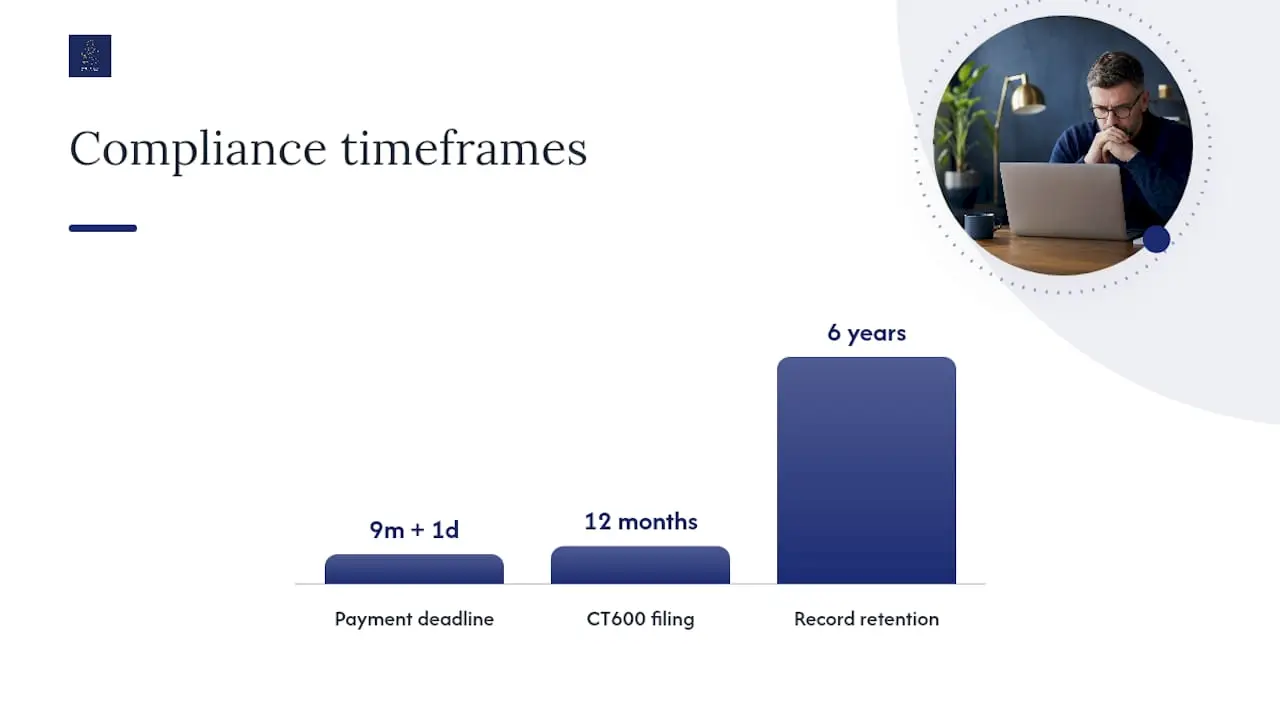
Table of Contents
- 1. Confusing the payment deadline with the filing deadline
- 2. Assuming Companies House filing satisfies HMRC
- 3. Getting the UTR or accounting period dates wrong
- 4. Missing mandatory CT600 boxes or leaving them blank
- 5. iXBRL tagging errors and using the wrong taxonomy year
- 6. Using legacy or unsupported filing software
- 7. Claiming disallowed expenses or missing allowable ones
- 8. Mixing personal and business transactions
- 9. Poor recordkeeping and missing evidence
- 10. Failing to register for Corporation Tax on time
- What are the key deadlines and penalties you need to know?
- How to pre-empt CT600 validation errors before you submit
- Which expenses are allowable and which are not?
- What records does HMRC expect you to keep?
- What you need to check in your filing software for 2026
- How to correct a mistake after you have filed
- How I help directors avoid these mistakes
- Why getting this right matters more than most directors realise
- CWABC can help you file accurately and on time
- Sources
1. Confusing the payment deadline with the filing deadline
Why it happens: The two deadlines sound similar, and many directors assume paying the tax and filing the return are the same event.
They are not. Corporation Tax must be paid within nine months and one day of your accounting period end. The CT600 return is due 12 months after the period end. For a company with a 31 March 2026 year-end, payment is due by 1 January 2027 and the CT600 by 31 March 2027.
The consequence: Interest runs from the day after the payment deadline, even if you file on time. HMRC charges interest at the official rate, and it compounds quickly on larger liabilities.
The fix: Set two calendar reminders the day you close your books: one for the payment date and one for the filing date. Use a small business tax deadline calendar to track both.
2. Assuming Companies House filing satisfies HMRC
Why it happens: Both obligations fall around the same time of year, and both involve your annual accounts. Directors often treat them as one task.
Companies House and HMRC are separate bodies with separate requirements. Filing your accounts with Companies House and your CT600 with HMRC are distinct legal obligations, even though you can sometimes submit both at the same time using compatible software. The Companies House accounts deadline is nine months after your accounting period end, which is earlier than the CT600 deadline.
The consequence: A company that files with Companies House on time but forgets the CT600 will still receive a late filing penalty from HMRC.
The fix: Treat them as two separate tasks on your calendar. If you use software that files both simultaneously, confirm the CT600 period dates are correct before you submit.
3. Getting the UTR or accounting period dates wrong
Why it happens: A UTR (Unique Taxpayer Reference) is a ten-digit number. Company registration numbers are eight digits. Directors sometimes enter the wrong one, or copy it from an old document where it was formatted differently.
HMRC rejects CT600s most often because of wrong UTRs, period date mismatches, missing mandatory boxes, iXBRL format errors, and arithmetic inconsistencies. An eight-digit company number used in the UTR field is one of the fastest causes of automatic rejection.
The consequence: Instant rejection. The return is not received by HMRC until you resubmit correctly, which can push you past the filing deadline.
The fix: Cross-reference your UTR against your HMRC online account or your original CT41G registration letter before you start. Check that the accounting period start and end dates on the CT600 match your statutory accounts exactly.
4. Missing mandatory CT600 boxes or leaving them blank
Why it happens: The CT600 has many boxes, and some that appear optional are actually mandatory. Software sometimes pre-fills zeros, but manual overrides or imports can leave fields empty.
The consequence: HMRC’s automated validation rejects returns with missing mandatory fields. You will not receive confirmation of receipt until the gaps are corrected and the return is resubmitted.
The fix: Run your software’s built-in validation before submission. Manually check that all mandatory boxes contain a value, including boxes where the correct answer is zero. Pay particular attention to the tax calculation boxes and the company type code.
5. iXBRL tagging errors and using the wrong taxonomy year
Why it happens: iXBRL is the mandatory format for accounts and computations submitted with the CT600. Using the wrong taxonomy year or missing required tags causes automatic rejections. Software that has not been updated to the current taxonomy will produce non-compliant iXBRL output even when the underlying numbers are correct.
The consequence: Rejection at the point of submission. The return is treated as unfiled until a compliant version is received.
The fix: Check that your software uses the current HMRC-approved taxonomy version. Run the iXBRL validation tool within your software before submitting. If you are unsure which taxonomy year applies to your accounting period, check the XBRL guide for UK businesses on GOV.UK.
6. Using legacy or unsupported filing software
Why it happens: HMRC’s free CATO (Company Accounts and Tax Online) service closed on 31 March 2026. From 1 April 2026, all limited companies must use third-party commercial software to submit their CT600 and iXBRL accounts. Directors who were using CATO, or who have not updated their desktop software since the taxonomy changed, will find their submissions rejected.
The consequence: A submission that appears to go through may still fail HMRC’s back-end validation if the software is out of date. Worse, some legacy tools do not flag the rejection clearly, leaving directors believing they have filed when they have not.
The fix: Confirm your software is on the current vendor-supported version and is listed as HMRC-compatible. If you were using CATO, you need to move to a commercial package now. For help choosing and setting up the right tool, see accounting software setup in Kent.
Pro Tip: Do a test submission with a simple one-page set of accounts before your real filing date. This confirms your iXBRL tags validate and your agent authorisation is active, with no last-minute surprises.
7. Claiming disallowed expenses or missing allowable ones
Why it happens: The rules around what a company can deduct are not always obvious. Revenue expenses are deductible if incurred wholly and exclusively for the trade; capital costs are claimed through capital allowances; and certain items such as client entertainment are specifically disallowed. Directors often either over-claim (putting personal costs through the company) or under-claim (missing legitimate deductions like use-of-home allowances or mileage).
The consequence: Over-claiming can trigger an HMRC enquiry and result in additional tax, interest, and penalties. Under-claiming simply means paying more tax than you need to.
The fix: Apply the “wholly and exclusively” test to every expense before coding it. If an expense has a personal element, document the business proportion and keep the evidence. See the full corporation tax for UK limited companies guide for a detailed breakdown.
8. Mixing personal and business transactions
Why it happens: Many small company directors use a single bank account for both personal and business spending, particularly in the early months of trading. This makes it almost impossible to produce a clean set of accounts without significant manual work.
The consequence: Personal costs coded as business expenses inflate your deductions and reduce your tax liability incorrectly. When HMRC investigates, mixed accounts are a red flag. They also make the director’s loan account difficult to reconcile, which creates a separate tax risk.

The fix: Open a dedicated business bank account and use it exclusively for company income and expenditure. Reconcile it monthly. Any personal costs paid via the company should be coded to the director’s loan account and repaid promptly to avoid a benefit-in-kind charge.
9. Poor recordkeeping and missing evidence
Why it happens: Receipts get lost, invoices are not saved, and mileage logs are never started. Directors often rely on bank statements alone, which do not provide enough detail for HMRC.
Keeping accurate, detailed business records and separating personal and business finances significantly reduces the risk of HMRC enquiries and incorrect expense claims. Records to keep include receipts, invoices, bank statements, and mileage logs, retained for at least six years.
The consequence: Without supporting evidence, HMRC can disallow expenses during an enquiry. Missing records also make it harder to prepare accurate accounts, which increases the risk of errors on the CT600.
The fix: Use a cloud accounting package such as Xero, QuickBooks, or FreeAgent to capture receipts digitally as you go. Set a monthly reminder to reconcile your bank account. Keep mileage logs updated weekly rather than reconstructing them at year-end.
Pro Tip: Most cloud accounting apps let you photograph a receipt on your phone and attach it to the transaction immediately. This takes ten seconds and removes the risk of losing paper receipts entirely.
10. Failing to register for Corporation Tax on time
Why it happens: When a company is incorporated at Companies House, it does not automatically register for Corporation Tax. Directors must notify HMRC within three months of starting to trade.
The consequence: Missing the registration deadline can result in penalties and interest on unpaid tax. HMRC may also open an enquiry if a company has been trading but has not filed a CT600.
The fix: Register for Corporation Tax through your HMRC online account as soon as your company starts trading. Keep a note of your UTR when it arrives, as you will need it for every CT600 you ever file.
What are the key deadlines and penalties you need to know?
The three deadlines directors most often confuse are distinct legal obligations, not variations of the same task.
For a company with a 31 March 2026 accounting period end:
- 1 January 2027 — Corporation Tax payment due (nine months and one day after period end).
- 31 December 2026 — Companies House accounts due (nine months after period end).
- 31 March 2027 — CT600 filing deadline (12 months after period end).
The payment deadline arrives before the filing deadline. This means you may need to estimate your liability and pay it before your accounts are fully finalised, particularly if your accountant needs time to prepare the CT600.
Late CT600 filing penalties increased for returns due on or after 1 April 2026, with higher fixed penalties and escalations for repeat failures. Interest on late payments runs from the day after the payment deadline regardless of when you file. Paying early, even before the accounts are complete, stops interest accruing. You can use the guide to paying corporation tax correctly to walk through the payment steps.
How to pre-empt CT600 validation errors before you submit
A short pre-submission check catches the majority of CT600 validation errors before they become rejections. Run through this list every time:
- UTR: Confirm it is ten digits and matches your HMRC online account exactly.
- Accounting period dates: Match the start and end dates on the CT600 to your statutory accounts. If your first accounting period exceeds 12 months, you must split it into two CT600 returns.
- Company type code: Confirm the correct code is selected in your software. An incorrect code causes a validation failure even when all the numbers are right.
- Mandatory boxes: Check every mandatory field contains a value, including zero where applicable.
- Arithmetic: Reconcile the CT600 tax calculation boxes back to your tax computation. The CT600 starts from accounting profit and adjusts for disallowable items and capital allowances; any mismatch triggers a rejection.
- iXBRL validation: Run the built-in validator in your software and resolve all errors before submitting.
- Accounts attached: Confirm the iXBRL-tagged accounts are attached to the submission, not just the CT600 form.
- Agent authorisation: If an accountant is filing on your behalf, confirm the 64-8 authorisation is active in HMRC’s system.
Pro Tip: Check your company’s registered details on Companies House before filing. Stale data, such as an old registered address or a director name that does not match HMRC’s records, can cause unexpected validation failures.
Which expenses are allowable and which are not?
The “wholly and exclusively” principle is the starting point for every expense decision. An expense is deductible if it was incurred wholly and exclusively for the purposes of the trade. If it has a personal element, you can sometimes claim the business proportion, but you must document the split clearly.
Here is a practical guide to common items:
| Expense | Allowable? | Notes |
|---|---|---|
| Staff salaries and employer NIC | Yes | Wholly business cost |
| Business travel (rail, mileage) | Yes | Mileage at HMRC approved rate; keep log |
| Home office (use-of-home allowance) | Partial | Proportionate claim; document basis |
| Client entertainment | No | Specifically disallowed |
| Staff entertaining | Yes | Allowable; different rules from client entertaining |
| Business insurance | Yes | Wholly and exclusively for the trade |
| Personal mobile phone (director) | Partial | Business use proportion only |
| Fines and penalties | No | Never deductible |
| Capital equipment (laptops, machinery) | Via capital allowances | Not a direct revenue deduction |
| Director’s personal clothing | No | Dual purpose; not wholly and exclusively |
A few practical dos and don’ts when logging expenses and extracting money from the company:
- Do code every expense to the correct nominal account at the time of purchase.
- Do keep the receipt or invoice for every item, however small.
- Do record the business purpose of any borderline expense in a note attached to the transaction.
- Don’t put personal purchases through the company and assume they will be sorted at year-end.
- Don’t pay yourself an undocumented cash withdrawal and leave it unreconciled.
- Don’t claim client entertainment as “staff entertaining” to get around the disallowance.
Director’s loan accounts deserve particular attention. If the company owes you money, that is a credit balance and is straightforward. If you owe the company money (a debit balance), HMRC may charge a Section 455 tax charge if the balance is not cleared within nine months of the accounting period end.
What records does HMRC expect you to keep?
Good recordkeeping is not just about surviving an enquiry. It makes preparing your accounts faster, reduces errors on the CT600, and gives you a clear picture of your business finances throughout the year.
The records you must keep include:
- All sales invoices and purchase receipts.
- Bank statements for every business account.
- Mileage logs with dates, destinations, and business purpose.
- Payroll records and PAYE submissions.
- VAT records if you are registered.
- Contracts and board minutes for material decisions (for example, approving a use-of-home allowance or a director’s salary).
- Records of any director’s loan account movements.
Retain all of these for at least six years from the end of the accounting period they relate to. HMRC can open an enquiry up to four years after filing in most cases, and longer if they suspect fraud or careless behaviour.
Practical steps to make recordkeeping manageable:
- Open a dedicated business bank account and never use it for personal spending.
- Reconcile your bank account monthly, not annually.
- Store digital copies of all documents in a cloud-based system with automatic backups.
- Use your accounting software’s receipt capture feature to photograph and attach receipts immediately.
Pro Tip: Set a recurring monthly calendar event called “bank reconciliation” for the last working day of each month. Doing it monthly takes 20–30 minutes. Doing it annually, from memory, takes hours and produces errors.
For year-round habits that keep your records clean, see year-round tax preparation tips for UK businesses.
What you need to check in your filing software for 2026
HMRC closed the CATO service on 31 March 2026. From 1 April 2026, every limited company must use third-party commercial software to submit its CT600 and iXBRL-tagged accounts. There is no free HMRC portal fallback.
Before you file, check the following in your software:
- iXBRL taxonomy version: Confirm the software uses the taxonomy year that applies to your accounting period. Using last year’s taxonomy causes automatic rejections.
- HMRC submission API: Verify the software connects to HMRC’s current API, not a deprecated endpoint.
- Built-in validation: The software should flag iXBRL errors and missing mandatory fields before you submit, not after.
- Agent authorisation: If your accountant files on your behalf, the software must support agent access and the 64-8 must be active.
- Audit trail: Check the software records who made changes and when. This protects you if HMRC queries a figure.
- Vendor update policy: Confirm the vendor releases updates promptly when HMRC changes its requirements. A vendor that is slow to update will leave you exposed at the next taxonomy change.
If you are still using a desktop package that has not been updated since 2024, treat that as urgent. Legacy desktop software that has not been updated to the latest iXBRL taxonomy produces a high rate of automated rejections. Moving to a maintained cloud accounting package removes this risk entirely.
How to correct a mistake after you have filed
Discovering an error after submission is stressful, but it is fixable. The process depends on what went wrong and how significant the error is.
Step 1: Identify the error. Is it a calculation mistake, a wrong figure, a missing expense, or a data entry error? Write down exactly what is wrong and what the correct figure should be.
Step 2: Amend the CT600. You can amend a CT600 within 12 months of the original filing deadline. Prepare a corrected return in your software and resubmit it to HMRC. The amended return replaces the original.
Step 3: Correct the accounts if necessary. If the error originated in your statutory accounts rather than the CT600 itself, you may need to file revised accounts with Companies House as well.
Step 4: Assess the tax impact. If the correction increases your tax liability, pay the additional amount promptly to minimise interest. If it reduces your liability, HMRC will repay the overpayment.
Step 5: Consider voluntary disclosure. If the error is material and you are outside the 12-month amendment window, contact HMRC proactively. Voluntary disclosure generally results in lower penalties than waiting for HMRC to discover the error.
Before you contact HMRC or an accountant, gather:
- Your original CT600 and the iXBRL accounts as submitted.
- The corrected figures and the source documents supporting them.
- Your UTR and company registration number.
- The accounting period the error relates to.
For a step-by-step walkthrough of the amendment process, see how to correct tax return mistakes.
How I help directors avoid these mistakes
As an AAT-licensed practitioner, I prepare CT600 returns, iXBRL-tagged accounts, and year-round bookkeeping for small limited companies across Kent and remotely throughout the UK. My approach is to catch the common errors before they reach HMRC: checking UTRs and period dates, running iXBRL validation, reconciling the tax computation to the CT600 boxes, and confirming the payment deadline is in your diary well before the filing deadline. I set clients up on Xero, QuickBooks, or FreeAgent so their records are clean and ready when it matters, and I explain every figure in plain English so you always know where you stand.
If you would like support with your Corporation Tax return or want to make sure your records are in good shape before your year-end, get in touch with me at CWABC.
Why getting this right matters more than most directors realise
Corporation Tax is not just a compliance box to tick. Getting it wrong costs real money: interest on late payments, penalties for late filing, and the time and stress of dealing with an HMRC enquiry. For a small company, a £500 penalty and a few hundred pounds of interest is a meaningful hit to cashflow.
The directors I see who handle this most calmly are the ones who treat it as a year-round process rather than a once-a-year scramble. They keep their records tidy, reconcile monthly, and know their deadlines months in advance. By the time their year-end arrives, there is very little left to do.
Routine controls, not last-minute fixes, are what keep Corporation Tax manageable. If you are not sure whether your current setup is working, seven signs you need an accountant is a useful starting point.
CWABC can help you file accurately and on time

Preparing a CT600 correctly involves more than filling in a form. It requires clean bookkeeping records, a reconciled tax computation, iXBRL-tagged accounts, and a pre-submission check that covers UTRs, period dates, mandatory boxes, and software validation. For first-time directors, or those moving away from CATO, that is a lot to get right without support.
I offer Corporation Tax preparation, iXBRL accounts, and year-round bookkeeping for small limited companies, CICs, and startups. Clients deal directly with me, receive clear explanations at every stage, and never face a surprise bill. If your software needs updating or you are not sure whether your records are ready for year-end, I can help with that too.
Visit the bookkeeping FAQs for small businesses to see how I work, or contact me directly to discuss your company’s needs.
Sources
Always check the primary GOV.UK sources before filing. Rules, deadlines, and software requirements do change, and a GOV.UK page is the only source you can rely on for current, authoritative information.
Bookmark these pages and check them at the start of each accounting period. HMRC updates its guidance when rates, deadlines, or software requirements change, and the GOV.UK page will always reflect the current position.
This article provides general information about Corporation Tax filing obligations for UK limited companies. It is not personalised tax advice. Always verify current deadlines and rules on GOV.UK or consult a qualified adviser for your specific circumstances.
This article is general information, not a substitute for advice from a qualified financial advisor. Consult a qualified financial professional about your own circumstances before acting on anything here.