
If you’re a UK residential landlord, four dates matter more than any other: 31 January (online Self Assessment filing and balancing payment), 31 July (second payment on account), 5 October (Self Assessment registration deadline after your first year of rental income), and a rolling 60-day window to report and pay Capital Gains Tax after selling a residential property. Right now, check two things: whether you’re registered for Self Assessment with an active Government Gateway account, and whether your rental income means you’ll need Making Tax Digital for Income Tax-compatible software.
- Confirm your Self Assessment status and UTR on GOV.UK
- Check whether your qualifying income brings you into MTD scope
- Diarise the 60-day clock the moment contracts complete on a sale
Key Takeaways
Meeting every landlord tax deadline depends on registering early, keeping digital records year-round, and treating CGT’s 60-day rule as entirely separate from Self Assessment.
| Point | Details |
|---|---|
| Four core dates | Diary 5 October, 31 January, 31 July, and the 60-day CGT window separately. |
| MTD threshold from 2026 | Qualifying income over £50,000 brings you into MTD from 6 April 2026. |
| Records matter year-round | Keep income, expense and disposal records for at least five years. |
| CGT is separate | Report and pay gains on a property sale within 60 days of completion, not at Self Assessment. |
| Get help before a deadline | CWABC offers landlord bookkeeping and MTD onboarding on Xero, FreeAgent and QuickBooks. |
This article is general information, not a substitute for advice from a qualified financial advisor. Consult a qualified financial professional about your own circumstances before acting on anything here.
Table of Contents
- The full annual landlord tax deadline checklist
- Do you need to file a Self Assessment tax return?
- What records do landlords need to keep?
- What income and expenses go on your tax return?
- How do payments on account and penalties work?
- What does Making Tax Digital mean for your quarterly updates?
- What happens when you sell a rental property?
- Your month-by-month landlord tax action plan
- Sources
The full annual landlord tax deadline checklist
Every landlord’s year runs on the same skeleton of dates, whether you own one flat or a small portfolio. Miss one and the penalties stack quickly, so it’s worth pinning this table somewhere you’ll actually see it.
| Date | Action required |
|---|---|
| 5 October | Register for Self Assessment if you received rental income for the first time in the previous tax year |
| 31 October | Paper tax return deadline (rarely used, but still live) |
| 31 January | Online tax return deadline and balancing payment for the previous tax year |
| 31 July | Second payment on account for the current tax year |
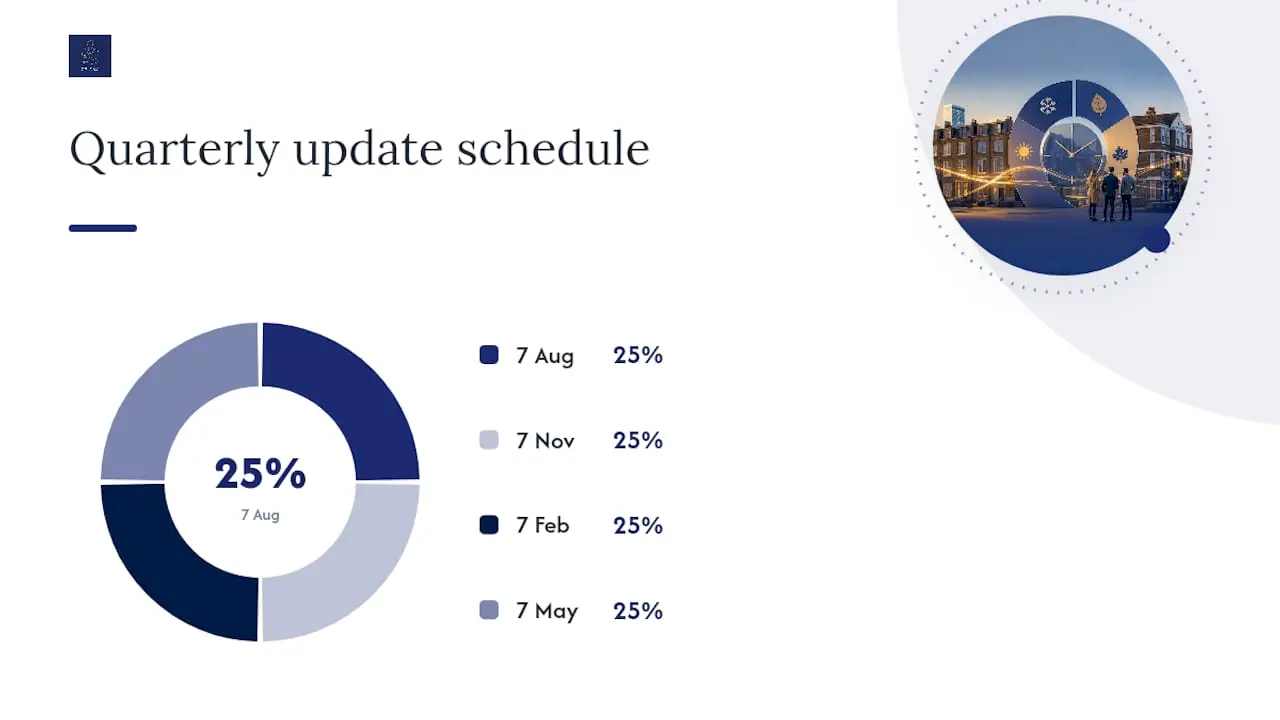
| 7 Aug / 7 Nov / 7 Feb / 7 May | MTD quarterly update deadlines for landlords in scope, following HMRC’s first-year timetable |
| Within 60 days of completion | Report and pay Capital Gains Tax after selling a UK residential property |
A few nuances sit underneath that table. First-year landlords have more flexibility because their registration deadline is tied to when rental income actually started, not the calendar year. Non-resident landlords generally face the same Self Assessment dates but often have additional withholding or Non-Resident Landlord Scheme considerations worth checking separately. And the 60-day CGT deadline runs independently of your Self Assessment calendar entirely, which trips up more landlords than any other date on this list.
If you’re brought into MTD, quarterly updates sit alongside the annual return rather than replacing it. You’ll send four updates through compatible software during the year, then a final declaration by 31 January, much as you do now, just with more frequent digital touchpoints along the way. My guide to the annual tax return process for landlords walks through the return itself in more depth.
Do you need to file a Self Assessment tax return?
If you receive rental income above the £1,000 property allowance, you almost certainly need to file. HMRC can also issue a notice to file even where your circumstances seem borderline, and ignoring that notice doesn’t make the obligation disappear. The safest approach is to register by 5 October following the tax year in which your rental income began, using HMRC’s Self Assessment registration service.
Registering means requesting a Unique Taxpayer Reference (UTR), which HMRC posts to you rather than emailing, and setting up a Government Gateway account to access HMRC’s online services. If you’ll be using MTD software later, you’ll also need to authorise that software to talk to HMRC once you’re enrolled.
Build in real lead time here. A UTR can take several weeks to arrive by post, and Government Gateway activation codes work the same way, so this isn’t a same-day job.
Landlords who leave registration until October discover the hard way that HMRC’s post-based verification doesn’t move any faster because a deadline is close.
Pro Tip: Store your Government Gateway login and two-factor authentication details somewhere secure but accessible, ideally a password manager, so a locked-out account never becomes the reason you miss 31 January.
What records do landlords need to keep?
Good record-keeping isn’t a compliance chore you do in January. It’s what makes January painless. Keep the following throughout the year, ideally scanned or photographed as you go rather than boxed up for a future you to sort out:
- Rent received, by property and by tenant, with dates
- Bank statements covering the relevant accounts
- Tenancy agreements and deposit protection records
- Invoices and receipts for repairs, maintenance and improvements
- Mortgage interest statements
- Purchase and disposal costs, including completion dates, for any property sold
HMRC generally expects records kept for at least five years after the 31 January submission deadline. Whether you use the cash basis or traditional accounting affects when income and expenses count, and most landlords with property turnover up to £150,000 can use the simpler cash basis by default; the £1,000 property income allowance can replace actual expenses entirely if your income is modest.
Pro Tip: Set up digital folders by tax year and by property, then tag each transaction to match the boxes on HMRC’s property pages. It turns a stressful return into a copy-and-paste exercise.

What income and expenses go on your tax return?
Rental income covers rent, lease premiums and any payments a tenant makes on your behalf, such as covering a repair you’d normally pay for. Report the whole amount, then set allowable expenses against it, or apply the £1,000 property allowance instead if that works out better for you.
Common allowable expenses include:
- Letting agent and management fees
- Landlord insurance
- Routine repairs and maintenance (not improvements)
- Ground rent and service charges
- Mortgage interest (relieved via a basic rate tax reduction, not deducted directly)
The line between a repair and a capital improvement matters. Replacing a broken boiler is a revenue expense; installing a new extension is capital and treated differently. Furnished holiday lettings lost their favourable tax regime, so those properties are now taxed under the same rules as any other residential let. My rental income tax guide covers the expense categories in more detail, and GOV.UK’s property notes remain the definitive reference for edge cases.
How do payments on account and penalties work?
Payments on account are HMRC’s way of collecting tax in advance, based on the assumption that this year’s bill will look like last year’s. Each instalment is normally 50% of your previous year’s tax bill, due on 31 January and 31 July, with any shortfall or refund settled as a balancing payment the following 31 January.
Say your tax bill for the year was £6,000. You’d typically pay £3,000 by 31 January and another £3,000 by 31 July as payments on account for the next year, then true up the difference once your actual figures are known.
Miss a deadline and the costs escalate. Late filing and late payment penalties start with a fixed charge and grow the longer the delay continues, with interest accruing on unpaid tax throughout. If you can’t pay in full, contact HMRC before the deadline rather than after; a Time to Pay arrangement is far easier to agree proactively than to negotiate once you’re already in arrears.
- Late filing: an initial penalty, rising with further delay
- Late payment: interest plus penalties layered on at set intervals
- Appeals: submit form SA370 if you have a reasonable excuse
What does Making Tax Digital mean for your quarterly updates?
MTD for Income Tax changes bookkeeping from an annual scramble into a quarterly habit, and the thresholds are now fixed. From 6 April 2026, landlords and sole traders with qualifying income above the official thresholds must keep digital records and send quarterly updates, with these thresholds gradually lowering in subsequent years to include progressively smaller portfolios.
If you’re in scope, a simple monthly rhythm keeps you ahead of it:
- Reconcile bank feeds weekly rather than letting them pile up
- Tag every rental receipt to the correct property as it lands
- Run a quarterly review before each submission deadline
- Send updates by the fixed dates, typically 7 August, 7 November, 7 February and 7 May in the first year
HMRC doesn’t provide free software for this; you’ll need a compatible package, and it’s worth budgeting for a monthly subscription accordingly. Xero, FreeAgent and QuickBooks all offer landlord-suitable versions, and you can sign up before you’re mandated to to test your workflow with real data before the deadline bites.
Pro Tip: Choose software that lets you tag transactions by property from day one. Retrofitting that structure once you’re mid-quarter is far more painful than setting it up properly the first time. My Making Tax Digital guide for landlords covers software choice and onboarding in more depth.
What happens when you sell a rental property?
Selling triggers a completely separate obligation from your annual return: a 60-day window to report and pay Capital Gains Tax on any taxable gain, running from the completion date, not exchange. Landlords regularly conflate this with their Self Assessment timeline, and the two run entirely independently of each other.
To meet the deadline, prepare:
- Completion date and both purchase and sale prices
- Costs of acquisition, disposal and any capital improvements
- Any reliefs or exemptions that reduce the taxable gain
- Access to your UK property account on GOV.UK to submit and pay
Interest and penalties apply from day 61 if you miss the window, so start the computation the moment a sale completes rather than waiting for the paperwork to settle. You’ll also need to reflect the disposal on your next Self Assessment return.
Your month-by-month landlord tax action plan
Spreading the work across the year removes almost all of the January pressure. A workable rhythm looks like this:
- Monthly: reconcile bank transactions, tally rent received, capture receipts as they arrive
- Quarterly: if MTD applies, submit your update; if not, review income against expenses to catch errors early
- January and July: check your payment on account is ready and funded well before the due date
- Ongoing: hold a percentage of each month’s rent in a separate account as a tax reserve, so 31 January never arrives as a surprise
A quarterly cashflow check catches problems while there’s still time to fix them, rather than in the week before a payment’s due. For a more detailed setup, my landlord bookkeeping guide covers folder structures and reconciliation routines specifically for rental portfolios. The Tax Refinery’s year-end planning checklist is also a useful cross-check if you want a second lens on year-end preparation more broadly.
A note from Chris
As an AAT-licensed bookkeeper and accountant, the mistake I see most often isn’t complicated tax law, it’s late UTR registration or a shoebox of missing receipts in December. Both are entirely avoidable with a few hours of planning, and fixed-price help is more affordable than most landlords assume.
How I can help before your next deadline
There are other ways to handle this: a spreadsheet and a diary reminder work for some landlords, and plenty manage MTD sign-up themselves through GOV.UK directly. But if you’d rather have someone set up your quarterly workflow properly the first time, that’s where I come in. I offer landlord bookkeeping packages, MTD onboarding on Xero, FreeAgent or QuickBooks, and Self Assessment preparation, all priced upfront so there are no surprises.

If your rental income is approaching £50,000 or you’ve got a property sale on the horizon, the sensible time to speak to me is now, not the week before a deadline. Get in touch through my contact page to arrange a quick consultation, or take a look at my landlord bookkeeping guide to see how the quarterly setup works before you commit to anything.
Sources
- Making Tax Digital for Income Tax Self Assessment for sole traders and landlords
- Use Making Tax Digital for Income Tax – before you use this guide