Running your own business feels rewarding until the money runs out before the bills do. Sole trader cash flow management, which accountants refer to more formally as liquidity planning, is the single biggest factor separating sole traders who thrive from those who quietly shut up shop. With MTD quarterly reporting arriving in April 2026, the pressure to stay on top of your money in real time has never been greater. This guide gives you a practical, calm system to take control, stay compliant, and stop worrying about what is sitting in your account.
Table of Contents
- Key takeaways
- Understanding sole trader cash flow management
- Setting up a practical cash flow system
- Managing tax obligations within your cash plan
- Common cash flow challenges and how to fix them
- My honest take on cash flow and sole traders
- How Cwabc can help you stay on top
- FAQ
Key takeaways
| Point | Details |
|---|---|
| Cash flow is not profit | Profit on paper does not pay bills; track actual cleared funds weekly. |
| Use a three-bucket system | Separate operating, tax reserve, and owner pay accounts to avoid overspending. |
| MTD changes the rhythm | From April 2026, quarterly submissions mean you need cash visibility four times a year, not once. |
| Tax deadlines are fixed | HMRC requires payments on 31 January and 31 July each year; plan for both well in advance. |
| Routine beats reaction | A weekly 10-minute cash review prevents the last-minute scramble that costs you money and stress. |
Understanding sole trader cash flow management
Cash flow is simply money coming in versus money going out, and when you have it. It is not the same as profit. You can show a healthy profit on your accounts yet still run out of money if clients pay late or a large tax bill arrives unexpectedly. Cash flow statements cover specific periods and reflect bank transactions, outstanding invoices, and bills due, giving you a real-time picture that your profit and loss statement simply cannot.
For sole traders in the UK, two accounting methods shape how this plays out in practice.
Cash basis accounting records income when you actually receive it and expenses when you actually pay them. It is simpler and gives you a clearer sense of your real cash position. Accrual accounting records income when it is earned and costs when they are incurred, regardless of when money moves. Most sole traders use cash basis, which keeps things more transparent day to day.
Two tax-related realities make your cash flow planning unique as a sole trader:
- HMRC requires you to file and pay tax for the 2025 to 2026 tax year by 31 January 2027, meaning you must have a lump sum available at a specific point.
- Payments on account are due twice yearly, on 31 January and 31 July, based on your previous year’s bill. These are advance payments credited against your final tax return, and they catch many sole traders completely off guard.
Then there is Making Tax Digital, or MTD. From April 2026, sole traders earning above the income threshold must submit quarterly summaries of income and expenses to HMRC. That means four reporting windows per year instead of one annual return. More on how to prepare for this below, but the key point here is that MTD demands more frequent cash awareness, not just more admin.
Pro Tip: If you are not sure whether MTD applies to you yet, check the businesses affected by MTD page to confirm your position before April 2026.
Setting up a practical cash flow system
The single most effective change most sole traders can make is to stop running everything through one account. When your income, tax savings, and personal drawings all sit in the same pot, it is almost impossible to know what you can safely spend. A three-bucket system creates immediate clarity.
Here is how to set it up:
- Open three separate accounts. One for business operations (paying suppliers, software, tools), one dedicated tax and reserve account, and one personal pay account where you transfer your owner drawings.
- Decide your percentage splits. A common starting point is 60% to operations, 25 to 30% to tax and reserves, and the remainder to owner pay. Adjust these based on your margin and typical tax rate.
- Automate the split on every payment received. When money lands in your operating account, set up a standing order or use your banking app to move the tax percentage across immediately. You never touch it unless paying HMRC or covering an emergency.
- Build a 14-day rolling forecast. List every expected payment in and every bill due over the next two weeks. Update it once a week. This alone will eliminate most cash surprises.
- Set a minimum reserve runway. Most sole traders feel comfortable with four to six weeks of operating costs sitting in their reserve. That is your floor. Do not draw from owner pay until this floor is met.
Here is a simple overview of what each bucket covers:
| Bucket | Purpose | Suggested split |
|---|---|---|
| Operations account | Day-to-day costs, subscriptions, supplies | 60% |
| Tax and reserve account | Tax savings, emergency buffer, quarterly bills | 25 to 30% |
| Owner pay account | Personal drawings, salary equivalent | 10 to 15% |
For software, tools like FreeAgent, QuickBooks, or Xero connect to your bank and make tracking business expenses far less time-consuming. They generate simple cash flow reports without needing an accounting degree to read them.
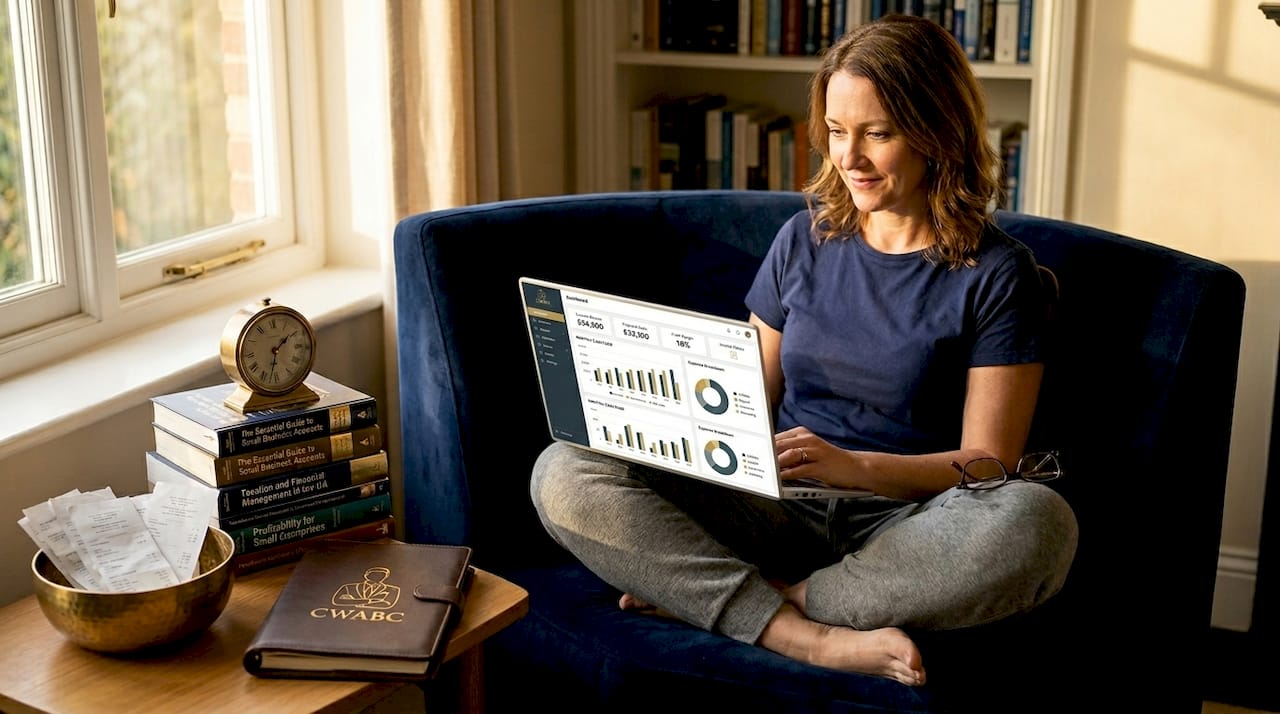
Pro Tip: Spreadsheets for cash flow can work well, but only if you update them every single week. An out-of-date spreadsheet is worse than no spreadsheet because it gives you false confidence.
Managing tax obligations within your cash plan
The two dates every sole trader must plan around are 31 January and 31 July. Missing them means interest and penalties from HMRC, and more importantly, it usually means you did not have the money set aside in the first place.
Here is what to build into your plan:
- Ring-fence your tax from day one. Using the three-bucket system above, your tax reserve grows automatically with every payment received. This prevents the all-too-common situation of spending money that was never really yours.
- Track your payments on account. If your previous year’s tax bill was £3,000, you will owe £1,500 on 31 January and another £1,500 on 31 July as advance payments, plus any balancing amount. Your reserve account must hold both instalments, not just one.
- Apply for Time to Pay early if you need it. HMRC’s Time to Pay allows you to spread tax bills up to £30,000 across monthly instalments. Nearly 18,000 payment plans have been set up since April, which shows how many people use this route. But it is not a guaranteed safety net. Time to Pay approval depends on filing your return first, applying before the deadline, and presenting a credible repayment plan.
- Plan for quarterly MTD submissions. From April 2026, you will need an accurate picture of income and expenses every three months. This is actually an opportunity. Four check-ins per year means you spot a shortfall in July rather than a catastrophe in January.
Trying to sort your tax position in the last week of January is a stressful and expensive habit. The sole traders who stay calm at deadline time are the ones who started setting money aside in April.
The mindset shift here is simple. Your tax reserve is not your money. Think of it as a holding account for HMRC. The moment you stop treating it that way, you are one large invoice away from a cash crisis.
Common cash flow challenges and how to fix them
Even with the best systems, problems arise. Here are the most common ones sole traders encounter, and what to do about them.
Late-paying clients are the most frequent cause of cash flow stress. Send invoices the same day work is completed, not at the end of the month. Include clear payment terms (14 days is reasonable for most service businesses), and follow up automatically on day 15. Using accounting software to send automatic reminders removes the awkwardness entirely.
Irregular or seasonal income is harder to control but easier to plan around than most people think. Look at your income over the last 12 months and identify your three quietest months. Your reserve account should be large enough to cover your operating costs through those months without you taking on debt or reducing your tax savings.
Unexpected expenses rarely feel unexpected once you track them over a year. Annual software renewals, equipment repairs, professional memberships: list them all out and divide by 12. Add that monthly figure to your operating costs so you are never blindsided.
When cash genuinely runs short and you cannot cover everything, here is the priority order to follow:
- Fund your tax reserve first. Falling behind on HMRC debt is the most damaging outcome.
- Cover mandatory bills due within 30 days next, such as rent, utilities, and insurance.
- Adjust your owner drawings last. You can delay paying yourself; you cannot delay HMRC.
Pro Tip: Sole traders should calculate safe discretionary spending by taking cleared cash, subtracting mandatory payables due within 30 days, and subtracting ring-fenced tax. What is left is what you can actually spend. Run this number weekly.
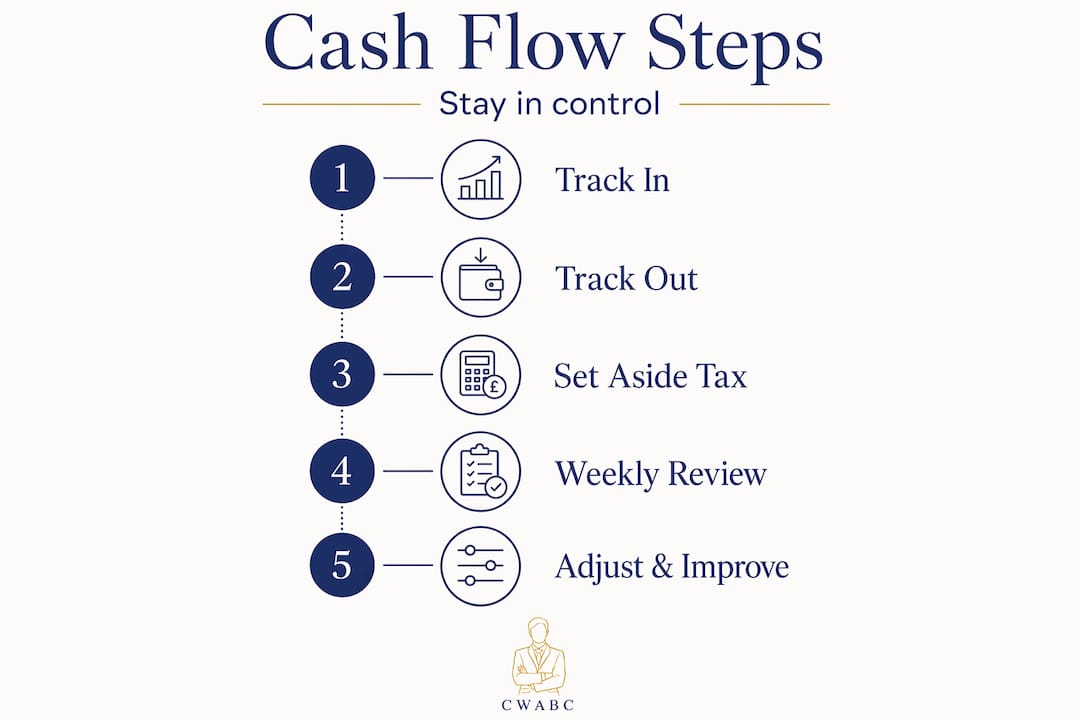
A simple weekly dashboard does not need to be complicated. Four numbers: cleared cash in the bank, tax reserve balance, bills due in the next 14 days, and safe-to-spend amount. Ten minutes every Monday morning, and you always know where you stand.
My honest take on cash flow and sole traders
I have worked with a lot of sole traders over the years, and the pattern is almost always the same. The cash flow problem does not start with a bad month. It starts with good months where the money feels plentiful and the temptation to spend it is hard to resist.
In my experience, the biggest mistake is treating all the money in your account as available money. It is not. A good chunk of it belongs to HMRC, and the moment you forget that, you are setting yourself up for a stressful January.
What I have also found is that complexity does not help. I have seen sole traders with elaborate spreadsheets that take an hour to update and are therefore never updated. The systems that actually work are boring: separate accounts, automatic transfers, a 10-minute weekly review. Repeat, every week, without exception.
MTD is going to feel like an added burden to a lot of people. I think it is actually a hidden advantage once you get past the initial setup. Quarterly check-ins force a discipline that most sole traders need but never prioritise. If you use them as a genuine cash review moment rather than just a filing exercise, you will end the year with fewer surprises and, I would argue, a healthier business.
The earlier you build these habits, the less painful the whole thing becomes. Starting in April rather than December is not just advice. It is the difference between calm preparation and last-minute chaos.
— Chris
How Cwabc can help you stay on top
If reading through all of this has left you wondering where to even begin, that is completely understandable. Good financial planning for sole traders does not have to mean hours of admin or confusing software.

At Cwabc, based in Tonbridge, we work specifically with sole traders and landlords to set up simple, practical systems that keep your finances organised and your tax obligations on track. From bookkeeping support in Tonbridge to MTD setup and quarterly reporting, we handle the detail so you can focus on the work you actually enjoy. We also support Self Assessment filing, budgeting reviews, and cash flow forecasting tailored to how your business actually runs. Our pricing is clear and upfront, with no jargon and no surprises. If you are a sole trader in Kent looking for calm, competent support, we would love to have a conversation.
FAQ
What is the difference between cash flow and profit?
Profit is what remains after expenses on paper. Cash flow is actual money moving in and out of your account. You can be profitable and still run out of cash if clients pay late or tax bills arrive when your account is low.
How much should a sole trader save for tax?
A general rule is to set aside 25 to 30% of every payment received into a dedicated tax account. Adjust this once you know your effective tax rate from your previous Self Assessment return.
What are payments on account for sole traders?
Payments on account are advance tax payments made to HMRC in two instalments each year, on 31 January and 31 July, based on your previous year’s tax bill. They are credited against your final annual tax return balance.
What does Making Tax Digital mean for my cash flow?
From April 2026, MTD for Income Tax requires affected sole traders to submit quarterly income and expense summaries to HMRC. This means you need an accurate view of your cash position every three months, not just once a year at filing time.
What can I do if I cannot pay my tax bill on time?
Contact HMRC as early as possible and apply for a Time to Pay arrangement. This allows you to spread your tax bill across monthly instalments up to £30,000, but you must have filed your return and have a credible plan in place before HMRC will agree.