
Your break-even point (BEP) is the exact level of sales at which your revenue equals your total costs — you are neither making a profit nor a loss. Two formulas get you there:
BEP (units) = Fixed costs ÷ (Selling price per unit − Variable cost per unit)
BEP (revenue) = Fixed costs ÷ Contribution margin ratio
One immediate UK consideration: once your taxable turnover crosses the VAT registration threshold, you must charge VAT on sales. That changes your effective revenue per sale and pushes your break-even point higher. More on that below.
Key takeaways
Break-even analysis works only when fixed costs are complete, time periods are consistent, and VAT registration effects are modelled in advance.
| Point | Details |
|---|---|
| Two core formulas | BEP (units) = Fixed costs ÷ Contribution margin per unit; BEP (revenue) = Fixed costs ÷ Contribution margin ratio. |
| VAT threshold effect | Crossing the VAT registration threshold can raise BEP significantly if VAT is absorbed rather than passed on in price. |
| Margin of safety | Subtract BEP from actual sales to see how far revenue can fall before you make a loss. |
| Sensitivity testing | Test at least three scenarios (price change, cost rise, volume drop) before any major business decision. |
| CWABC support | CWABC provides bookkeeping, VAT planning and break-even modelling for small UK businesses from one point of contact. |
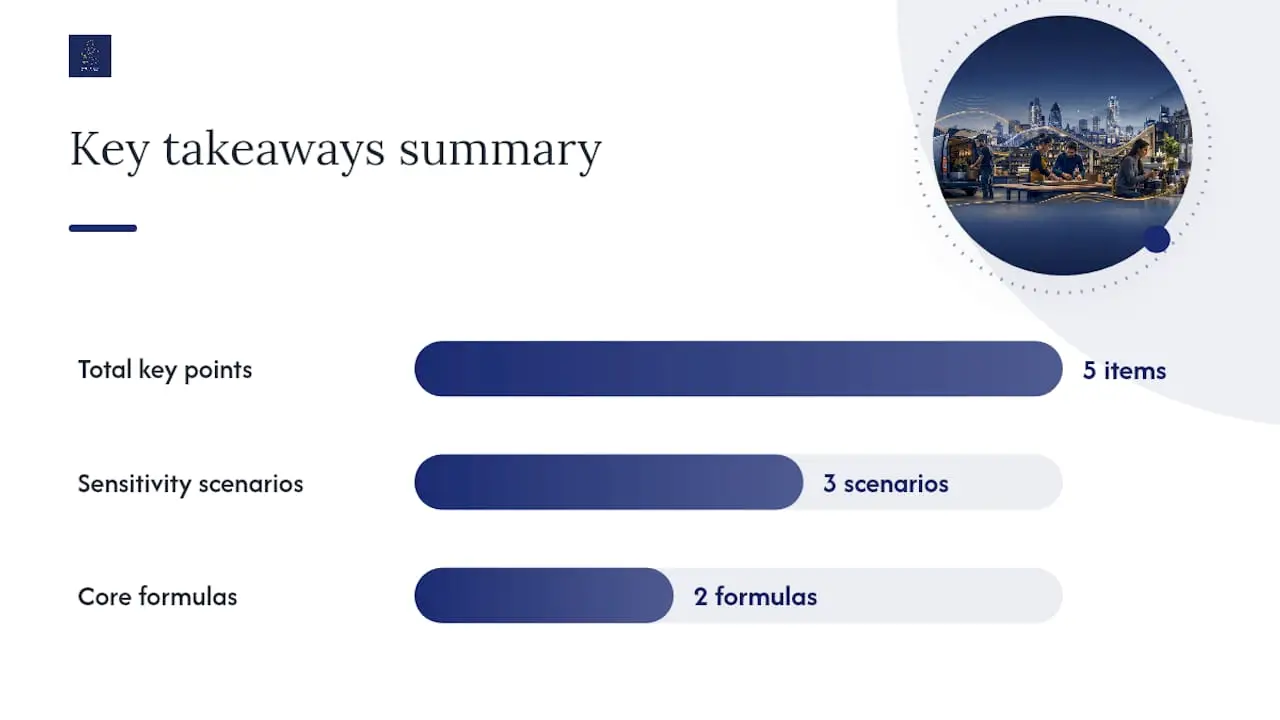
Table of Contents
- What is break-even analysis and why does it matter?
- How to calculate your break-even point step by step
- How to classify fixed, variable and semi-variable costs
- How to draw and read a break-even graph
- How to interpret your results and what to do next
- Worked UK examples including VAT and employer NI
- Your break-even action checklist for this month
- How to use break-even analysis for funding decisions
- Sensitivity analysis: how changes in costs, prices or volume affect your BEP
- What I have learned from working with small UK businesses on this
- How CWABC can help you put this into practice
- Sources
What is break-even analysis and why does it matter?
Break-even analysis is the process of calculating the minimum sales volume your business needs to cover all its costs. The central concept is the contribution margin: the amount each sale contributes toward fixed costs after variable costs are deducted. Once total contributions equal your fixed costs, you have broken even; every sale beyond that point generates profit.
For a small UK business, the calculation is useful in several concrete situations:
- Pricing decisions — test whether a proposed price covers costs and leaves room for profit
- Hiring — model whether adding a member of staff (and the associated employer National Insurance costs) is viable at current sales volumes
- Premises — assess whether moving to larger or more expensive premises is financially sustainable
- Funding applications — show lenders and investors the sales level at which the business becomes self-sustaining
- VAT planning — understand how approaching the VAT registration threshold changes your pricing and margin
Three UK-specific cost items that frequently alter break-even calculations are the VAT registration threshold, employer National Insurance contributions, and business rates. Each one can shift your fixed-cost base significantly, so they deserve their own line in your model.
How to calculate your break-even point step by step
Xero’s UK guide makes an important point that is easy to overlook: every figure you use must cover the same time period. Monthly fixed costs paired with annual revenue figures will produce nonsense results. Choose monthly or annual, and stick to it throughout.
The units method (product businesses)
- List all fixed costs for your chosen period — rent, business rates, insurance, subscriptions, accountancy fees, any salaries that do not vary with output.
- Identify the variable cost per unit — materials, packaging, per-unit delivery, payment-processing fees.
- Set your selling price per unit.
- Calculate contribution margin per unit = Selling price − Variable cost per unit.
- Divide fixed costs by contribution margin per unit to get BEP in units.
Worked example: A Kent-based candle maker has monthly fixed costs of £2,000. Each candle sells for £20 and costs £8 in materials and packaging (variable cost). Contribution margin = £20 − £8 = £12. BEP = £2,000 ÷ £12 = 167 candles per month.
The revenue method (service businesses)
Service businesses often do not sell discrete units. Here you use the contribution margin ratio instead:
Contribution margin ratio = (Revenue − Variable costs) ÷ Revenue
BEP (revenue) = Fixed costs ÷ Contribution margin ratio
Worked example: A freelance consultant has monthly fixed costs of £1,500. Contribution margin ratio = 1 − 0.10 = 0.90. BEP = £1,500 ÷ 0.90 = £1,667 of monthly revenue.
Multi-product businesses
When you sell several products with different margins, a single-product BEP will misstate the true sales needed. Stripe’s guide recommends calculating a weighted-average contribution margin: multiply each product’s contribution margin by its share of total sales, sum the results, then divide fixed costs by that weighted figure.
Pro Tip: Before you run any calculation, check your bookkeeping records for completeness. Missing a recurring cost — a software subscription, an annual insurance premium — will understate your fixed costs and make your break-even point look lower than it really is. Clean records are the foundation of a reliable model. The hidden costs of messy accounts article explains how gaps in your records can inflate professional fees too.
How to classify fixed, variable and semi-variable costs
Misclassifying costs is the most common reason a break-even calculation goes wrong. Here is a practical guide for UK small businesses:
Fixed costs (do not change with output):
- Rent and business rates
- Employer National Insurance on fixed salaries
- Accountancy and bookkeeping fees
- Business insurance premiums
- Software subscriptions (Xero, QuickBooks, FreeAgent)
- Loan repayments and finance charges
Variable costs (rise and fall directly with sales):
- Raw materials and stock
- Per-unit packaging and postage
- Payment-processing fees (e.g. Stripe or SumUp transaction charges)
- Freelance labour paid per job
Semi-variable costs present a practical challenge. A mobile phone contract has a fixed monthly line rental plus variable call charges; a delivery driver’s pay might include a fixed retainer and a per-drop rate. Two pragmatic approaches work well for small businesses: split the cost into its fixed and variable components and allocate each accordingly, or classify the whole cost as fixed if the variable element is small and unlikely to distort the result.
Employer National Insurance is worth a specific note. If you are planning to hire, model the full employer cost — salary plus NI plus any pension contributions — as a fixed cost before calculating your new break-even point. Getting this wrong is one of the most common errors small employers make when modelling growth. For correct cost classification and record keeping, good bookkeeping habits make the difference.
How to draw and read a break-even graph
A break-even graph gives you an instant visual of where profit begins. BBC Bitesize’s explanation is a clear starting point if you want a classroom-style walkthrough. Here is how to build one:
- Set the horizontal axis as units sold (or revenue for a service business).
- Set the vertical axis as £ (costs and revenue).
- Draw the fixed costs line as a horizontal line at your fixed cost value — it does not move regardless of sales.
- Draw the total costs line starting at the fixed cost value on the vertical axis and rising with each unit sold (slope = variable cost per unit).
- Draw the revenue line starting at zero and rising with each unit sold (slope = selling price per unit).
- Mark the break-even point where the revenue line crosses the total costs line.
The area to the left of that crossing point is your loss zone; to the right is profit.
Margin of safety
The margin of safety tells you how far sales can fall before you slip into a loss. The formula is:
Margin of safety = Actual (or budgeted) sales − Break-even sales
You can express it as a percentage: (Margin of safety ÷ Actual sales) × 100
Using the candle example above: if the business currently sells 250 candles a month and the BEP is 167, the margin of safety is 83 units, or 33%. That means sales could drop by a third before the business loses money.
Spreadsheet tip: In Excel or Google Sheets, list units in column A, fixed costs (constant) in column B, total costs (fixed + variable × units) in column C, and revenue (price × units) in column D. Select all four columns and insert a line chart. The intersection of columns C and D is your break-even point, visible at a glance.
How to interpret your results and what to do next
Once you have your break-even point, the number itself tells you what action to consider.
If your BEP looks low relative to current sales:
- Your margin of safety is healthy — use this as a baseline before any price change or cost increase.
- Consider whether you could reinvest the surplus margin into growth without pushing BEP to a dangerous level.
If your BEP is close to current sales:
- Prioritise cost control before hiring or expanding premises.
- Review variable costs for savings — supplier renegotiation, delivery consolidation, payment-processor rates.
- Test a modest price increase: even a 5% rise in selling price can reduce BEP meaningfully.
If your BEP exceeds realistic sales:
- This is a signal to revisit the business model, not just the numbers.
- Consider whether fixed costs can be reduced (home working, shared office space, renegotiated contracts).
- Explore whether a different pricing structure — retainers, bundles, tiered pricing — changes the contribution margin.
Break-even analysis has real limitations, and Unit4’s guide summarises them well. It assumes costs and prices remain constant, treats all units as identical, and ignores the timing of cash flows. A business can be above break-even on paper and still run out of cash if customers pay late. Pair your break-even model with a cashflow forecast and sensitivity testing to get a fuller picture.
Worked UK examples including VAT and employer NI
Example 1: product micro-business (candle maker)
Monthly fixed costs: £2,000 (rent £800, business rates £200, insurance £100, subscriptions £150, accountancy £250, miscellaneous £500). Variable cost per candle: £8. Selling price: £20. BEP = 167 candles.
Now suppose turnover approaches the VAT registration threshold. Once registered, the business must charge VAT on sales. For a consumer-facing product, the options are to absorb the VAT (reducing net revenue per sale), raise the price (risking lost sales), or accept a higher BEP. New contribution margin = £16.67 − £8 = £8.67. New BEP = £2,000 ÷ £8.67 = 231 candles. This is an increase in the sales needed just to break even. CalcHub’s UK guide models this scenario in detail and is worth bookmarking.
For sole traders approaching that threshold, the VAT threshold guide for sole traders explains the options clearly.
Example 2: service consultancy
Monthly fixed costs: £1,500. BEP = £1,667 per month. The consultant then hires a part-time assistant at £1,000 per month (salary plus employer NI). Fixed costs rise to £2,500. New BEP = £2,500 ÷ 0.90 = £2,778 per month — an increase of £1,111 in required monthly revenue just to cover one part-time hire.

Bookkeeper vs accountant: who do you need?
| Bookkeeper | Accountant | |
|---|---|---|
| Core duties | Recording transactions, bank reconciliation, VAT returns, payroll | Preparing accounts, Corporation Tax, Self Assessment, financial advice |
| When to hire | From day one to keep records clean and current | When filing statutory accounts, tax returns or seeking funding |
| Qualifications | AAT, ICB or equivalent; varies widely | ACA, ACCA, CIMA or AAT licensed |
| Single point of contact | Some practices combine both roles | Some practices combine both roles |
Many small businesses benefit from one adviser who handles both bookkeeping and accountancy-level filings. That reduces errors, cuts the cost of reconciling messy records before a filing, and means you are not repeating yourself to two different people. If you are unsure which you need, the 7 signs you need an accountant guide is a practical starting point.
Questions to ask before hiring:
- Are you AAT-licensed, ACA, ACCA or ICB qualified?
- Do you handle both bookkeeping and tax filings, or just one?
- How do you communicate with clients — email, phone, video call?
- What software do you use and will I have access to my own data?
- How is pricing structured — fixed monthly fee or hourly?
Pro Tip: Ask any prospective adviser to show you a sample break-even model or cashflow forecast. If they cannot produce one, or if it is built entirely in a locked spreadsheet you cannot edit, that tells you something important about how they work.
Your break-even action checklist for this month
Work through these steps in order and you will have a working model by the end of the month.
- Gather your numbers — pull the last three months of bank statements and categorise every cost as fixed, variable or semi-variable.
- Choose your time period — monthly is usually most practical for a small business; annual works if your costs are lumpy.
- Calculate BEP in units using the formula above, or BEP in revenue if you are a service business.
- Test three price scenarios — current price, 5% higher, 10% higher — and note how each changes your BEP.
- Run a sensitivity check — what happens to BEP if your main supplier raises prices by 10%? If rent increases at renewal?
- Update the model monthly — costs and prices change; a model built once and never revisited quickly becomes misleading.
When to call an adviser: if your BEP requires sales volumes that feel unrealistic, if you are approaching the VAT registration threshold, or if you are about to hire your first employee, those are the moments when a conversation with a qualified practitioner pays for itself.
How to use break-even analysis for funding decisions
Lenders and investors want to know one thing above all others: at what point does this business stop needing external support? Break-even analysis answers that question directly, which is why it belongs in every funding application and investor presentation.
When approaching a bank for a start-up loan or a growth facility, include your break-even calculation alongside your cashflow forecast. Show the BEP in both units and revenue, explain your assumptions clearly (especially fixed costs and contribution margin), and demonstrate the margin of safety at your projected sales level. A lender who can see that your projected sales sit comfortably above BEP is far more likely to approve a facility than one presented with revenue projections alone.
For investor presentations, go a step further. That kind of sensitivity modelling signals financial maturity. It also protects you: if an investor asks “what if your main customer leaves?” you already have the answer.
Break-even analysis also helps you size a funding request correctly. If you need £30,000 to cover fixed costs while you build to break-even, that figure is defensible. Asking for a round number without showing the underlying model is far less persuasive.
Sensitivity analysis: how changes in costs, prices or volume affect your BEP
Sensitivity analysis is simply the practice of asking “what if?” and running the numbers. It turns a static break-even calculation into a planning tool.
The three levers to test are:
1. Selling price. A price increase reduces BEP because each sale contributes more. A price rise on the candle example (from £20 to £22) increases contribution margin from £12 to £14, reducing BEP from 167 to 143 units. That is 24 fewer candles needed each month to cover costs.
2. Variable costs. A rise in material costs squeezes contribution margin and pushes BEP up. If the candle maker’s material costs rise from £8 to £10 per unit, contribution margin falls to £10, and BEP rises to 200 units. Knowing this in advance means you can negotiate with suppliers or adjust pricing before the cost increase hits.

3. Fixed costs. Adding a fixed cost (new premises, a hire, a software upgrade) raises BEP proportionally. Removing one lowers it. This is why modelling a hire before committing is so valuable — the worked example in the consultancy section above shows exactly how quickly a part-time hire shifts the required revenue.
Run at least three scenarios for any significant business decision: optimistic, realistic, and pessimistic. If the pessimistic scenario still produces a viable BEP, the decision is probably sound. If even the realistic scenario pushes BEP beyond what you can realistically sell, pause and reconsider.
What I have learned from working with small UK businesses on this
Break-even analysis is one of those tools that sounds straightforward until you sit down to do it. The formula is simple; the hard part is getting the inputs right. Most of the errors I see come not from the maths but from incomplete cost lists — a forgotten insurance renewal, an annual software licence treated as a one-off, employer NI omitted from a hiring model.
The VAT threshold effect surprises people every time. A business that has been growing steadily can find its BEP jumps sharply the moment it registers for VAT, simply because consumer-facing prices need to rise or margins need to absorb the tax. Modelling that scenario before you hit the threshold, rather than after, gives you time to adjust pricing gradually rather than all at once.
Working from Hildenborough in Kent, I support sole traders, startups and small limited companies across the region and remotely throughout the UK. Having one point of contact for bookkeeping, VAT, payroll and forecasting means the numbers feeding your break-even model are already clean, categorised and consistent — you are not starting from a spreadsheet of bank transactions and hoping for the best.
If your break-even calculation is raising more questions than it answers, that is usually a sign the underlying records need attention before the model will be reliable.
How CWABC can help you put this into practice
Running a break-even calculation is straightforward when your numbers are in order. Getting them in order is where most small businesses need support.

CWABC provides bookkeeping, VAT returns, payroll, cloud-accounting setup and bespoke financial modelling for sole traders, startups and small limited companies across Kent and remotely throughout the UK. That means the fixed costs feeding your break-even model are already correctly classified, your VAT position is clear, and your contribution margins reflect real transaction data rather than estimates.
Specific ways I can help:
- Break-even and cashflow modelling built in Xero, QuickBooks or FreeAgent so you can update it yourself
- VAT registration planning so you model the threshold effect before it hits your pricing
- Employer NI and payroll modelling before you commit to a hire
- Cloud accounting software setup so your records are always ready for analysis
- VAT return preparation and ongoing compliance support
If you would like a break-even spreadsheet template or a conversation about your numbers, get in touch via the contact page and I will come back to you promptly.
Sources
The sources below are worth bookmarking for ongoing reference:
- Gov
- Calchub
- How to calculate the break-even point | Stripe
- Break-Even – Financial terms and calculations – AQA
This article is general information, not a substitute for advice from a qualified financial advisor. Consult a qualified financial professional about your own circumstances before acting on anything here.