Tax stress is not inevitable. For many sole traders and small business owners, the anxiety that arrives each January or April is not caused by complicated tax law. It is caused by disorganised records. Understanding why bookkeeping prevents tax stress is the first step toward changing that experience entirely. Bookkeeping, properly understood as the systematic practice of recording and maintaining your financial records throughout the year, is not just number-keeping. It is the process that removes the last-minute panic, reduces the risk of errors, and puts you back in control of your own finances.
Table of Contents
- Key takeaways
- Why disorganised records escalate tax pressure
- Reconciliation and regular bookkeeping habits
- The emotional and practical benefits of automation
- Practical bookkeeping tips for year-round calm
- My perspective: bookkeeping changed how my clients experience tax season
- Work with Cwabc for stress-free tax filing
- FAQ
Key takeaways
| Point | Details |
|---|---|
| Disorganised records cause stress | Missing or inaccurate data creates cognitive overload and raises your audit risk near deadlines. |
| Regular reconciliation prevents surprises | Monthly bank reconciliation catches discrepancies early, before they become tax-time problems. |
| Automation saves significant time | Financial software can cut small business finance management by over 22 hours per month. |
| Structured workflows spread the workload | Staging bookkeeping across the year removes the last-minute rush and reduces errors. |
| Professional support builds confidence | Expert help from a licensed bookkeeper means accurate, timely returns and no unwelcome surprises. |
Why disorganised records escalate tax pressure
Most people associate tax stress with the complexity of HMRC requirements. The real culprit, more often than not, is timing. When records are left untouched for months, everything compresses toward the deadline. Delayed preparation compresses work near the filing date, which raises the risk of errors and missed items significantly.
This is not just about feeling rushed. The practical consequences are serious.
- Missing receipts and invoices make it impossible to substantiate deductions. HMRC requires clear documentation of the amount, date, business purpose, and supplier relationship for expenses you wish to claim.
- Inaccurate income figures can arise when payments received across multiple accounts or platforms are not captured consistently.
- Uncategorised transactions force you to make hurried decisions about what was a business cost and what was personal. Those decisions under pressure are rarely as accurate as ones made at the time.
- Audit risk increases when records look incomplete or inconsistent. Poor documentation risks disallowance of legitimate deductions, potential penalties, and a great deal of additional stress you did not need.
There is also a psychological dimension that is easy to underestimate. Confusion caused by missing or inaccurate data creates genuine cognitive overload. When you sit down to prepare a tax return and cannot find what you need, the mental effort of reconstructing months of transactions is exhausting. It is not a character flaw. It is what happens when the records are not there to support you.
“Tax-season pressure stems more from process design and workflow timing than from transaction volume. Structured businesses that spread their workload experience measurably less urgency and fewer errors.”
The good news is that the solution is not complicated. It starts with changing the habit of when you maintain your records, not how clever you are with numbers.
Reconciliation and regular bookkeeping habits
The single most practical habit that separates calm, confident filers from stressed, last-minute ones is bank reconciliation. Done monthly, it is straightforward. Left for six months, it becomes a significant task with a real risk of cascading errors.
Neglecting bank reconciliation causes cash flow surprises, audit complications, tax errors, and delayed detection of fraud. More importantly, catching a discrepancy in month two takes minutes. Catching it in month ten, when the figures have been carried forward across multiple periods, can take hours.
Here is how regular bookkeeping habits translate directly into stress-free tax filing:
| Habit | Frequency | Benefit at tax time |
|---|---|---|
| Bank reconciliation | Monthly | Accurate income and expense figures with no surprises |
| Receipt capture | At point of purchase | Full substantiation for all claimed expenses |
| Categorising transactions | Weekly or monthly | No rushed decisions near the deadline |
| Reviewing aged invoices | Monthly | Correct turnover figures and no missed income |
| Checking payroll records | Each pay run | Accurate employer costs and PAYE submissions |
Consistent bookkeeping workflows spread the workload across the entire year. Instead of facing a mountain of paperwork in January, you face a small, manageable task each month. That shift alone removes the bulk of tax-related anxiety for most sole traders and small business owners.
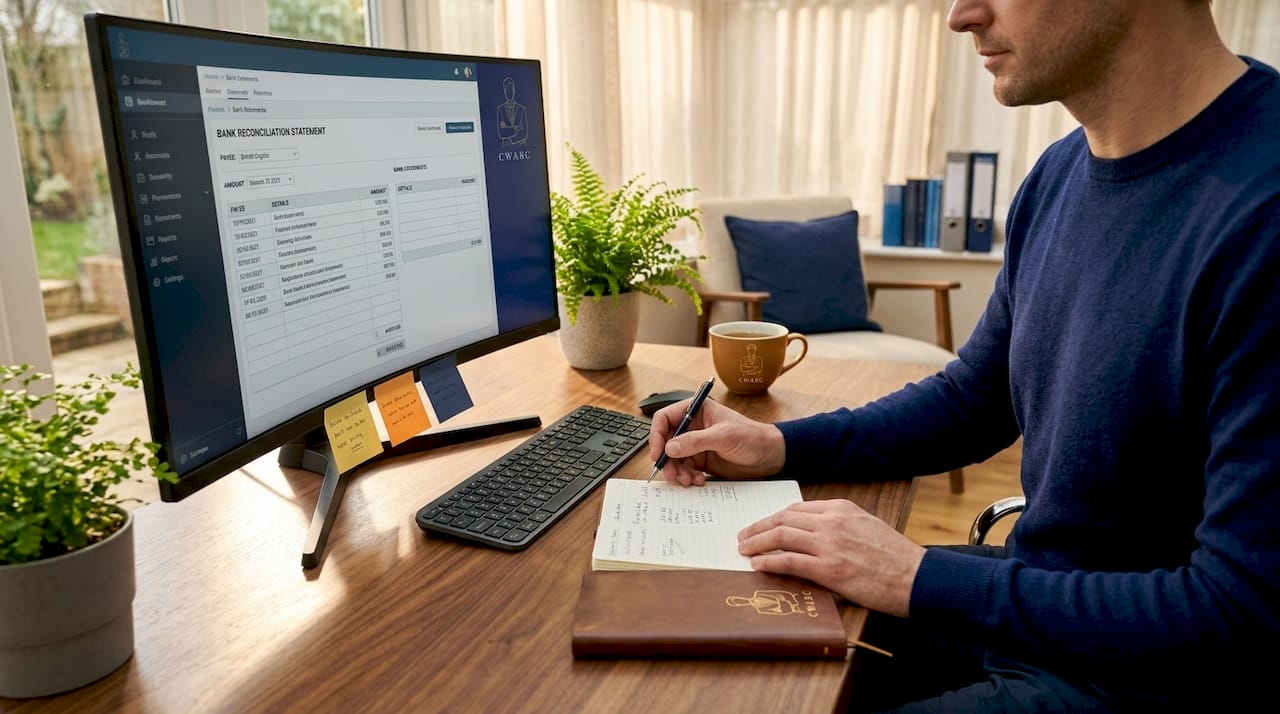
Automation plays a major role here. Cloud accounting platforms can pull transactions directly from your bank, match them to invoices, and flag anomalies without manual data entry. Bank reconciliation automation has been shown to reduce monthly close times by 75% in practice, with errors falling sharply within the first two months of implementation.
Pro Tip: Set a recurring calendar appointment on the last working day of each month to reconcile your bank account and categorise any outstanding transactions. Twenty minutes a month is considerably easier than two days in January.
The emotional and practical benefits of automation
There is a version of bookkeeping that feels heavy and burdensome. Then there is the version that runs largely in the background, gives you accurate figures on demand, and removes the dread from the end of the financial year. The difference is almost entirely about whether you have a structured system in place.
Financial software automation can cut small business owner finance management time by 22 hours per month. That is not a marginal saving. For a sole trader or small business owner, 22 hours is a significant portion of your working time, freed up from tasks that were generating anxiety rather than income.
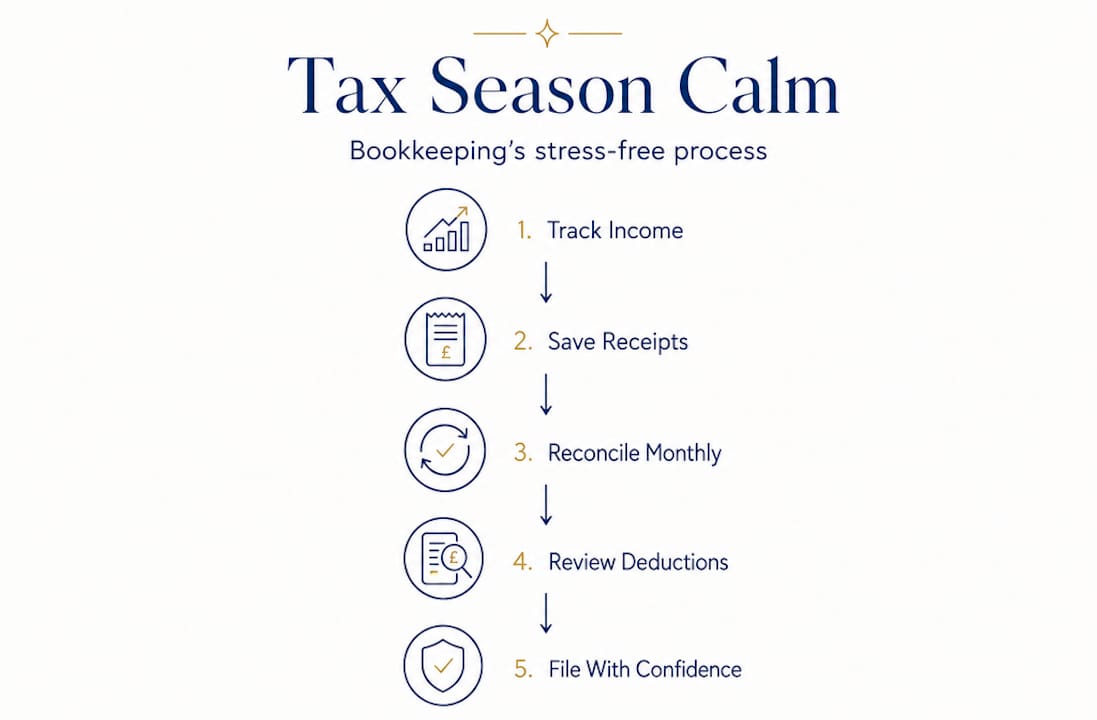
The emotional relief is just as real as the time saving. Research into financial stress and mental bandwidth confirms that bookkeeping systems which centralise and automate reconciliation reduce manual workload and the anxiety driven by unexpected surprises. Tax stress reduces most reliably when people feel greater control and clarity, not necessarily when every uncertainty is eliminated.
Structured workflows deliver exactly that sense of control. When you know your books are current, your receipts are captured, and your figures are accurate, you are not dreading the tax return. You are simply reporting what you already know.
The practical benefits for a small business include:
- Faster, more accurate tax preparation with fewer hours spent locating missing information
- Reduced risk of penalties from late or inaccurate submissions
- Better visibility of your actual profit, which supports better decisions throughout the year
- Lower accountant or bookkeeping fees, because clean records take less time to work with
- Greater confidence in conversations with HMRC, lenders, or potential investors
A mid-year financial review becomes genuinely useful when your books are current. Without it, it is just another source of anxiety.
Practical bookkeeping tips for year-round calm
Knowing why bookkeeping matters is one thing. Building the habits to make it happen consistently is another. These practical steps work for individuals, sole traders, and small business owners alike.
-
Separate your finances. Open a dedicated business bank account if you have not already. Mixing personal and business transactions is the single fastest way to create confusion at tax time. Separation makes categorisation straightforward and reduces the time spent working out what was a business cost.
-
Capture receipts digitally at the point of purchase. Most cloud accounting tools allow you to photograph a receipt immediately and attach it to the transaction. Receipts over a certain value must be retained for up to seven years depending on your circumstances. A shoebox of paper is not a records system.
-
Schedule a monthly bookkeeping session. Treat it like a client meeting: it goes in the diary and it does not move. A consistent monthly habit keeps your records current and makes the year-end process straightforward.
-
Use accounting software suited to your size. Xero, FreeAgent, and QuickBooks each have features designed for sole traders and small businesses. They connect directly to your bank, automate transaction imports, and produce reports that make tax preparation far simpler. Cwabc offers accounting software setup specifically for businesses in Kent.
-
Get professional help before you think you need it. Many sole traders wait until they are overwhelmed before seeking support. A licensed bookkeeper can set up your system correctly from the start, which prevents the chaos from developing in the first place.
-
Do a mid-year check. Review your figures at the halfway point of your financial year. This gives you time to correct any issues, make informed decisions about expenditure, and prepare calmly for the year-end.
Pro Tip: If you are a landlord or sole trader, keep a separate folder, physical or digital, for each tax year. Label it clearly and save every piece of relevant documentation as you go. When January comes, everything you need is already in one place.
The hidden costs of messy accounts go well beyond the accountant’s fee for sorting them out. They include the hours you spend trying to reconstruct records, the penalties for inaccurate submissions, and the ongoing mental load of knowing your finances are not under control.
My perspective: bookkeeping changed how my clients experience tax season
In my experience working with sole traders and landlords across Kent, the transformation that happens when someone moves from reactive to proactive bookkeeping is remarkable. Not because the tax rules change. Because they change.
I have seen clients come to me in February, genuinely distressed, with carrier bags of receipts and no clear picture of their income for the year. Once we set up a straightforward monthly system, those same clients arrive at year-end with everything organised, accurate, and ready. The relief is visible. More importantly, it lasts.
What most people underestimate is the link between financial organisation and mental clarity. When your records are current, you are not carrying the cognitive load of an unresolved problem in the back of your mind. That background anxiety, the nagging feeling that your finances are not in order, disappears when your books are up to date.
My honest take is this: most tax stress is self-inflicted, not because people are careless, but because no one has ever shown them a simple system that works. The solution is not complicated accounting knowledge. It is regular habits, the right tools, and sometimes a little professional support to set things up correctly.
Early preparation and staged workflows are not just for large firms. They work just as well for a sole trader with a handful of clients or a landlord with two properties. You do not need to be a numbers person. You need a process.
— Chris
Work with Cwabc for stress-free tax filing
If you recognise the patterns described in this article, Cwabc can help you put a straightforward system in place.
Based in Tonbridge, Cwabc specialises in bookkeeping for sole traders and landlords, delivering clear, jargon-free support that keeps your finances organised and compliant year-round. Whether you need help setting up accounting software, maintaining monthly records, or preparing for Making Tax Digital, the approach is always the same: simple, structured, and tailored to your situation.
There are no complicated contracts and no confusing fees. Just practical, reliable support from a licensed bookkeeper who understands the pressures you face. Explore bookkeeping services in Tonbridge to see how Cwabc works with small business owners just like you, or visit the bookkeeping FAQ page if you have questions about where to start. The earlier you begin, the calmer your tax season will be.
FAQ
What is bookkeeping and how does it reduce tax stress?
Bookkeeping is the practice of recording and organising your financial transactions throughout the year. It reduces tax stress by keeping your records accurate and current so that when your tax return is due, there is nothing to chase, reconstruct, or panic about.
How often should I update my bookkeeping records?
Monthly is the minimum for most sole traders and small business owners. Reconciling your bank account and categorising transactions once a month keeps your records accurate and prevents the build-up that causes last-minute pressure.
What happens if my financial records are disorganised at tax time?
Disorganised records increase the risk of errors, missed deductions, and potential penalties from HMRC. Poor documentation can also lead to disallowance of legitimate expenses and a significantly more stressful filing process.
Can accounting software replace a bookkeeper?
Accounting software automates many tasks, such as bank feeds and transaction matching, but it does not replace the judgement and oversight of a trained bookkeeper. The two work best together, with software handling data capture and a bookkeeper reviewing for accuracy and compliance.
Is bookkeeping only useful for businesses with complex finances?
No. Even individuals with simple finances benefit from keeping organised records. The benefits of bookkeeping apply to anyone who needs to file a self-assessment return, including landlords, freelancers, and part-time sole traders.