Found a mistake on a VAT return you have already sent? Take a breath. Most errors can be put right calmly, either as an adjustment on your next return or by telling HMRC (HM Revenue and Customs, the UK tax authority) separately. A penalty is not automatic. It depends on the size of the error, how it happened and whether you took reasonable care.
This guide explains how to tell which correction route applies, what HMRC means by “reasonable care”, how penalties and interest come into it, and which records to keep. It also shows a bookkeeping reconciliation example with simple numbers.
TL;DR
- If the net value of your errors is £10,000 or less, you can usually adjust on your next VAT return (Method 1).
- Between £10,000 and £50,000, Method 1 still works if the error is under 1% of your box 6 figure for the period you found it. Otherwise, or if the error was deliberate, tell HMRC separately (Method 2).
- No penalty applies if you took reasonable care and still got it wrong. A tidy, reconciled audit trail is your best evidence.
- Late payment penalties are a separate system. Contact HMRC early if you cannot pay on time.
- I can review your VAT transactions, find the discrepancies and prepare the correction for you.
Table of Contents
- Why VAT errors happen (and why they are rarely a disaster)
- Step one: work out the net value of the error
- Step two: choose Method 1 or Method 2
- Method 1: adjusting on your next VAT return
- Method 2: telling HMRC separately and the VAT652 form
- Reasonable care: the line between a mistake and a penalty
- A bookkeeping reconciliation example
- Records to keep for every correction
- Interest, late payment and other VAT penalties
- What if HMRC raises an assessment?
- My perspective: calm corrections beat last-minute mess
- How I can help with a VAT error
- A quick checklist before your next VAT return
- FAQ
- Need help?
- Sources
Why VAT errors happen (and why they are rarely a disaster)
VAT looks simple until you are coding 400 transactions a quarter. The mistakes I see described most often by small businesses are ordinary ones:
- VAT claimed on an invoice that was not a valid VAT invoice, or on a purchase that was partly personal.
- The wrong VAT rate applied to a sale (standard, reduced or zero).
- A sales invoice entered twice, or missed altogether.
- Bank transactions coded to the wrong account, so VAT lands in the wrong box.
- Credit notes not matched to the original invoice.
- Figures typed into the return by hand instead of coming straight from the software.
None of these makes you a bad business owner. HMRC’s own guidance says that errors you do not correct could lead to a penalty and interest, which is why the sensible move is to correct them once you spot them, not to hope nobody notices.
Step one: work out the net value of the error
Before you choose a correction route, you need one number: the net value of the errors you are correcting. That is the VAT you under-declared (or over-claimed) less any VAT you over-declared, across the periods you are looking at. Check HMRC’s notice for exactly how errors in different periods are combined, as the rules are specific.
Two more things to establish:
- How far back the error goes. You can correct errors in returns for the preceding four years, within the limits below.
- Whether it was deliberate. Deliberate errors can never go through Method 1. If you are reading this because an error was not deliberate, which is the normal situation, carry on.
Step two: choose Method 1 or Method 2
HMRC’s Notice 700/45 sets out two routes. Here is how the tests work in plain English.
| Situation | Route |
|---|---|
| Net value of errors is £10,000 or less | Method 1: adjust on your next VAT return |
| Net value is between £10,000 and £50,000 and is less than 1% of your box 6 (net outputs) figure for the period you discovered the error | Method 1: adjust on your next VAT return |
| Net value is over £50,000, or over £10,000 and not under 1% of box 6 | Method 2: tell HMRC separately |
| Error was deliberate | Method 2: tell HMRC separately |
These thresholds come from HMRC’s VAT Notice 700/45. HMRC’s compliance handbook also lists the monetary limits for correcting indirect tax errors, if you want the technical version.
Two worked examples of the 1% test
These figures are illustrative only, not real clients.
- Example A. You discover an under-declared £12,000 of VAT. Your box 6 for the period you found it is £400,000. One per cent of that is £4,000, so £12,000 fails the test. You use Method 2.
- Example B. Same £12,000 error, but your box 6 is £2,000,000. One per cent is £20,000, so £12,000 passes. You can use Method 1.
Most small businesses never get near these figures. For many, the error is a few hundred pounds and Method 1 applies comfortably.
Method 1: adjusting on your next VAT return
Method 1 is the quieter route. You do not write to HMRC. Instead, you include the correction in the VAT return for the period in which you found the error.
- Record the error in your own file. Note the period it relates to, the amount, what went wrong and the date you found it.
- Add or subtract the VAT in the right boxes. An under-declaration of VAT on sales increases box 1. An over-claim of VAT on purchases reduces box 4. The reverse applies if you over-declared sales VAT or under-claimed purchases VAT.
- Adjust the related net figures too. Boxes 6 and 7 should reflect the corrected sales and purchases values.
- Keep a written note of the adjustment. HMRC’s guidance expects you to keep a record of the correction with your VAT records.
- Submit through Making Tax Digital compatible software, as usual, and pay any extra VAT due by the normal deadline.
If you use Xero, QuickBooks or FreeAgent, the safest approach is usually to correct the underlying transaction in the books, then keep a short adjustment schedule explaining how the return differs from the ledger. I explain how that works in my guide to fixing VAT return errors online.
Method 2: telling HMRC separately and the VAT652 form
Method 2 applies when the error is too big for Method 1 or was deliberate. A person can correct errors in previously submitted returns, whatever their net value, by making a separate notification in writing. HMRC accepts that by letter or by an error correction notification.
The form most people know for this is VAT652, “Notification of errors in VAT returns”. HMRC’s page on how to tell HMRC about VAT Return errors, last updated on 8 September 2025, is the place to check the current version of the process before you send anything, because the way of submitting has been changing. In practice you will need to give:
- the VAT period or periods affected;
- the amount of VAT under- or over-declared for each period;
- a clear explanation of how the error happened;
- how you found it and what you have done to stop it recurring.
Paying the extra VAT at the same time, or soon after, limits the interest that builds up. If you are overpaid, a Method 2 notification is also how you ask for the money back, subject to HMRC’s time limits.
If an error involves a large sum, several periods, or the line between a genuine mistake and something more serious feels blurry, that is the moment to have someone experienced look at your records first. For anything that could be treated as deliberate, a tax adviser or solicitor who specialises in tax disputes is the right professional, not a blog post.
Reasonable care: the line between a mistake and a penalty
This is the part that worries people most, so here is the reassuring bit. HMRC’s manual states plainly that not every inaccuracy results in a penalty, because people do make mistakes. If you took reasonable care to complete the return correctly, there is no penalty, even if the return turns out to be wrong.
A wrong return is not the same as a careless one. What shows reasonable care in practice?
- Bookkeeping that is up to date and reconciled to the bank.
- A clear record of how each VAT figure was calculated.
- Invoices and receipts stored and linked to transactions.
- A sensible check before filing, such as comparing this quarter’s figures with the last.
- Asking for advice when something unusual comes up, and keeping a note of what you were told.
By contrast, a penalty can be charged where an error is down to carelessness, or where it is deliberate. The more serious the behaviour, the higher the potential penalty. HMRC also looks at how forthcoming you were when you told them. I will not quote percentages here, because the amount depends on the facts. Check HMRC’s current penalty guidance for your situation.
The practical point is this: the audit trail does the work. If you can show how you got to your numbers, a genuine slip looks like a genuine slip. For more on this, see my article on how accurate bookkeeping helps prevent HMRC problems.
A bookkeeping reconciliation example
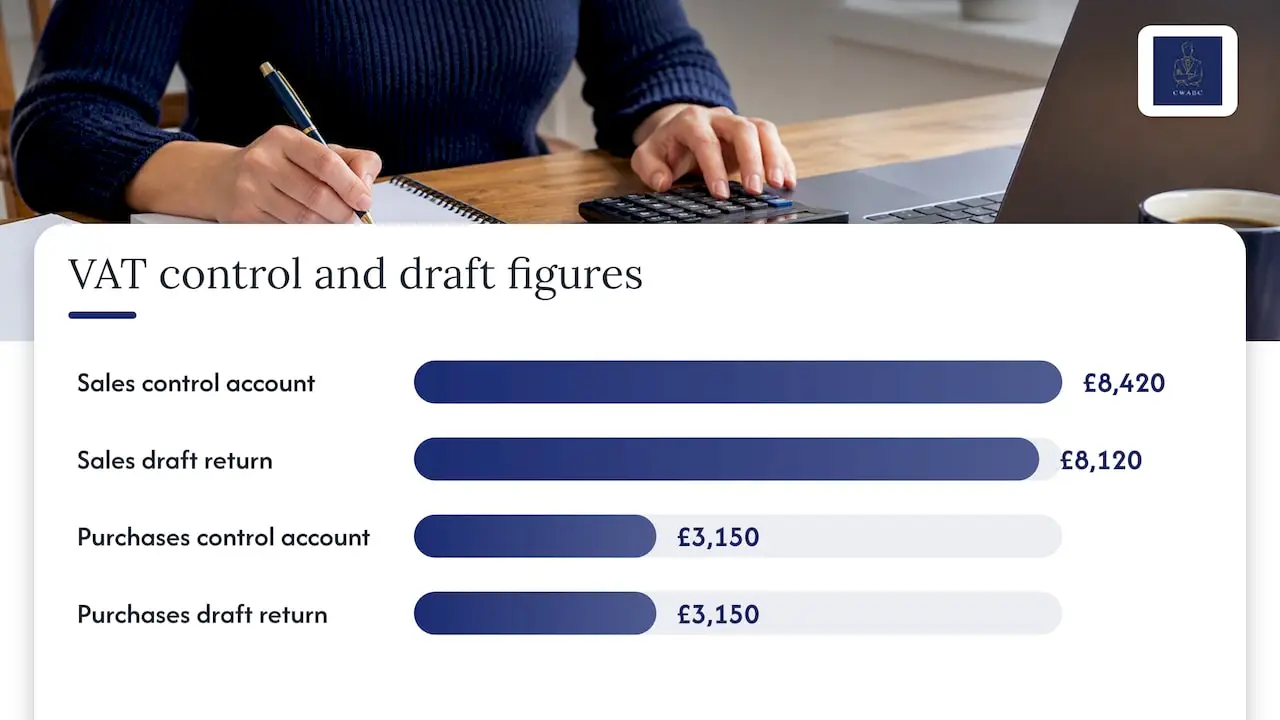
Here is a simple, made-up example of how an error shows up when you reconcile, and how it is corrected. The numbers are illustrative.
A quarterly VAT filer prepares the return from the software. Before filing, the VAT control account is checked against the figures on the return:
| Item | VAT control account | Draft return | Difference |
|---|---|---|---|
| VAT on sales (box 1) | £8,420 | £8,120 | £300 |
| VAT on purchases (box 4) | £3,150 | £3,150 | £0 |
The £300 gap is the clue. Digging into it:
- Filter sales invoices for the period and compare them to the sales report behind the return.
- Find one invoice, net £1,500, posted to a “no VAT” code by mistake. It should have been standard rated, so £300 of VAT is missing from the return.
- Correct the tax code on the invoice in the software and re-run the VAT report.
- The report now agrees to the control account.
What happens next depends on the timing:
- Found before filing: correct the transaction, file the right figure, and keep a note. There is nothing to disclose.
- Found after filing, small amount: the net error of £300 is well under £10,000, so it goes on the next return as an adjustment under Method 1. You add £300 to box 1, and the related £1,500 to box 6, and keep the working in your file.
- Found after filing, much larger amount: apply the thresholds above and, if they are breached, use Method 2.
The lesson is that a reconciliation habit turns a scary HMRC letter into a routine tidy-up. I go through the basics of a return in my small business guide to the VAT return.
Records to keep for every correction
Whether you use Method 1 or Method 2, keep a short correction file. It should include:
- the original return and the corrected figures;
- the invoices, credit notes or bank entries behind the error;
- your working showing how the amount was calculated;
- a note of when and how you discovered the error;
- a copy of any letter, form or notification sent to HMRC;
- evidence of any payment made.
Store it digitally with the quarter it relates to. HMRC expects VAT records to be kept for a set period, so check the current retention rules in HMRC’s guidance rather than relying on memory.
Interest, late payment and other VAT penalties
Correcting an error is one thing. Paying late or filing late is a different matter, with its own rules.
Late payment of VAT
For VAT accounting periods starting on or after 1 January 2023, late payment penalties are tiered by how overdue the payment is:
| Payment is | What applies |
|---|---|
| Paid within 15 days | No penalty |
| Paid between 16 and 30 days late | 3% of the VAT owed at day 15 |
| 31 days or more late | 3% of the VAT owed at day 15, plus 3% of the amount owed at day 30, plus interest at an annual rate of 10% on the outstanding amount |
HMRC’s guidance also says to get in touch early if you cannot pay, because a payment plan arranged before the penalty thresholds can limit or avoid the penalty. Do not wait for HMRC to contact you.
Late VAT returns
Late submission now works on a points system rather than the old default surcharge. I have set out the details in my guide to avoiding VAT late filing penalties, and HMRC’s current figures are always the final word.
Self Assessment is different
If you are also a sole trader or landlord, do not mix VAT penalties up with Self Assessment ones. The latter start with a £100 fixed penalty for a missed deadline, followed by daily and percentage-based charges. My guide to Self Assessment penalties covers them.
What if HMRC raises an assessment?
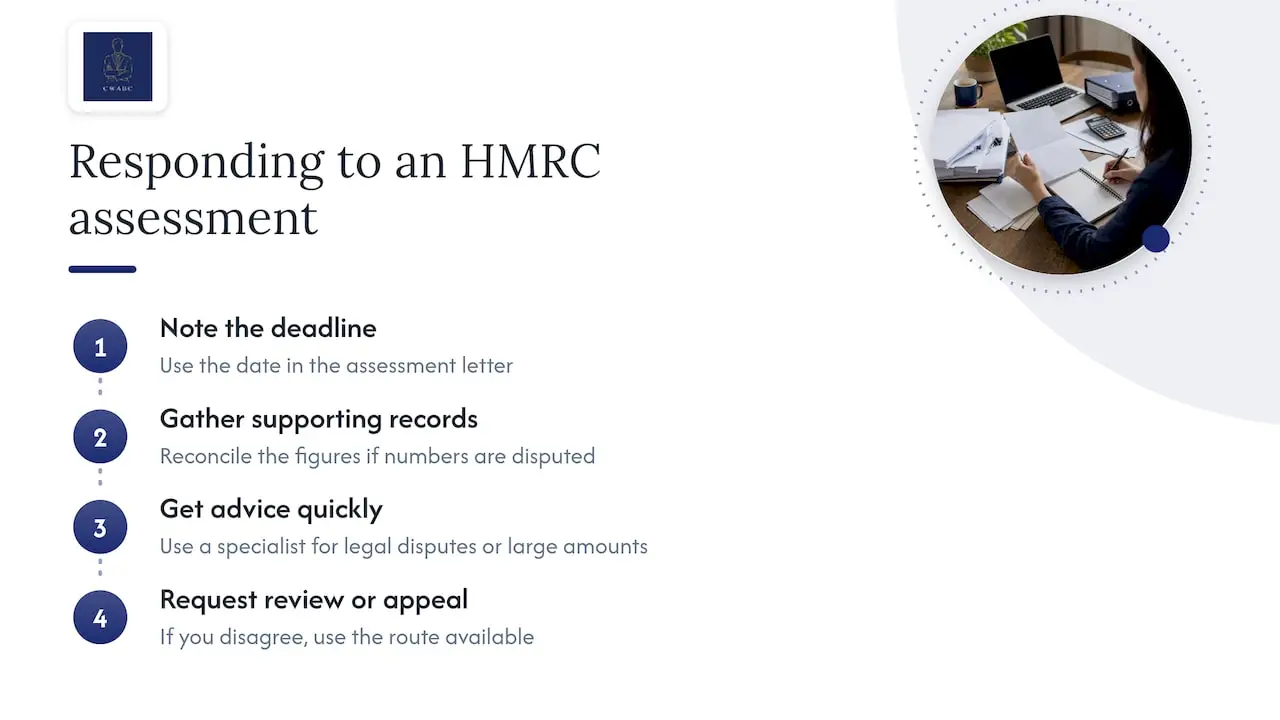
Sometimes HMRC does not wait for you. If it believes VAT is underdeclared, or a return is missing, it can issue an assessment for the amount it thinks is due. If you disagree, you generally have a right to ask for a review or to appeal, and the deadline is short. Your assessment letter will set out your appeal rights and the date to act by.
Do not ignore it. Gather the records that support your figures, note the deadline on the letter and get advice quickly. If the amount is large or the dispute is about the law, speak to a tax adviser or tax solicitor who handles disputes. If the dispute is about your numbers, a clean reconciliation is often the strongest evidence you can bring.
My perspective: calm corrections beat last-minute mess
I work with sole traders, landlords, small limited companies and small employers across Tonbridge, Sevenoaks, Kent and remotely across the UK. The pattern I see on VAT is rarely dishonesty. It is rushed bookkeeping, a quarter-end scramble and a figure nobody checked.
My view is simple. Errors are normal, and the system is built to let you correct them. What turns a small slip into an expensive one is silence: leaving an error alone, or not knowing which route applies. If your records are reconciled each month and you can explain how a number was reached, you are in a strong position.
I would rather you correct a £300 slip next quarter, with a tidy note on file, than lie awake wondering whether HMRC will find it. If you are unsure which method applies, ask before you file, not after.
— Chris
How I can help with a VAT error
If you have spotted a discrepancy, or suspect one, I can help you deal with it step by step. As a sole practitioner, I work with you directly. Depending on what you need, I can:
- review your VAT transactions and tax codes for the period in question;
- reconcile the VAT control account to your returns and find discrepancies;
- work out the net value of the error and which correction route applies;
- prepare the adjustment for your next return, or the information for a separate notification to HMRC;
- set up your software and monthly routines so the same mistake is less likely to happen again.
See my VAT returns service or my wider accounting and VAT services. If the root problem is messy books, my bookkeeping services are often the better starting point. Pricing is agreed clearly upfront. I cannot promise a particular outcome with HMRC, but I can help you present accurate, well-organised records.
A quick checklist before your next VAT return
- Reconcile your bank accounts to the end of the VAT period.
- Compare the VAT control account to the draft return.
- Check unusual transactions: large purchases, credit notes, overseas items and anything coded to zero or exempt.
- Compare this quarter with the last, and investigate big swings.
- Check that every VAT claim has a valid invoice behind it.
- File, pay on time, and save the working papers.
For wider planning, my small business tax deadline calendar helps you see where VAT sits alongside your other dates. My VAT mistakes checklist is a shorter version of this guide.
FAQ
What is the threshold for VAT errors to be disclosed directly to HMRC?
You must tell HMRC separately (Method 2) if the net value of errors is over £50,000, or over £10,000 and not under 1% of your box 6 figure for the period you found the error. Deliberate errors always need this route too. Below those limits you can adjust on your next return. The detail is in HMRC’s VAT Notice 700/45.
How do I correct a wrong VAT return?
Work out the net value of the error and check the thresholds. For small errors, adjust the figures on your next return and keep a note of the correction. For larger ones, notify HMRC in writing, using the VAT652 form or a letter. Check HMRC’s page on reporting VAT Return errors for the current process.
Will I be charged a penalty for a VAT error?
Not necessarily. HMRC says that where you took reasonable care, there is no penalty even if the return was wrong. Penalties can apply where an error is careless or deliberate, and interest may be charged on VAT paid late. Keeping reconciled records is your best protection.
What is the penalty for paying VAT late?
There is no penalty if you pay within 15 days of the due date. After that, a 3% penalty applies for payments 16 to 30 days late, with a second 3% charge and interest at 10% a year from day 31. See HMRC’s late payment guidance. If you cannot pay, contact HMRC early about a payment plan.
Can I appeal a VAT assessment?
Generally yes. Your assessment letter explains your right to ask for a review or appeal, and the time limit is short, so act promptly. Gather your records, and for large or legal disputes, speak to a tax adviser or solicitor who handles tax disputes.
Need help?
If you have found a VAT error, or want to make sure you never do, I am happy to look at it with you. Send me the details through my contact page and I will let you know how I can help. You can also see my other services.
Sources
- How to correct VAT errors and make adjustments or claims (VAT Notice 700/45), GOV.UK
- Correct errors in your VAT Return, GOV.UK
- Check how to tell HMRC about VAT Return errors, GOV.UK
- VAEC7120, Separate notification, HMRC internal manual
- VAEC7670, Interest and penalties, HMRC internal manual
- CH81142, Correction of errors for indirect taxes, monetary limits, HMRC internal manual
- How late payment penalties work if you pay VAT late, GOV.UK
- 11.48 million beat the Self Assessment deadline, GOV.UK