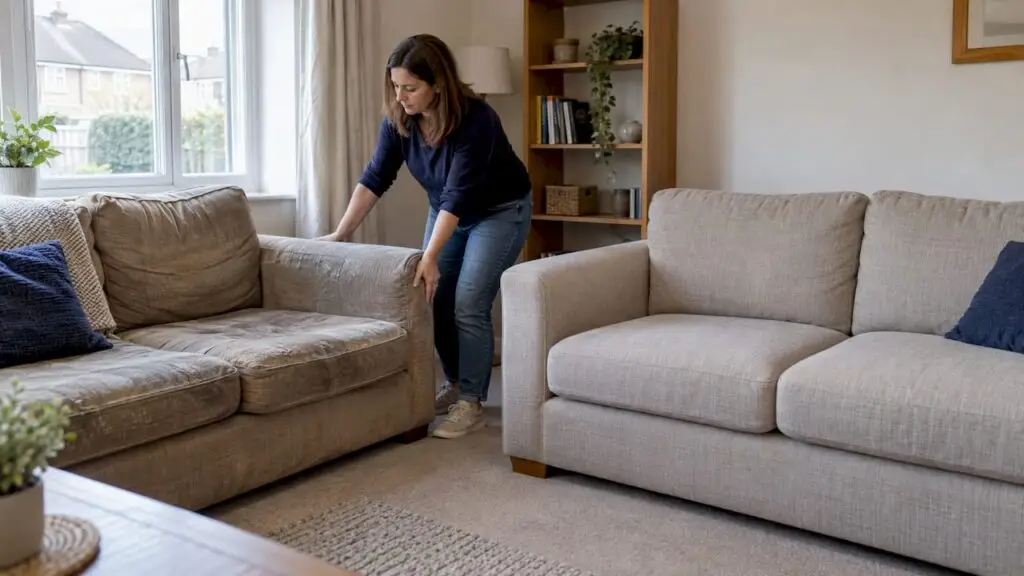
Replacement of Domestic Items Relief lets you deduct the cost of replacing furniture, furnishings, appliances and kitchenware that you already provided for your tenant’s use, but only when the old item is genuinely gone from that use. The deduction is the cost of a like-for-like replacement, so if you upgrade, the claim is capped. Initial furnishing never qualifies, and fixtures such as boilers sit outside this relief entirely.
TL;DR:
- The relief applies only to moveable domestic items like furniture and appliances, not fixtures such as boilers or fitted kitchens, and the old item must be genuinely unavailable to the tenant.
- The replacement deduction cap is limited to the cost of a like-for-like item or a reasonable modern equivalent, plus incidental costs, minus any proceeds from disposal or trade-in.
- Missing any of the four conditions, such as the old item still being available to the tenant or claiming on fixtures, invalidates the claim.
- Proper documentation—including invoices, disposal proof, and photos—is essential for a defensible claim, especially when multiple replacements occur in one year.
- Buyers should avoid upgrading well beyond a reasonable standard without capping the deduction, as this common mistake can lead to disallowance.
Table of Contents
- 1. Which items qualify and the four conditions you must meet
- 2. Working out the allowable deduction
- 3. Worked examples you can follow
- 4. What doesn’t qualify, and the mistakes that catch landlords out
- 5. Record keeping and where to put the claim on your tax return
- 6. Practitioner tips from CWABC
- 7. Why disciplined record keeping pays off
- 8. How I can help landlords with replacement claims
- FAQ
- Sources
1. Which items qualify and the four conditions you must meet
I think of domestic items as anything moveable that makes a let property liveable rather than part of the building itself. Beds, free-standing wardrobes, curtains, carpets, televisions, fridges, sofas and crockery all count. A fitted kitchen or a boiler does not, because these are fixed to the property and treated as part of it rather than as separate domestic items.
HMRC’s guidance at PIM3210 sets this relief out clearly, and the law behind it sits in section 311A of the Income Tax (Trading and Other Income) Act 2005. That section lists four conditions, usually labelled A to D, and you need to satisfy all of them before you claim:
- Condition A: your property business includes letting a dwelling-house, so the relief applies to residential lettings rather than commercial premises.
- Condition B: an old item was already provided for the tenant, you’ve bought a new one solely for their use, and the old one is no longer available to them at all.
- Condition C: the expenditure is wholly and exclusively for the letting business and would otherwise be treated as capital rather than revenue.
- Condition D: you haven’t claimed capital allowances on the same item.
Miss any one of these and the claim falls away, so it’s worth checking each condition item by item rather than assuming a replacement automatically qualifies.
2. Working out the allowable deduction
The formula behind this relief is simpler than it first looks. You start with the cost of the new item, or a capped equivalent if you’ve upgraded, then add any incidental costs and subtract whatever you received for the old one.
- Take the cost of the new item, or the cost of a reasonable modern equivalent if the new one is an improvement.
- Add incidental costs such as delivery, collection or reasonable installation directly linked to the replacement.
- Subtract any proceeds from selling, part-exchanging or trading in the old item.
One figure worth remembering: under section 311A, the deduction is capped at the cost of a same or substantially similar item whenever the replacement counts as an improvement, which keeps the relief tied to maintaining the property rather than upgrading it.
Part-exchange and trade-in deals reduce the deduction by the value HMRC’s guidance attributes to the old item, the same as a straight sale would. A brand-new item replacing an old, worn one is not automatically an improvement either. If a five-year-old sofa is replaced with a similar but new sofa, that’s simply a like-for-like swap, not an upgrade, so the full cost qualifies. For a fuller look at where the line between a repair and a capital improvement sits, I’ve written a checklist on repairs versus capital improvements that’s worth reading alongside this.
3. Worked examples you can follow
These figures are illustrative only, not HMRC rates, and are here purely to show how the maths works in practice.
- Sofa replacement: say the new sofa costs £700, but a reasonable modern equivalent to the old one would cost £500. Delivery and disposal together cost £80, and you sell the old sofa for £50. The allowable deduction is £500 plus £80 minus £50, which comes to £530, even though you spent £700.
- Washing machine with trade-in: say a new washing machine costs £450 and the retailer gives you £40 off as a trade-in for the old one. There’s no improvement involved, so the allowable deduction is £450 minus £40, which is £410.
Worth noting: the legislation.gov.uk text of section 311A confirms that incidental acquisition and disposal costs are included in the claim, and that proceeds from the old item always reduce it, whether the item was sold privately or handed back as part of a deal.
4. What doesn’t qualify, and the mistakes that catch landlords out
Fixtures don’t count as domestic items under this relief. Boilers, fitted kitchens and water-filled radiators are treated as part of the building once installed, so their replacement falls under ordinary repair or capital expenditure rules instead, as PIM3210 makes clear.
- Initial furnishing is excluded entirely: if you’re furnishing a let for the first time, none of that spend qualifies, only later replacements do.
- If you’ve claimed Rent-a-Room relief for a dwelling-house, you cannot also claim replacement item expenses for that same letting, and the exemption thresholds sit at £7,500 for a sole claim or £3,750 where it’s shared, as set out in HMRC’s SA105 notes. My Rent-a-Room guide sets out that trade-off in more detail.
- Keeping the old item around for the tenant’s use, even informally, undermines Condition B straight away.
- Upgrading well beyond a reasonable modern equivalent without capping the claim is one of the most common errors I see.
Pro Tip: Before you claim, ask yourself honestly whether the old item is genuinely gone from tenant use, not just replaced in name while it lingers in a cupboard or garage.
5. Record keeping and where to put the claim on your tax return
Good records turn a reasonable claim into a defensible one. I’d keep these for every replacement:
- The replacement invoice and proof of payment, showing date, item and cost.
- Evidence of disposal, such as a collection receipt or a note of how the old item was removed.
- Part-exchange or trade-in paperwork showing the value credited against the old item.
- Dated photographs of the old and new items where practical.
- A short written note identifying the old item, when it was removed and why it’s no longer available.
For residential lettings that aren’t furnished holiday lets, qualifying costs go in box 36 of the property pages, headed “Costs of replacing domestic items,” following HMRC’s SA105 notes. My guide to the property income tax return walks through the rest of that form if you want the wider context.
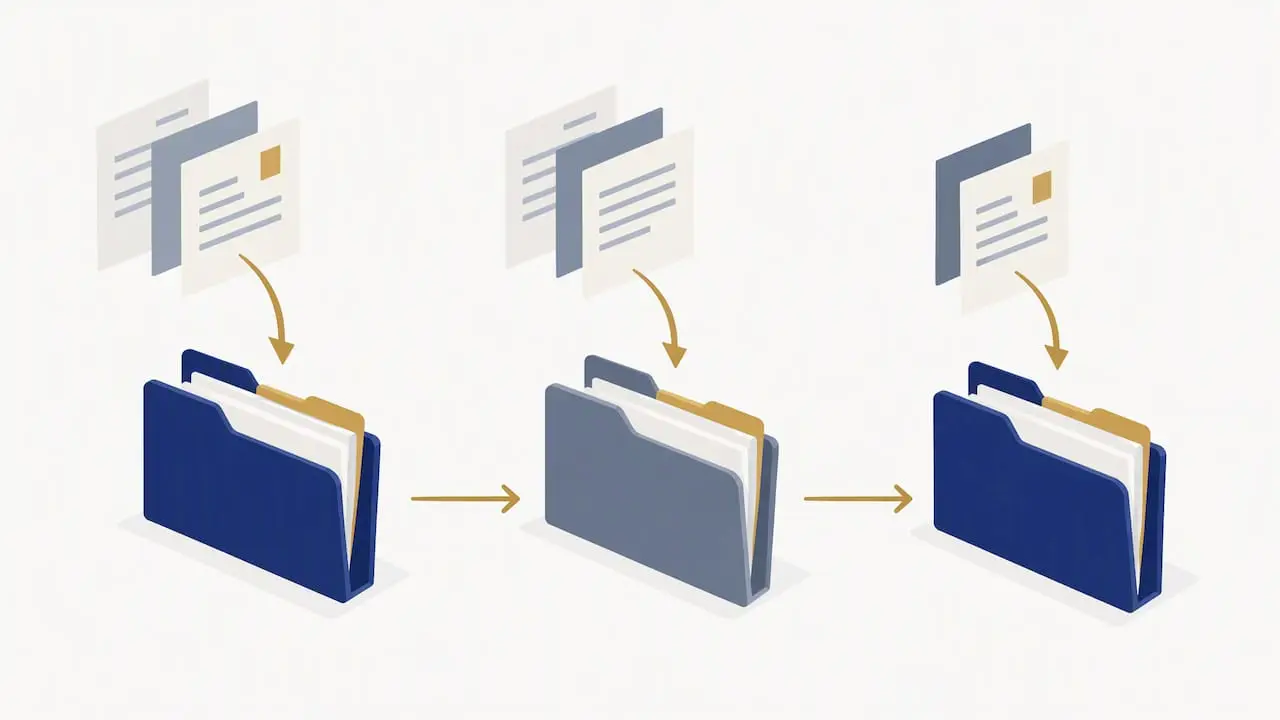
If you use the cash basis, PIM1095 confirms this relief still applies for ordinary residential lettings, but proceeds or adjustments received in a later tax year sometimes need including in that later period rather than the year of replacement, so timing matters more than usual. Keep a simple folder structure by tax year and retain everything for at least the standard Self Assessment record-keeping period.
6. Practitioner tips from CWABC
Working through landlord claims regularly, a few habits consistently keep things straightforward:
- I recommend digital invoices filed by tax year, with disposal notes attached at the same time, not reconstructed months later.
- When a replacement might count as an improvement, I write a short comparison of age, condition and specification between old and new, so the reasoning is there if HMRC ever asks.
- Multiple disposals in one year, or part-exchanges on mixed-use properties, are where I most often suggest a proper review rather than a guess.
- If your bookkeeping has fallen behind or you’re unsure whether something counts as a fixture, it’s worth getting that checked before you file rather than after.
My bookkeeping services are built around exactly this kind of ongoing record keeping for landlords.
7. Why disciplined record keeping pays off
The landlords who struggle with this relief almost always have the same problem: no paper trail, not a disputed principle. A dated invoice and a disposal note settle most questions before they’re even asked. I’d always rather see a claim backed by clear evidence than one built on an assumption that feels reasonable but can’t be shown.
— Chris
8. How I can help landlords with replacement claims
Getting this relief right often comes down to having the right records in place before your tax return is due, not scrambling for them afterwards. I work directly with landlords across Tonbridge, Sevenoaks, Kent and remotely to keep rental records organised and claims defensible.

- My rental reporting and bookkeeping support keeps invoices, disposals and part-exchange records filed as you go, not reconstructed later.
- My Self Assessment service covers your property pages including this relief; current prices are on the pricing page.
- My Making Tax Digital support helps landlords move to digital record keeping ahead of the rules that affect them.
If you’d like a straightforward conversation about your own rental records, get in touch through my contact page.
FAQ
What qualifies for replacement of domestic items relief?
Qualifying items are moveable furniture, furnishings, household appliances and kitchenware provided for a tenant’s use in a residential letting, replaced after the original item is no longer available to them. Fixtures such as boilers or fitted kitchens don’t qualify, and the item must be a genuine replacement, not an initial purchase, under section 311A.
What can landlords claim tax relief on?
Beyond replacement domestic items, landlords can generally claim revenue costs such as repairs, letting agent fees, insurance and finance costs, each under its own rules. Replacement of Domestic Items Relief specifically covers the replacement cost, incidental purchase and disposal costs, less any proceeds received, as set out in PIM3210.
Who is responsible for replacing white goods in a rental property?
This is generally a matter for the tenancy agreement rather than tax law, and responsibility varies between landlords and tenants depending on what’s agreed. Where a landlord does replace a white good such as a fridge or washing machine that they originally provided, the cost may qualify for this relief if the statutory conditions are met.
Can I claim for replacement carpets in my rental property?
Yes, carpets are treated as a domestic item for this relief, so replacing worn carpets you previously provided for a tenant generally qualifies. The deduction is the replacement cost, capped to a reasonable modern equivalent if the new carpet is a genuine upgrade, following the same rules in PIM3210.