
Making Tax Digital (MTD) is the UK government’s mandatory programme requiring sole traders and landlords to keep digital tax records and submit quarterly income updates to HMRC through approved software, replacing the traditional annual Self Assessment process. If you earn above certain thresholds, this change affects you directly. MTD for Income Tax becomes compulsory from april 2026 for those earning over £50,000, initially covering around 860,000 taxpayers. Understanding what is making tax digital now, before the deadline arrives, means you can prepare calmly rather than scramble at the last minute.
Why did HMRC introduce making tax digital?
The core reason HMRC introduced Making Tax Digital is to close the UK’s tax gap, which is the difference between tax owed and tax actually collected. Annual paper-based returns create long gaps between earning income and reporting it, which leads to forgotten receipts, miscategorised expenses, and honest errors that cost the Treasury billions each year.
Jonathan Athow from HMRC explains the thinking clearly. He highlights that near real-time records help taxpayers avoid the common problem of lost receipts and inaccurate figures that build up over twelve months. Quarterly reporting keeps your records fresh and your figures accurate.
“The goal of Making Tax Digital is to help taxpayers maintain near real-time digital records, reducing the risk of errors and improving overall compliance.” — Jonathan Athow, HMRC
The evidence supports this approach. HMRC evaluation data shows that 67% of businesses experienced fewer record-keeping errors after adopting MTD-compatible software, and 80% found the software straightforward to use. Those figures suggest the transition is manageable for most people, not just tech-savvy businesses.
The broader benefits beyond tax compliance
MTD’s impact reaches further than just filing returns on time. The benefits of making tax digital include:
- Better cash flow visibility. Quarterly updates force you to review income and expenses regularly, giving you a clearer picture of your finances throughout the year.
- Reduced end-of-year panic. Spreading the workload across four quarters means no frantic receipt-hunting in january.
- Wider digital efficiency. MTD acts as a catalyst for broader business digitalisation, automating invoicing and cash flow tracking beyond tax reporting alone.
- Greater tax awareness. Reviewing your figures quarterly helps you understand your tax position before the year ends, so there are no nasty surprises.
The government’s intention is clear. MTD is not just a compliance tool. It is a stepping stone toward fully digital business management, encouraging cloud-based accounting as standard practice for UK small businesses.
Who must comply and what are the requirements?
Making Tax Digital requirements apply to sole traders and landlords based on their annual gross income, not their profit. The rollout follows a phased timeline:
| Income Threshold | Compulsory Start Date | Taxpayers Affected |
|---|---|---|
| Over £50,000 | April 2026 | Approx. 860,000 |
| Over £30,000 | April 2027 | Additional cohort |
| Over £20,000 | April 2028 | Broader coverage |
The threshold reducing to £20,000 by April 2028 means the majority of self-employed individuals and landlords will eventually fall within scope. If you are not affected in 2026, you will likely be affected within two years.
What you are required to do
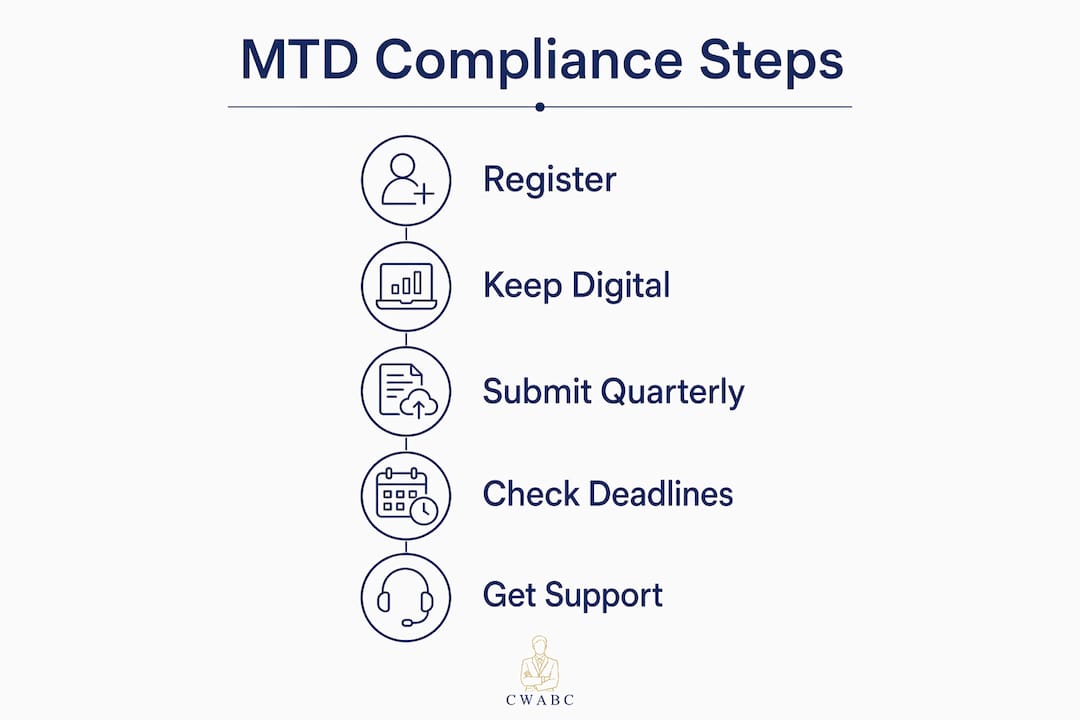
The making tax digital requirements are specific. You must:
- Keep digital records of every transaction, including its value, date, and the correct HMRC expense category
- Submit quarterly updates to HMRC through MTD-compatible software
- Meet each quarterly deadline, which falls one month after the quarter ends (for example, the first quarter ending 5 july 2026 has a submission deadline of 7 august 2026)
- Submit a final year-end declaration confirming your annual figures
Is making tax digital mandatory? Yes, for those above the thresholds. Exemptions exist for individuals who can demonstrate digital exclusion due to age, disability, or lack of internet access, but these are assessed case by case by HMRC.
Pro Tip: Check the types of businesses affected by MTD to confirm whether your income sources fall within scope. Some landlords with mixed income types have specific rules that differ from straightforward sole traders.
Missing quarterly deadlines can result in penalty points under HMRC’s new points-based system. Accumulate enough points and a financial penalty follows. Getting set up early removes that risk entirely.
How does making tax digital software work?
Choosing the best making tax digital software depends entirely on your business. A sole trader with straightforward income and a handful of expenses needs something very different from a landlord managing multiple properties with varied costs.

The right software match depends on business complexity. Simple, cost-effective apps suit sole traders better than enterprise-grade platforms. Here is a practical comparison of the main options:
| Software | Best For | Key Features |
|---|---|---|
| FreeAgent | Sole traders, freelancers | Bank feeds, invoicing, MTD submissions |
| Xero | Small businesses, landlords | Full bookkeeping, bank reconciliation, reporting |
| QuickBooks | Growing businesses | Invoicing, expenses, payroll integration |
| Sage | Established businesses | Advanced reporting, multi-user access |
What to look for in MTD software
When assessing your options, focus on these practical features:
- MTD API compliance. The software must connect directly to HMRC’s systems. Not all tools marketed as “digital” meet this standard.
- Bank feed integration. Automatic transaction imports reduce manual data entry and the errors that come with it.
- Expense categorisation. Good software maps your transactions to HMRC’s approved categories automatically or with minimal input.
- Ease of use. If the interface confuses you, you will avoid using it, which defeats the purpose entirely.
One critical point many people miss: Excel alone is not MTD-ready. Spreadsheets require bridging software or full API integration to meet compliance standards. Using Excel without that connection can lead to penalties, regardless of how accurate your figures are.
Software also does not replace professional advice. MTD-compatible tools do not handle complex tax adjustments, depreciation calculations, or reliefs correctly without human oversight. The software handles the submission mechanics. A qualified accountant handles the judgement calls.
How to transition successfully to making tax digital
Getting ready for MTD is a process, not a single task. The digital transition typically takes longer than people expect. Setup, historical data migration, and training often require at least 3–6 months. Starting now gives you that time without pressure.
Here is a practical step-by-step approach:
-
Confirm your income threshold. Check whether your gross income from self-employment or property exceeds £50,000 for the 2026 deadline. Use your most recent Self Assessment return as a starting point.
-
Choose your MTD software. Select a platform that suits your business size and complexity. If you are unsure, seek advice from a bookkeeper or accountant before committing to a subscription.
-
Set up your software and connect your bank feeds. Link your business bank account so transactions import automatically. This is the foundation of accurate quarterly reporting.
-
Migrate historical records. Review and categorise past transactions so your opening figures are correct. Errors here carry forward and cause reconciliation problems later.
-
Familiarise yourself with the quarterly process. Run through a practice quarter before your first live submission. Understand where to find your income summary, how to review categorised expenses, and where to submit.
-
Submit your first quarterly update on time. The sole trader deadlines guide at Cwabc sets out every key date clearly so nothing catches you off guard.
-
Review and correct errors promptly. MTD allows corrections within the software before the final year-end declaration. Do not wait until year-end to fix categorisation mistakes.
Pro Tip: Set a recurring calendar reminder one week before each quarterly deadline. That gives you time to review your records, fix any gaps, and submit without rushing.
The sole trader transition guide for 2026 from Cwabc walks through each of these steps in detail, with specific guidance for different business types. If you are a landlord, the MTD ITSA guide for landlords covers the specific rules that apply to property income.
Key takeaways
Making Tax Digital requires sole traders and landlords above set income thresholds to keep digital records and submit quarterly updates to HMRC using approved software, with mandatory compliance starting april 2026 for those earning over £50,000.
| Point | Details |
|---|---|
| Mandatory from april 2026 | Sole traders and landlords earning over £50,000 must comply first, with lower thresholds following by 2028. |
| Quarterly submissions required | You must submit income and expense updates four times per year, within one month of each quarter ending. |
| Software must be MTD-compliant | Excel alone does not meet the standard; use HMRC-recognised tools like Xero, FreeAgent, or QuickBooks. |
| Start preparation 3–6 months early | Setup, bank feed connection, and historical data migration take longer than most people expect. |
| Professional support remains valuable | Software handles submissions; accountants handle complex adjustments, reliefs, and judgement calls. |
My honest view on making tax digital
I have worked with sole traders and landlords in and around Tonbridge for years, and the pattern I see most often is this: people leave MTD preparation far too late because it feels abstract until the deadline is close. Then the panic sets in.
Here is what I have found to be true. The businesses that transition calmly are the ones that treat MTD as a bookkeeping upgrade, not a tax burden. When you have clean, categorised records updating in near real-time through a tool like Xero or FreeAgent, your quarterly submission takes minutes, not hours. The dread disappears because the work is already done.
What I would push back on is the idea that software alone is enough. I see this misconception regularly. Someone signs up for QuickBooks, connects their bank, and assumes they are compliant. But if the transactions are miscategorised, if the opening balances are wrong, or if a relief has been missed, the software submits those errors directly to HMRC without question. The tool is only as reliable as the person using it.
The other thing worth saying plainly: the 3–6 month preparation window is not an exaggeration. I have sat with clients who thought they could set everything up in a weekend. Categorising two years of historical transactions, reconciling bank feeds, and learning a new interface takes real time. Give yourself that time now, and the whole process becomes straightforward.
MTD will reshape how bookkeeping works for small businesses in the UK. That is not a bad thing. Quarterly visibility into your finances is genuinely useful. The businesses that embrace it early will find themselves in a much stronger position, not just for compliance, but for understanding their numbers throughout the year.
— Chris
Ready to get your MTD set up without the stress?
At Cwabc, we help sole traders and landlords in Tonbridge and beyond get MTD-ready without the confusion. Whether you need help choosing the right software, setting up Xero, FreeAgent, or QuickBooks, or managing your quarterly submissions, we handle the detail so you can focus on your business.

Our accounting software setup service in Kent covers everything from initial configuration to bank feed connection and your first quarterly submission. If you want to understand your full obligations before you start, the MTD requirements checklist for 2026 is a practical starting point. We offer clear, upfront pricing and personal support tailored to your situation. Get in touch today and take MTD off your worry list.
FAQ
What is making tax digital for income tax?
Making Tax Digital for Income Tax is a UK government requirement for sole traders and landlords to keep digital records and submit quarterly income updates to HMRC using approved software, replacing the annual Self Assessment process.
Is making tax digital mandatory for all self-employed people?
MTD is mandatory from april 2026 for sole traders and landlords earning over £50,000, with the threshold lowering to £20,000 by april 2028, meaning most self-employed individuals will eventually be required to comply.
Can i use excel for making tax digital?
Excel alone does not meet MTD compliance standards. You must use HMRC-recognised software or add bridging software that connects your spreadsheet to HMRC’s systems via an approved API.
What happens if i miss a quarterly MTD deadline?
HMRC operates a points-based penalty system for late submissions. Each missed deadline earns a penalty point, and once you reach the threshold for your filing frequency, a financial penalty is charged.
Do i still need an accountant if i use MTD software?
Yes. MTD software handles the mechanics of digital record-keeping and submission, but a qualified accountant remains valuable for complex tax adjustments, reliefs, and ensuring your categorised records are correct before submission.